English as a Bridge: Barriers for India’s Marginalized Communities in the Digital Age
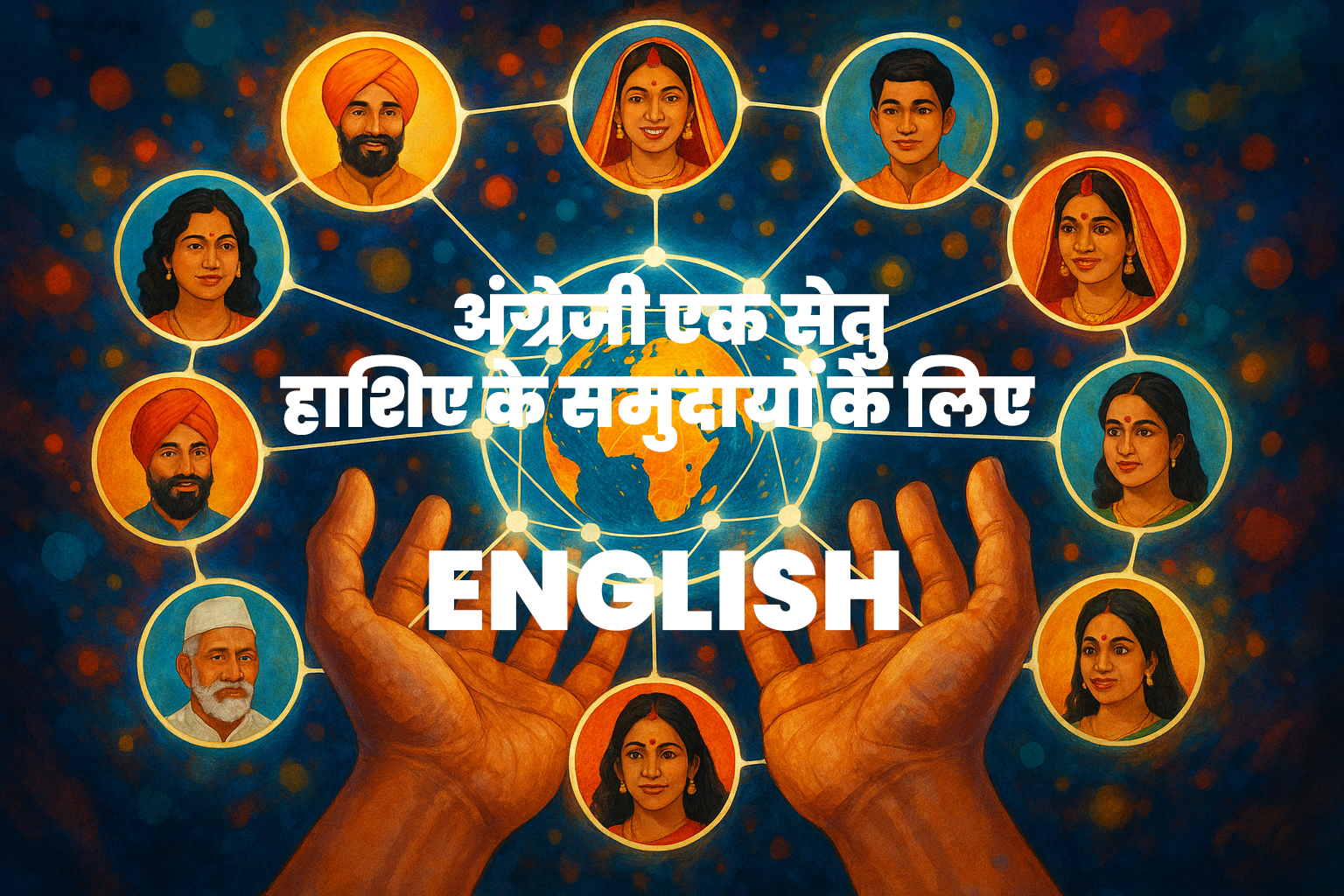
The premise that English can serve as a powerful bridge for India’s downtrodden and marginalized communities represents a profound shift in how we understand language as a tool of empowerment rather than oppression. This transformative potential becomes particularly evident when we examine how English enables downtrodden and marginalized voices to transcend local boundaries, connect with global human rights networks, and leverage international platforms to amplify their struggles for justice, dignity, and equality. In an interconnected world where linguistic barriers often determine access to power and resources, English emerges not merely as a colonial legacy but as a strategic instrument of liberation for those who have been systematically excluded from mainstream discourse. [1][2][3][4][5]
The evidence overwhelmingly demonstrates that downtrodden and marginalized communities across India are increasingly recognizing English as a pathway to breaking free from entrenched systems of oppression, accessing global solidarity networks, and transforming their struggles into internationally recognized movements for human rights and social justice. [6][7][5][8][9]
The Democratic Deficit: Language as a Barrier to Political Participation
India’s linguistic landscape presents a complex paradox that directly impacts democratic participation and political representation. With over 1,600 mother tongues spoken across the subcontinent, the dominance of Hindi and English in official domains creates systematic exclusion for vast populations who lack proficiency in these languages. Research conducted across multiple Indian states reveals that linguistic minorities face significant barriers in engaging with democratic processes, accessing government services, and participating meaningfully in political discourse. [10][11][12][13][14]
A particularly stark illustration of this exclusion emerges from studies in Northeast India, where indigenous communities struggle to participate in decision-making processes. As one student from Manipur observed, “Our indigenous languages are not valued in governance. Without Hindi or English, we struggle to participate in decision-making”. This sentiment reflects a broader pattern where linguistic barriers effectively disenfranchise entire communities from democratic participation, creating what scholars term a “crisis of representation” in Indian democracy. [15][10]
The constitutional framework, while providing safeguards for linguistic minorities, has proven inadequate in addressing these practical barriers. The Three-Language Formula, designed to balance national integration with regional linguistic identity, has been implemented inconsistently across states, often exacerbating rather than resolving linguistic disparities. In many Hindi-speaking states, the formula has failed to promote multilingual proficiency, while non-Hindi states often resist mandatory Hindi education, creating an uneven linguistic landscape that privileges certain communities over others. [11][12][14][16][10]
Employment discrimination based on linguistic proficiency further compounds these inequalities. Central government positions increasingly favor Hindi and English speakers, with data showing that only 12% of IAS officers come from South Indian states, despite these regions contributing 25% of India’s GDP. This disparity illustrates how language barriers translate into systemic economic disadvantages for non-dominant language speakers, perpetuating cycles of exclusion and marginalization. [2][17][18]
English as a Tool of Social Mobility and Empowerment
Contrary to postcolonial critiques that view English as an instrument of cultural imperialism, downtrodden and marginalized communities in India increasingly embrace it as a tool of liberation and social mobility. This strategic adoption of English reflects what scholars term “instrumental” rather than “identity-based” language politics, where communities prioritize practical benefits over cultural preservation concerns. [1][2][19][3][20]
Dr. B.R. Ambedkar’s prescient observation that English represents “the milk of the tigress” for downtrodden captures this transformative potential. Ambedkar recognized that English could provide downtrodden with access to modern knowledge, global discourse, and international solidarity networks that their mother tongues could not offer. Contemporary research validates this insight, demonstrating that employment prospects for English-speaking youth are 400% higher than those from regional language schools. [2][3]
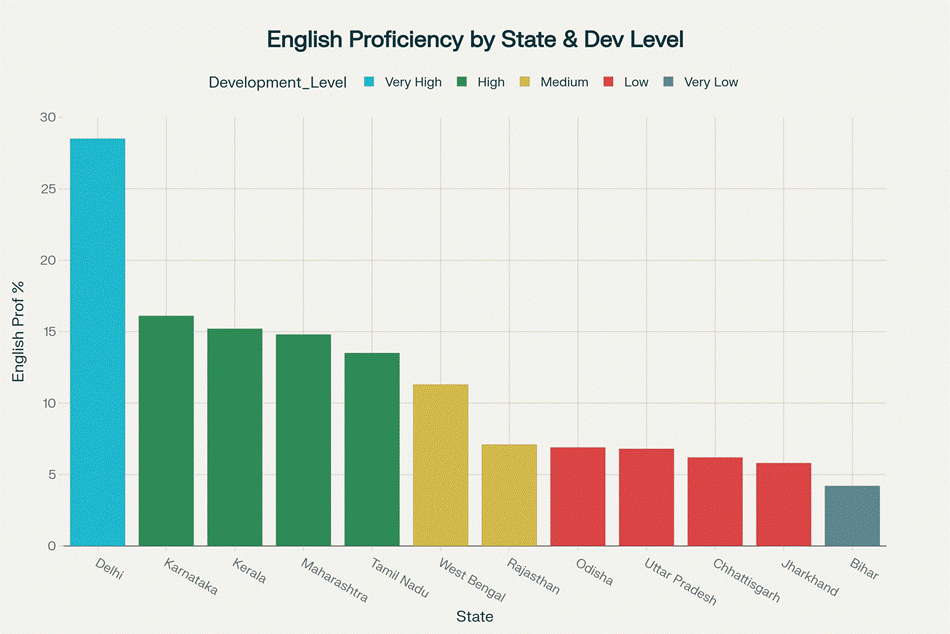
English Proficiency and Economic Development Across Indian States: The Linguistic Divide
The empowerment potential of English becomes particularly evident in educational contexts. Studies from Rajasthan demonstrate how English language skills can serve as “an exceptionally brilliant tool for empowerment in the present globalized world”. English provides downtrodden and marginalized communities with access to higher education, international scholarship opportunities, and global knowledge networks that remain inaccessible through regional languages alone. [1][2]
Kancha Ilaiah’s advocacy for English medium instruction in government schools reflects this pragmatic approach to linguistic empowerment. His successful campaign to introduce English instruction from sixth grade in 6,500 schools in Andhra Pradesh demonstrates the practical impact of English access on downtrodden and marginalized communities. Ilaiah’s argument that English serves as a “vocational skill” for disadvantaged groups acknowledges the reality that linguistic capital directly translates into economic and social mobility in contemporary India. [2]
The geographic flexibility that English proficiency provides cannot be understated. In a country where inter-state migration is common, English serves as a lingua franca that enables greater labor mobility and economic opportunities. This mobility becomes particularly crucial for downtrodden and marginalized communities seeking to escape localized systems of oppression and discrimination. [1][2]
Digital Revolution: Social Media as a Platform for Global Advocacy
The digital revolution has fundamentally transformed how downtrodden and marginalized communities in India engage in advocacy and social mobilization. Social media platforms have emerged as crucial spaces where historically silenced voices can bypass traditional media gatekeepers and directly engage with national and international audiences. [6][21][7][5][8]
The power of digital platforms in amplifying downtrodden and marginalized voices becomes evident through movements like #DalitLivesMatter, #MeTooIndia, and various caste-based advocacy campaigns. These movements demonstrate how English-language social media content enables Indian downtrodden and marginalized communities to connect their local struggles with global human rights discourses, creating what scholars term “transnational advocacy networks”. [7][22][23][24][5][8][9][6]
Downtrodden (Dalit) activists have been particularly innovative in leveraging digital platforms to challenge oppressive narratives and build solidarity networks. Research examining Downtrodden (Dalit) digital activism reveals how online platforms enable activists to “circumvent the constraints imposed by caste-biased traditional media” while building “strong solidarity networks” that transcend geographical and linguistic boundaries. The strategic use of hashtags like #DalitLivesMatter creates direct connections with international movements like #BlackLivesMatter, fostering cross-cultural solidarity and mutual support. [4][5][8]
The International Dalit Solidarity Network (IDSN) exemplifies how English proficiency enables downtrodden and marginalized communities to engage with global human rights frameworks. Organizations like IDSN work systematically to internationalize caste-based discrimination issues by lobbying United Nations bodies, European Union institutions, and international human rights organizations. This internationalization strategy depends fundamentally on English-language communication and documentation that can reach global audiences and policymakers. [5][25][26][27]
Digital storytelling has emerged as a particularly powerful tool for downtrodden and marginalized communities to humanize abstract issues and build empathy among distant audiences. Through multimedia narratives that combine personal testimonies with visual elements, activists can make their struggles “comprehensible and useful to activists and publics who may be geographically and/or socially distant”. A 2022 World Economic Forum survey found that 65% of respondents are more likely to support humanitarian causes after reading personal digital narratives, demonstrating the emotional impact of digital storytelling in fostering empathy and motivating collective action. [28][29][30][22]
Transnational Advocacy Networks and Global Solidarity
The emergence of transnational advocacy networks represents a fundamental shift in how downtrodden and marginalized communities engage with power structures and seek redress for injustices. These networks, defined as actors “bound together by shared values, a common discourse, and dense exchanges of information and services,” enable local struggles to gain international visibility and support. [22][23][24]
English serves as the critical communication medium that enables these networks to function effectively. Research on transnational advocacy demonstrates that successful networks rely on “information politics” – the ability to “move politically usable information quickly and credibly to where it will have the most impact”. This information exchange depends fundamentally on a shared language that can reach diverse international audiences, making English proficiency essential for effective advocacy. [31][22]
The global response to issues like the farmers’ protests in India illustrates how English-language social media campaigns can generate international pressure for policy change. International figures like Rihanna and Greta Thunberg amplified farmers’ messages through English-language tweets, creating unprecedented global attention that domestic movements alone could not have achieved. This international solidarity demonstrates what scholars term “leverage politics” – the ability to “call upon powerful actors to affect a situation where weaker members of a network are unlikely to have influence”. [32][33][34][22]
Case studies of successful transnational advocacy reveal consistent patterns in how English enables downtrodden and marginalized communities to access global support networks. The documentation of human rights violations in English-language reports, the ability to communicate with international media outlets, and the capacity to engage with global civil society organizations all depend on English proficiency. [35][36][37][38]
Organizations like the National Campaign on Dalit Human Rights (NCDHR) have successfully leveraged English-language advocacy to secure international funding, technical assistance, and political support for their domestic campaigns. The ability to participate in international conferences, submit reports to UN bodies, and collaborate with global human rights organizations requires English proficiency that enables meaningful engagement with international advocacy frameworks. [37][39]
Challenges and Digital Divides
Despite the empowerment potential of English and digital platforms, significant challenges constrain downtrodden and marginalized communities’ ability to fully leverage these tools. The digital divide remains a fundamental barrier, with access to internet connectivity, smartphones, and digital literacy varying dramatically across rural and urban areas, gender lines, and socioeconomic strata. [6][7][40]
Research indicates that “the digital divide—where access to the internet is unequal across rural and urban areas, gender, and class—continues to restrict some marginalized groups from fully participating in these digital spaces”. This technological inequality intersects with linguistic barriers to create compound forms of exclusion. Communities lacking both English proficiency and digital access remain doubly downtrodden and marginalized from the opportunities that digital advocacy provides.[7]
Algorithmic bias and content moderation policies present additional challenges for downtrodden and marginalized voices online. Social media platforms’ algorithms “sometimes reflect existing social biases, limiting the reach of downtrodden and marginalized voices”. The experience of Downtrodden (Dalit) activists highlights how “algorithms and content moderation policies sometimes reflect existing social biases,” creating systemic barriers to visibility and engagement. [21][41][6][7]
Government restrictions on digital platforms pose particularly serious threats to downtrodden and marginalized communities’ advocacy efforts. The Indian government’s requests for content takedowns, internet shutdowns during protests, and restrictions on social media accounts directly impact downtrodden and marginalized communities’ ability to organize and communicate. Twitter’s compliance with government requests to restrict accounts of journalists and activists during the farmers’ protests demonstrates how state power can limit digital advocacy spaces. [42][33][43][44]
Online harassment and caste-based abuse constitute significant risks for downtrodden and marginalized activists engaging in digital spaces. Research on Downtrodden (Dalit) digital activism reveals how activists face “state-sanctioned punitive actions, increasing hostility on digital media platforms, and costs to well-being” when participating in online advocacy. These risks can deter participation and limit the effectiveness of digital organizing efforts. [6][7][8]
Educational Imperatives and Institutional Responses
The recognition of English as a tool of empowerment has generated significant debate about educational policy and institutional responses to linguistic inequality. The instrumentality versus identity debate in language policy research reflects tensions between promoting English for socioeconomic mobility and preserving linguistic diversity. [19]
Progressive educators and activists increasingly advocate for English-medium instruction in government schools serving downtrodden and marginalized communities, arguing that denying English access perpetuates educational apartheid. The movement led by Kancha Ilaiah in Andhra Pradesh demonstrates how systematic introduction of English instruction can expand opportunities for downtrodden and marginalized students while maintaining cultural identity. [2][45][3]
However, the implementation of English-medium education faces significant challenges related to teacher training, resource allocation, and pedagogical approaches. Many government schools lack qualified English teachers, appropriate textbooks, and supportive learning environments necessary for effective English instruction. These implementation gaps can exacerbate rather than reduce educational inequalities if not addressed systematically. [45][16]
The caste-based discrimination that persists within educational institutions presents additional barriers to downtrodden and marginalized students’ success. Even when English instruction is available, Downtrodden (Dalit) and Adivasi students often face harassment, segregation, and exclusion that undermines their educational progress. The tragic cases of Rohith Vemula and Payal Tadvi illustrate how institutional discrimination can affect even academically successful students from downtrodden and marginalized communities. [46][47][8][45]
Innovative approaches to English language education increasingly emphasize digital literacy alongside linguistic competence. Programs that combine English instruction with digital skills training enable downtrodden and marginalized communities to access both linguistic capital and technological tools necessary for contemporary advocacy and employment. [48][49]
Global Comparative Perspectives
International comparisons reveal how linguistic policies and digital access intersect with social justice outcomes across diverse contexts. Research on language-based discrimination in multilingual organizations demonstrates consistent patterns where linguistic minorities face systematic disadvantages in employment, advancement, and organizational participation. [38][50][51]
The success of language equity advocacy in other contexts provides instructive models for Indian downtrodden and marginalized communities. The case study of the Refugee and Immigrant Collaborative for Empowerment (RICE) in California demonstrates how multilingual coalitions can effectively advocate for language access rights through systematic data collection, strategic advocacy, and cross-sector collaboration.[38]
RICE’s approach of framing issues around language equity rather than ethnic disparities proved particularly effective for building bridges across diverse communities. This model suggests that English advocacy in India could benefit from similar coalition-building approaches that unite different downtrodden and marginalized communities around shared linguistic access goals rather than focusing solely on caste or tribal identity. [38]
International grassroots movements demonstrate the power of digital-first organizing strategies that transcend linguistic and geographical boundaries. The success of movements like Momentum in the UK and Bernie Sanders’ campaign in the United States illustrates how digital tools can enable resource-constrained grassroots organizations to achieve significant political impact through strategic use of technology and social media. [49][52][53]
Policy Implications and Institutional Reforms
The evidence for English as a tool of empowerment suggests several critical policy directions for educational institutions, government agencies, and civil society organizations. First, systematic expansion of quality English instruction in government schools serving marginalized communities represents a fundamental equity imperative. This expansion must be accompanied by adequate teacher training, resource allocation, and institutional support to ensure effective implementation. [1][2][45]
Second, digital literacy programs that combine English language instruction with technological skills can maximize the empowerment potential of both linguistic and digital capital. These programs should prioritize practical skills necessary for online advocacy, digital storytelling, and transnational networking. [48][49]
Third, institutional responses to linguistic discrimination require systematic attention to bias in algorithms, content moderation policies, and platform governance structures. Social media companies and technology platforms must develop more sophisticated approaches to supporting downtrodden and marginalized voices while preventing harassment and abuse. [21][7][44]
Fourth, government policies that restrict digital advocacy spaces undermine democratic participation and human rights. Legal frameworks that protect digital rights and prevent arbitrary restrictions on online organizing are essential for maintaining the democratic potential of digital platforms. [42][33][43]
Future Directions and Emerging Opportunities
The convergence of linguistic empowerment and digital advocacy creates unprecedented opportunities for downtrodden and marginalized communities to challenge oppressive systems and build alternative power structures. Emerging technologies like machine translation and voice recognition may eventually reduce some linguistic barriers, but English proficiency is likely to remain crucial for international advocacy and cross-cultural communication. [28][17][54][5][8]
The development of more sophisticated digital storytelling tools and platforms specifically designed for downtrodden and marginalized communities could enhance their advocacy capabilities. These tools should prioritize accessibility, security, and cultural sensitivity while enabling effective communication with diverse audiences. [29][30][28]
International funding and support for downtrodden and marginalized communities’ digital advocacy efforts could significantly expand their impact and sustainability. Donor organizations and international NGOs increasingly recognize the importance of supporting grassroots digital organizing, but more systematic approaches to capacity building and resource allocation are needed. [36][37][38]
Conclusion
The evidence overwhelmingly supports the proposition that English can serve as a powerful bridge for India’s downtrodden and marginalized communities to connect with global networks, transcend local oppression, and build international solidarity for their struggles. Rather than representing cultural imperialism, strategic adoption of English enables marginalized communities to access tools of empowerment that remain unavailable through regional languages alone. [1][2][19][3][6][7][5][8]
The digital revolution has amplified this empowerment potential by providing platforms where English-language advocacy can reach global audiences and generate international pressure for social change. Successful movements like #DalitLivesMatter demonstrate how local struggles can gain international visibility and support through strategic use of English and digital platforms. [6][21][28][7][5][8]
However, realizing this potential requires systematic attention to digital divides, institutional discrimination, and policy barriers that constrain downtrodden and marginalized communities’ access to both linguistic capital and technological tools. Educational institutions, government agencies, and civil society organizations must work collaboratively to expand access while addressing the structural inequalities that perpetuate exclusion. [45][7][40][6]
The transformation of English from a symbol of colonial domination into a tool of liberation represents one of the most significant shifts in contemporary Indian social movements. As downtrodden and marginalized communities increasingly embrace this strategic approach to linguistic empowerment, their voices grow stronger, their networks expand, and their capacity to challenge injustice increases exponentially. In an interconnected world where language shapes access to power, English emerges not as cultural betrayal but as practical necessity for those who refuse to remain silent in the face of oppression. [2][3][20][4][5][8][1]
The future of social justice in India may well depend on how effectively downtrodden and marginalized communities can leverage this linguistic bridge to build the transnational solidarity networks necessary for challenging entrenched systems of inequality and creating more just and inclusive societies. The evidence suggests that they are already well on their way to achieving precisely this transformation.
- https://www.ijrar.org/papers/IJRAR19D4232.pdf
- https://indiaemployerforum.org/world-of-work/english-education-for-labour-mobility/
- https://www.roundtableindia.co.in/english-as-a-tool-of-liberation-for-dalits-in-india/
- https://hir.harvard.edu/dalit-and-black-solidarity-interview-with-suraj-yengde/
- https://doivup.upol.cz/pdfs/doi/9900/05/9200.pdf
- https://papers.ssrn.com/sol3/papers.cfm?abstract_id=5112563
- https://papers.ssrn.com/sol3/Delivery.cfm/5112563.pdf?abstractid=5112563&mirid=1
- https://research-portal.st-andrews.ac.uk/files/315908302/Dalit_digital_activism_paper-JCASP-accepted.pdf
- https://journalism.university/digital-media/digital-empowerment-internet-elevating-marginalised/
- https://www.questjournals.org/jrhss/papers/vol13-issue1/1301228245.pdf
- https://rupkatha.com/V12/n5/rioc1s24n2.pdf
- https://ijcrt.org/papers/IJCRT1135993.pdf
- https://www.diva-portal.org/smash/get/diva2:1623628/FULLTEXT01.pdf
- https://www.purplepencilproject.com/language-politics-in-india/
- https://carnegieendowment.org/2019/03/14/india-s-emerging-crisis-of-representation-pub-78588
- https://educationforallinindia.com/the-three-language-formula-in-india-evolution-implementation-and-contestation/
- https://www.linkedin.com/pulse/one-language-many-voices-analyzing-debate-over-common-nikhil-c-laby-ajcmc
- https://www.linkedin.com/pulse/bridging-linguistic-divide-empowering-india-through-english-kumar
- https://www.cambridge.org/core/journals/english-today/article/english-as-a-facilitator-of-social-mobility-in-india/6EFC612E30DE842BBA63306D5CDF14E2
- https://indianexpress.com/article/opinion/columns/dalits-english-language-emancipation-9896351/
- https://www.linkedin.com/pulse/understanding-dynamics-marginalized-communities-social-virginia-arivu-lmblf
- https://courses.washington.edu/pbaf531/KeckSikkink.pdf
- http://ealai-archive.c.u-tokyo.ac.jp/ja/images/Keck, Activists Beyond Borders.pdf
- https://digitalcommons.du.edu/cgi/viewcontent.cgi?article=1009&context=advancedintlstudies
- https://dsnuk.org/what-we-do/about-us/
- https://idsn.org
- https://idsn.org/countries/
- https://www.iosrjournals.org/iosr-jhss/papers/Vol.29-Issue8/Ser-1/M2908017479.pdf
- https://collaborations.miami.edu/articles/10.33596/coll.88
- https://journals.sagepub.com/doi/10.1177/16094069251352061?int.sj-full-text.similar-articles.1
- https://www.scribd.com/presentation/427506718/Transnational-advocacy-networks-pptx-pptx
- https://www.dpublication.com/wp-content/uploads/2021/03/16-225.pdf
- https://www.businessinsider.com/how-twitters-india-standoff-dragged-in-journalists-and-activists-2021-2
- https://apcoworldwide.com/blog/navigating-social-justice-activism-in-the-age-of-social-media/
- https://www.ihra.co.in/ngo
- https://f4ff.global/assets/2025/06/5_Reimagining-Dalit-Feminist-Led-Caste-Equity-in-South-Asia-Pathways-for-Sustained-Funding-Movement-Building.pdf
- https://internationalbudget.org/wp-content/uploads/IBP-NCDHR-Impact-Story.pdf
- https://pmc.ncbi.nlm.nih.gov/articles/PMC10616868/
- https://www.ijrar.org/papers/IJRAR19D5385.pdf
- https://www.genderit.org/feminist-talk/global-south-online-solidarity-movements-whose-online-solidarity-movements-are-we
- https://sabrangindia.in/article/twitters-tokenism-when-it-comes-human-rights-surprising/
- https://www.amnesty.org/en/location/asia-and-the-pacific/south-asia/india/report-india/
- https://www.vox.com/recode/22410931/india-pandemic-facebook-twitter-free-speech-modi-covid-19-censorship-free-speech-takedown
- https://thewire.in/rights/meta-second-human-rights-report-india-issues-no-plan?mid_related_new
- https://www.roundtableindia.co.in/indias-silent-walls-education-caste-and-the-cost-of-inequality/
- https://article-14.com/post/-caste-on-campus-dalit-students-face-exclusion-alienation-in-india-s-higher-education-institutions–642b88a7149fe
- https://cjp.org.in/everyday-atrocity-mapping-the-normalisation-of-violence-against-dalits-and-adivasis-in-2025/
- https://rising.globalvoices.org/language-digital-activism-workshops-for-india/
- https://www.eu-bold.com/grassroots-innovation-for-linguistic-advocacy/
- https://academic.oup.com/heapro/article/32/4/636/2951000
- https://www.sciencedirect.com/science/article/pii/S1090951624000026
- https://callhub.io/blog/advocacy/grassroots-movements-examples/
- https://commonslibrary.org/grassroots-led-campaigns-report/
- https://library.fiveable.me/key-terms/introduction-international-relations/transnational-advocacy-networks
- https://www.reddit.com/r/india/comments/1jaj4h6/language_and_caste_clashes_in_india_whats_really/
- https://www.area-studies.ox.ac.uk/article/defending-digital-liberties-indias-emerging-activism
- https://clix.tiss.edu/wp-content/uploads/2017/03/Dialects-and-Discrimination-of-Dalits-in-India.pdf
- https://nhrf.no/event/digital-activism-for-equality-opposing-casteism-in-todays-india
- https://journals.sagepub.com/doi/10.1177/2455328X241302583?int.sj-abstract.similar-articles.4
- https://en.wikipedia.org/wiki/Internet_activism
- https://socialwelfare.vikaspedia.in/viewcontent/social-welfare/women-and-child-development/child-development-1/resources-on-safe-childhood-for-panchayat-members/caste-discrimination?lgn=en
- https://www.aljazeera.com/opinions/2014/1/6/indias-era-of-digital-activism
- https://onlinelibrary.wiley.com/doi/10.1111/josl.12567
- https://cjp.org.in/caste-discrimination-and-related-laws-in-india/
- https://rru.ac.in/social-media-activism-and-national-security-potential-threat-or-a-gimmick/
- https://pmc.ncbi.nlm.nih.gov/articles/PMC10953837/
- https://idsn.org/wp-content/uploads/2019/05/India-Discrimination-Policy-Brief-Shah-Lerche-Srivastava-2018.pdf
- https://progressive.international/members/79d51396-221d-40b0-90bc-eb8903f470b8-national-alliance-of-peoples-movements/en/
- https://grassrootsjusticenetwork.org/connect/organization/inernational-human-rights-community-india/
- https://wagingnonviolence.org/rs/2020/07/mutual-aid-india-covid19/
- https://www.ihra.co.in/index.php
- https://www.cec-india.org/libpdf/1439729996Dalit,Adivasi,Women,andMigrants.pdf
- https://www.humanrightsinitiative.org
- https://dalitadivasitext.wordpress.com/open-borders/
- https://www.ihroindia.org
- https://en.wikipedia.org/wiki/Solidarity_Youth_Movement
- https://www.humanrightscareers.com/magazine/international-human-rights-organizations/
- https://oberlinreview.org/34640/opinions/global-solidarity-must-be-coupled-with-understanding-of-difference/
- https://papers.ssrn.com/sol3/Delivery.cfm/5035035.pdf?abstractid=5035035
- https://cjrjournal.in/Uploads/Files/CJR17J_7. J.K Panda.pdf
- https://citejournal.org/volume-19/issue-4-19/english-language-arts/educate-empower-advocate-amplifying-marginalized-voices-in-a-digital-society
- https://jcla.in/wp-content/uploads/2020/10/JCLA-42.3-Winter-2019-Cemile-Sahoglu.pdf
- https://blindwelfaresociety.in/blogs/using-social-media-for-advocacy-amplifying-the-voices-of-the-visually-impaired
- https://files.eric.ed.gov/fulltext/EJ1456191.pdf
- https://bibliomed.org/fulltextpdf.php?mno=178010
- https://blogs.lse.ac.uk/lsereviewofbooks/2018/12/13/feature-essay-language-movements-and-democracy-in-india-by-mithilesh-kumar-jha/
- http://www.isid.ac.in/~acegd/acegd2023/papers/AdvaithJayakumar.pdf
- https://onlinelibrary.wiley.com/doi/10.1111/ajps.12728
- https://scholar.harvard.edu/files/ksikkink/files/global_prescriptions_sikkink.pdf
- https://wc2025.ipsa.org/wc/panel/inclusive-democracy-india
- https://academic.oup.com/book/43122/chapter/361963344
- https://www.granthaalayahpublication.org/Arts-Journal/ShodhKosh/article/view/2187
- https://journals.openedition.org/cp/422?lang=en
- https://www.unesco.org/en/articles/handbook-media-advocacy-marginalized-groups-presented-stakeholders-china
- https://2023.workingdraftmagazine.com/2023/03/31/how-to-touch-grass-in-the-digital-age/
- https://dalitsolidarity.org
- https://www.europe-solidaire.org/spip.php?article34950