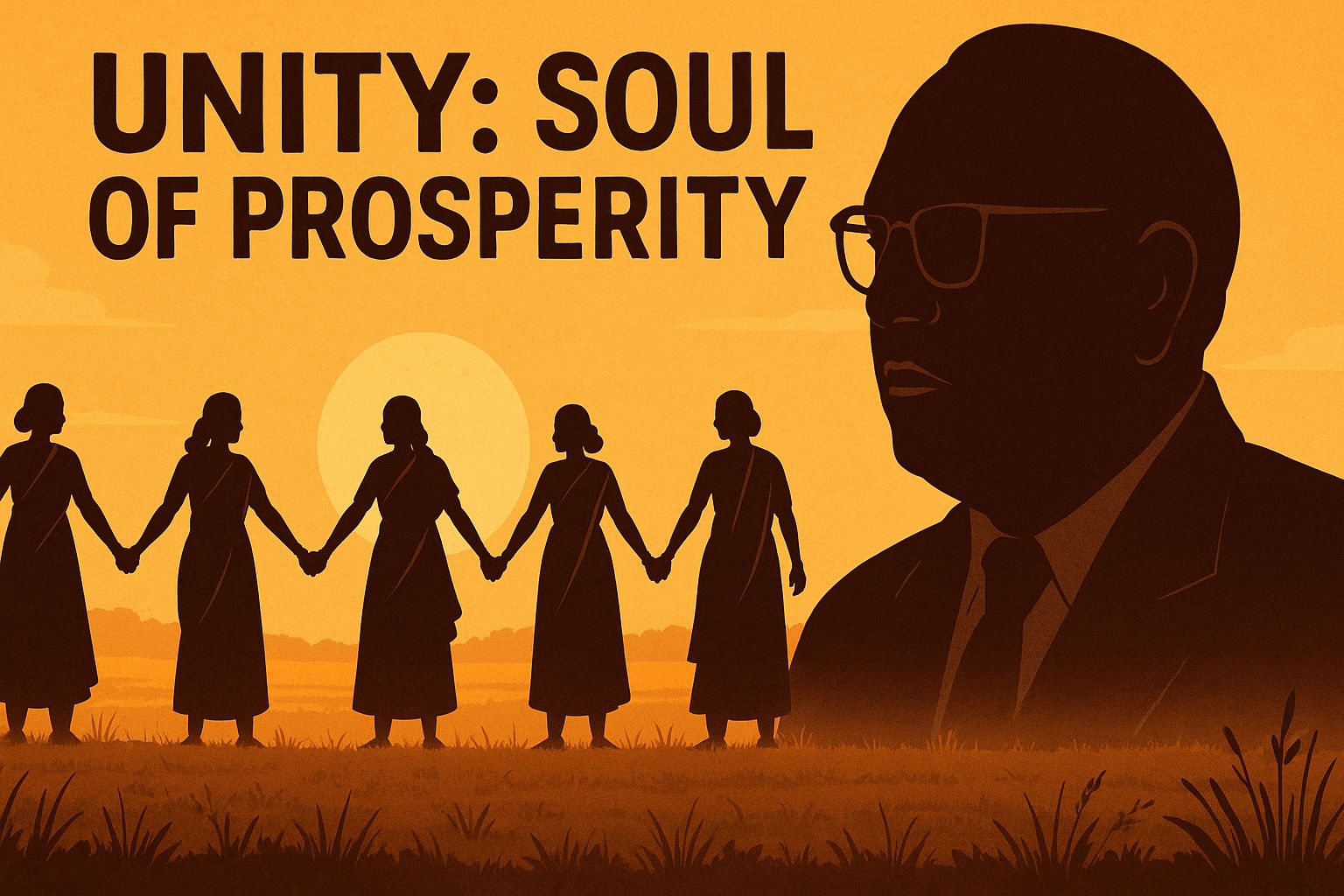
Unity: The Soul of Prosperity for Downtrodden Communities
Downtrodden (Dalits) in India, comprising 16.6% of the nation’s population or approximately 200-250 million individuals, continue to face systemic barriers rooted in centuries of caste-based discrimination. Despite constitutional protections and progressive legislation, the community remains marginalized in key economic indicators—owning only 2.2% of land, comprising just 6.5% of formal sector employment, and having limited access to financial services with only 10.7% of households accessing bank loans. However, emerging evidence from across India demonstrates that when Downtrodden (Dalits) unite under shared purpose and collective identity, they unlock unprecedented potential for economic prosperity, social stability, and generational transformation. Unity emerges not merely as an aspirational ideal but as the most powerful catalyst for dismantling structural barriers and creating sustainable pathways to empowerment. [1][2]
Dr. Ambedkar’s Vision: The Philosophical Foundation of Unity
Dr. B.R. Ambedkar’s transformative philosophy centered on a fundamental truth: “Educate, Agitate, Organize.” This trinity of empowerment recognized that individual efforts, while admirable, could never match the transformative power of collective action. Ambedkar’s vision extended far beyond political representation; he understood that true liberation required Downtrodden (Dalits) to band together as a unified force capable of challenging entrenched social hierarchies and economic exploitation. His conversion to Buddhism in 1956, accompanied by hundreds of thousands of followers, demonstrated the power of collective religious and social transformation—creating a movement that transcended individual choice to become a statement of collective dignity and resistance. [3][4]
Ambedkar’s constitutional contributions through the Scheduled Castes and Scheduled Tribes (Prevention of Atrocities) Act, 1989, and Article 17’s abolition of untouchability, established the legal framework for unity by ensuring that collective resistance against discrimination would have institutional backing. His emphasis on education as liberation was not merely about individual advancement but about creating an informed community capable of collective decision-making and unified action against oppression. The reservations in education and employment that Ambedkar championed were designed to build a critical mass of empowered individuals who could, in turn, lift their entire community through unified efforts. [4][5][6][7]
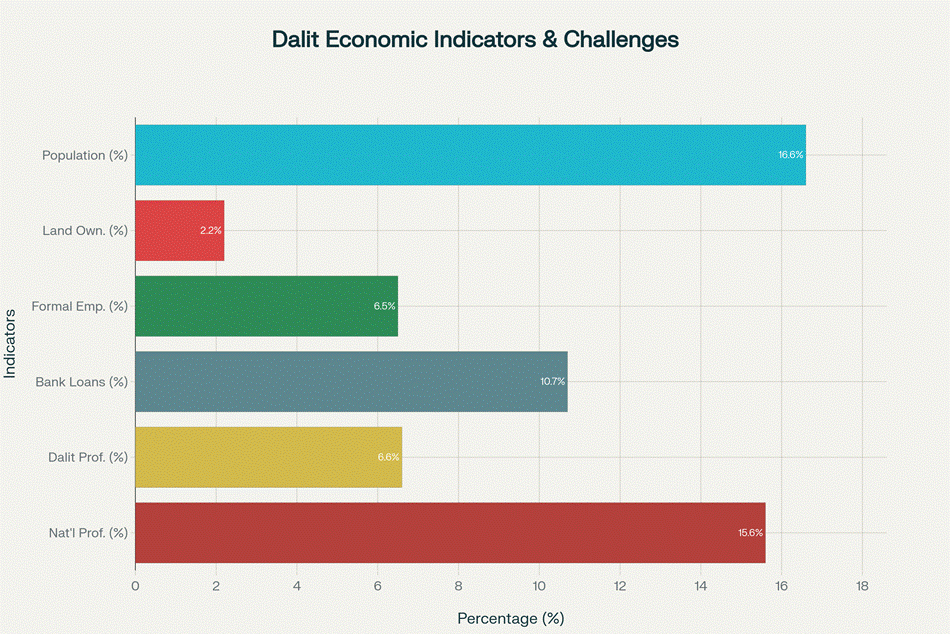
Key economic indicators highlighting the challenges faced by downtrodden (Dalit) communities in India, showing significant gaps in land ownership, employment access, and financial inclusion despite constituting 16.6% of the population.
Economic Prosperity Through Collective Action: Evidence from the Ground
Agricultural Cooperatives and Collective Farming
The most compelling evidence of unity’s economic power comes from agricultural cooperatives across India. In Punjab, 55 villages have successfully implemented collective farming models specifically benefiting downtrodden (Dalit) communities, with the movement gaining strength through the Zameen Prapti Sangharsh Committee (ZPSC). These collectives have transformed how Downtrodden (Dalits) access and utilize land—traditionally the most significant barrier to economic advancement. In Balad Kalan village, a collective of 133 downtrodden (Dalit) families now cultivates 120 acres of reserved common agricultural land through an 11-member village committee. The economic impact is substantial: after deducting input costs, profits are divided equally among all families, ensuring that the benefits of collective farming reach every household. [8]
The Pallur Dalit Women’s Collective in Tamil Nadu demonstrates how unity enables land reclamation and sustainable agriculture. Starting with 40 women in 2016, the movement has expanded to 80 women working on 15 farms across Vellore district, having successfully reclaimed 7.5 acres of illegally occupied land. These women not only cleared rocky, thorny terrain but also established seed banks, implemented organic farming techniques, and created sustainable irrigation systems. Their collective approach enables them to share harvest equally, ensuring food security for families that had never experienced it before. [9][10]
Microfinance and Self-Help Groups: Building Financial Resilience
Microfinance initiatives demonstrate how collective financial action creates opportunities impossible through individual efforts. In Tamil Nadu, downtrodden (Dalit) women’s self-help groups have achieved remarkable success rates, with 99% loan repayment compliance and systematic capacity building. The Uttar Pradesh government’s initiative to induct 33,507 Scheduled Caste and Scheduled Tribe members into Primary Agricultural Cooperative Societies (PACS) by paying their membership fees illustrates how collective financial participation can rapidly scale economic empowerment. Each member receives loans proportionate to their shares, but more importantly, they gain voting rights in cooperative elections—creating pathways for political empowerment alongside economic advancement. [11][12]
Research from Rajasthan reveals that downtrodden (Dalit) entrepreneurs, when supported by collective networks and institutional backing, contribute approximately 0.97% to the state’s GDP, with an average annual contribution of ₹571,500 per entrepreneur. This contribution is ten times the per capita income of Rajasthan, demonstrating that when Downtrodden (Dalits) access capital and markets collectively, their economic impact far exceeds expectations. [13]
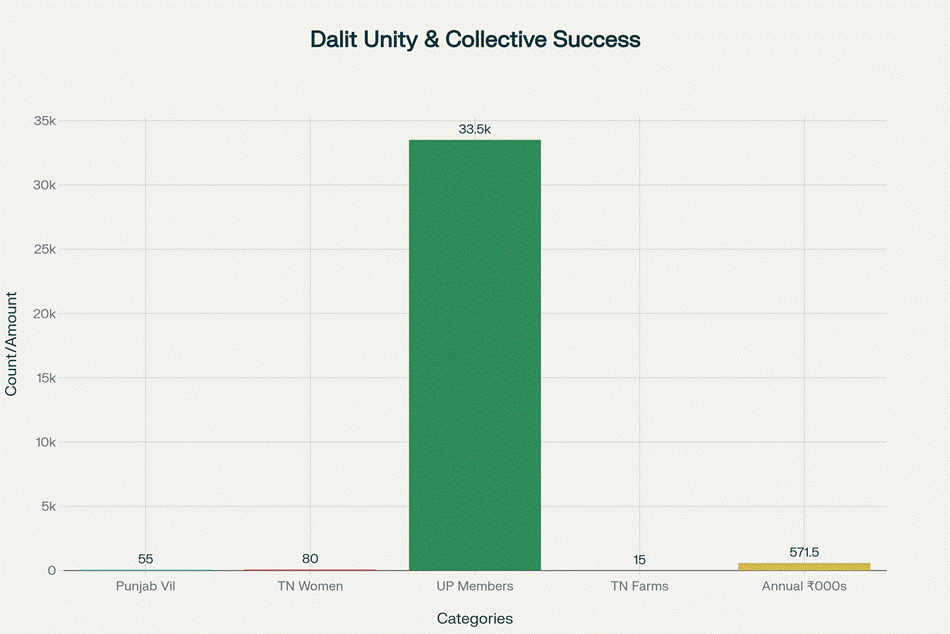
Success stories demonstrating the positive impact of unity and collective action in downtrodden (Dalit) empowerment across different Indian states, showing the tangible benefits of community solidarity.
Social Prosperity and Cultural Empowerment: Building Collective Identity
Unity nurtures cultural pride and social cohesion that extends far beyond economic metrics. The Kerala government’s allocation of ₹1,25,471.92 crore under the Scheduled Castes Sub-Plan (SCSP) in 2023-24 demonstrates how collective political mobilization translates into substantial resource allocation for community development. However, the true power of unity lies in how it transforms social relationships and cultural expressions within downtrodden (Dalit) communities. [14]
In Telangana, the Dalit Bandhu Scheme, providing one-time capital grants of ₹10 lakhs to families, has been most successful when recipients form support networks and collective enterprises. The scheme’s emphasis on asset ownership—enabling families to purchase land, livestock, and productive assets—creates generational wealth that extends beyond individual families to strengthen entire communities. Studies show that 55% of respondents strongly agreed that such collective financial empowerment improved their overall quality of life, with benefits extending to education, healthcare access, and social mobility. [15]
Cultural empowerment through unity manifests in collective celebrations, shared storytelling, and community-led festivals that reinforce downtrodden (Dalit) identity and pride. The Tamil Nadu Dalit Women’s Movement has successfully organized bullock cart campaigns (yatras) to collect traditional seeds, preserving agricultural heritage while building community bonds. These cultural activities serve multiple purposes: they maintain traditional knowledge, create platforms for leadership development, and strengthen social networks that prove crucial during economic or social crises.[16]
The Cost of Disunity: Understanding Systemic Vulnerabilities
National Crime Records Bureau data reveals the stark consequences when downtrodden (Dalit) communities lack unified protection mechanisms. From 2014 to 2022, 4,09,797 incidents of crimes were recorded against Downtrodden (Dalits) under the SC/ST Prevention of Atrocities Act, with crimes against downtrodden (Dalit) women and girls constituting 15.32% (62,819 incidents) of total crimes. The 78% increase in violence against downtrodden (Dalit) women and girls during this period—far exceeding the 43% increase in overall violence against Downtrodden (Dalits)—demonstrates how vulnerability intensifies when communities lack collective defense mechanisms. [2]
Economic fragmentation perpetuates cycles of poverty and exploitation. Despite constitutional protections, only 18% of downtrodden (Dalit) households have access to formal credit compared to 33% of non-Dalit households. This credit gap forces many Downtrodden (Dalits) to rely on informal moneylenders who charge exploitative interest rates, creating debt traps that individual families cannot escape alone. The 2005 Economic Census reveals that Downtrodden (Dalits) own just 9.8% of enterprises despite constituting 16.4% of the population, indicating systematic exclusion from entrepreneurial opportunities. [1][17]
Political fragmentation weakens advocacy and policy influence. When downtrodden (Dalit)political energies scatter across multiple parties and competing interests, the community loses collective bargaining power in policy formulation. The success of unified movements like those in Punjab’s collective farming initiatives or Tamil Nadu’s land rights campaigns demonstrates that coordinated political action yields far superior results than fragmented individual efforts. [8][16]
Pathways to Forge Lasting Unity: Institutional Frameworks for Collective Action
Community Councils and Governance Structures
Establishing representative community councils creates institutional frameworks for sustained unity. The Tamil Nadu model, where downtrodden (Dalit) women formed the Grameen Makhila Abiviruthi Sangatna (Rural Women Farmers’ Development Collective), demonstrates how formal organizational structures can channel collective energy into sustained empowerment. These councils must represent diverse interests—different neighborhoods, occupational groups, age demographics, and gender perspectives—to ensure that unity encompasses rather than excludes community diversity. [16]
Regular accountability mechanisms, including monthly meetings, transparent financial reporting, and democratic decision-making processes, prevent the fragmentation that often undermines collective movements. The success of cooperative societies in Uttar Pradesh, where democratic elections provide pathways for leadership development, illustrates how formal governance structures can nurture unity while building individual capacities. [11]
Shared Economic Platforms and Cooperative Enterprises
Digital and physical marketplaces dedicated to downtrodden (Dalit)-owned businesses foster robust economic ecosystems that deepen community solidarity. For example, the “Dalit Bazaar” initiative in Maharashtra supports over 120 downtrodden (Dalit) artisans and entrepreneurs by providing micro-grants of ₹8,000–₹20,000 alongside digital-marketing and e-commerce training. This platform features both a monthly pop-up market in Pune and an online storefront, enabling participants to reach urban and global customers. Crucially, a portion of every sale is funneled back into a community development fund—financing skill-building workshops, healthcare camps, and the construction of a local resource center—thereby generating multiplier effects that uplift the entire community.
Cooperative enterprises in agriculture, crafts, retail, and services leverage pooled resources to achieve economies of scale impossible for individual entrepreneurs. The success of Amul, which transformed individual dairy farmers into a ₹53,000 crore cooperative network benefiting 3.6 million farmer families, provides a template for how downtrodden (Dalit) communities can build similar collective enterprises.[19]
Educational Alliances and Capacity Building
Scholarship funds and mentorship networks create intergenerational pathways for community advancement. The Central government’s allocation of ₹500 crore for Pre-Matric Scholarships and ₹6,360 crore for Post-Matric Scholarships for Scheduled Castes in 2024-25 demonstrates the scale of investment required for educational empowerment. However, individual scholarships achieve maximum impact when supported by community mentorship networks that guide students, provide career counseling, and create role models within the community.[6]
Educational alliances must extend beyond formal schooling to include vocational training, entrepreneurship development, and digital literacy programs. The Pradhan Mantri Kaushal Vikas Yojana’s success in providing market-relevant skills to downtrodden (Dalit) youth becomes more effective when combined with community-based placement networks and peer support systems that reduce dropout rates and improve employment outcomes.[15]
Cultural Coalitions and Identity Reinforcement
Organized cultural activities strengthen social bonds while celebrating downtrodden (Dalit) achievements and heritage. The annual Manusmriti Burning Day (December 25), commemorating Dr. Ambedkar’s rejection of caste-based scriptures demonstrates how collective cultural expressions can reinforce unity while making political statements. Art exhibitions, storytelling sessions, music festivals, and literary gatherings create platforms for intergenerational knowledge transfer while nurturing pride in downtrodden (Dalit) identity and accomplishments. [4]
Cultural coalitions must balance traditional heritage with contemporary aspirations, ensuring that cultural activities inspire rather than constrain individual growth. The success of collective farming initiatives that incorporate traditional seed preservation with modern agricultural techniques illustrates how cultural preservation can enhance rather than hinder economic advancement. [16][10]
Legal Defense Funds and Collective Protection
Communal legal aid pools ensure swift response to caste-based violence and systematic legal support for community members. The SC/ST Prevention of Atrocities Act’s provisions for legal aid, travel expenses for witnesses, and rehabilitation support become more effective when administered through community-controlled legal defense funds rather than purely governmental mechanisms. These funds can ensure that legal representation is culturally sensitive, community-accountable, and strategically coordinated across multiple cases to establish favorable legal precedents.[5][20]
Legal defense funds must also engage in preventive work—community legal education, rights awareness programs, and early intervention in potential conflict situations. The establishment of village-level legal aid committees, trained in recognizing and responding to discrimination, creates early warning systems that can prevent individual incidents from escalating into community-wide crises.
Contemporary Challenges and Adaptive Strategies
Climate change and environmental degradation pose new challenges requiring collective responses. downtrodden (Dalit) communities, often concentrated in flood-prone areas or regions with degraded agricultural land, are disproportionately affected by extreme weather events. Collective farming initiatives that incorporate climate-resilient crop varieties, water conservation techniques, and renewable energy systems provide models for how unity can address contemporary challenges while building economic resilience.[21]
Digital transformation creates both opportunities and risks for downtrodden (Dalit) unity. While digital platforms can connect geographically dispersed community members and create new economic opportunities, they also risk creating digital divides that fragment communities. Collective digital literacy programs, community-controlled digital platforms, and shared technology resources ensure that digital transformation strengthens rather than weakens community bonds.
Migration and urbanization challenge traditional community structures. As Downtrodden (Dalits) migrate to urban centers for employment and education, maintaining community connections requires innovative approaches. Urban downtrodden (Dalit) professional networks, migrant worker cooperatives, and digital platforms for community engagement create new forms of unity adapted to contemporary mobility patterns.
Government Policy Integration and Community Autonomy
The Scheduled Caste Sub-Plan (SCSP) allocation of ₹1,68,478.38 crore for 2025-26 represents massive public investment in downtrodden (Dalit) empowerment. However, research by the National Campaign on Dalit Human Rights reveals that only 18% of SCSP allocations genuinely benefit SC communities, with the majority going to general schemes with minimal direct impact. Unified downtrodden (Dalit) advocacy can ensure that these substantial public investments translate into tangible community benefits rather than bureaucratic expenditures. [6]
Community-controlled implementation mechanisms can improve the effectiveness of government schemes. The success of cooperative societies in channeling government resources through community institutions rather than purely bureaucratic channels demonstrates how unity can enhance policy implementation while maintaining community autonomy. When downtrodden (Dalit) communities collectively engage with government programs, they can negotiate better terms, ensure culturally appropriate implementation, and maintain democratic oversight of public resources. [11][19]
Measuring Success: Indicators of Unified Prosperity
Economic indicators must capture collective as well as individual advancement. Traditional metrics like per capita income or individual asset ownership provide incomplete pictures of community prosperity. Collective metrics—such as community-owned assets, cooperative enterprise revenue, shared infrastructure development, and collective savings rates—better reflect how unity contributes to prosperity.
Social indicators should measure community cohesion, leadership development, and collective efficacy. The number of community-trained leaders, participation rates in collective decision-making, success rates in collective conflict resolution, and community response capacity during crises provide insights into the strength and sustainability of unity.
Cultural indicators assess identity pride, intergenerational knowledge transfer, and creative expression within the community. The frequency and quality of community cultural events, preservation and innovation in traditional practices, and community control over cultural narratives indicate whether unity enhances rather than constrains individual cultural development.
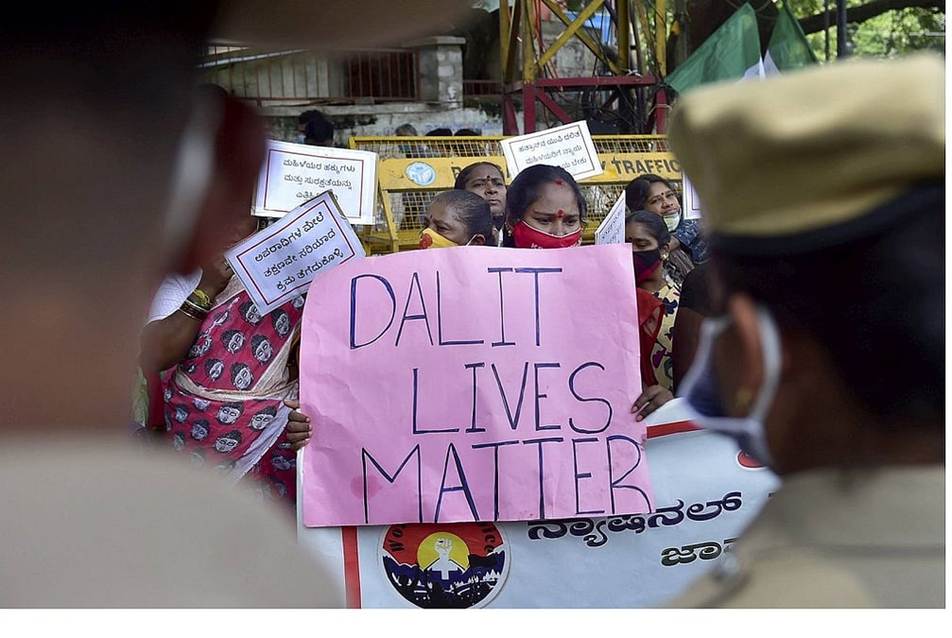
Protesters united under the banner “Dalit Lives Matter,” demonstrating collective strength in a downtrodden (Dalit) social justice march.
Conclusion: Unity as Transformative Force
The evidence from across India—from Punjab’s collective farming villages to Tamil Nadu’s women’s agricultural cooperatives, from Rajasthan’s entrepreneurial networks to Telangana’s capital grant programs—demonstrates conclusively that unity is not merely beneficial but essential for Dalit prosperity. When Downtrodden (Dalits) organize collectively, they transform from vulnerable individuals into powerful communities capable of negotiating better economic terms, providing mutual protection against violence and discrimination, and creating sustainable pathways for generational advancement. [13][11][8][16][10]
The path forward requires intentional investment in institutional frameworks that nurture and sustain unity while respecting individual autonomy and diversity within downtrodden (Dalit) communities. This means creating community councils with democratic accountability, establishing cooperative economic platforms that reinvest profits into community development, building educational and cultural networks that strengthen collective identity, and maintaining legal defense systems that protect community members and advance collective rights.
Unity among Downtrodden (Dalits) is not about uniformity or suppression of diversity; it is about harnessing collective strength to create conditions where individual potential can flourish free from caste-based constraints. When 200-250 million Downtrodden (Dalits) unite under shared purpose while maintaining their rich internal diversity, they become an unstoppable force for social transformation that benefits not only their own communities but contributes to India’s broader democratic and economic development.
The choice facing downtrodden (Dalit) communities is clear: remain fragmented and vulnerable to continued exploitation and marginalization or unite and unlock the transformative power that has already begun to reshape rural economies, challenge social hierarchies, and create new possibilities for prosperity and dignity. Unity truly is the soul of prosperity for downtrodden (Dalit) communities—not as an abstract ideal but as a concrete, measurable, and achievable pathway to collective liberation and individual fulfillment.
- https://www.roundtableindia.co.in/socio-economic-overview-of-dalits-in-india/
- https://idsn.org/wp-content/uploads/2025/03/AIDMAM-Factsheet-2024-Violence-again-women-Factsheet.pdf
- https://philosophy.institute/dalit-philosophy/dr-ambedkar-vision-dalit-empowerment/
- https://www.drishtiias.com/blog/celebrating-dr-br-ambedkar-architect-of-social-justice
- https://en.wikipedia.org/wiki/Scheduled_Caste_and_Scheduled_Tribe_(Prevention_of_Atrocities)_Act,_1989
- https://countercurrents.org/2024/11/analysing-budget-2024-25-from-a-peoples-perspective-part-14-budget-for-dalits-adivasis-and-minorities/
- https://nyaaya.org/nyaaya-weekly/protecting-scheduled-castes-against-discrimination-and-atrocities/
- https://scroll.in/article/1073623/how-village-cooperative-societies-are-mobilising-dalit-groups-to-maintain-and-protect-the-commons
- https://www.sredarakkonam.org/post/the-pallur-dalit-women-collective-farm
- https://yourstory.com/socialstory/2024/01/these-dalit-women-claim-unused-lands-and-turn-organic-farmers
- https://indianexpress.com/article/cities/lucknow/maya-banks-on-coops-for-upliftment-of-dalits/
- http://sdgs.un.org/partnerships/empowerment-women-through-self-help-groups
- https://saudijournals.com/media/articles/SJEF_94_63-72.pdf
- https://sansad.in/getFile/loksabhaquestions/annex/185/AU1569_U5LT1S.pdf
- https://www.ijhssi.org/papers/vol9(1)/Series-1/0901019397.pdf
- https://ipam-global.org/stories/maharajapuram-dalit-women-reclaim-land-through-collective-farming/
- https://m.thewire.in/article/economy/why-are-there-so-few-dalit-entrepreneurs-the-problem-of-indias-casted-capitalism
- https://www.worldwidejournals.com/global-journal-for-research-analysis-GJRA/recent_issues_pdf/2016/December/December_2016_1481986090__103.pdf
- https://www.pib.gov.in/PressReleaseIframePage.aspx?PRID=1758124
- https://www.hrw.org/reports/1999/india/India994-13.htm
- https://earthjournalism.net/stories/dalit-female-farmers-in-india-take-on-caste-the-patriarchy-and-climate-change
- https://ijirt.org/publishedpaper/IJIRT173473_PAPER.pdf
- https://www.ijllr.com/post/dr-b-r-ambedkar-s-vision-for-social-justice-empowering-india-s-marginalized-communities
- https://countercurrents.org/2024/10/dr-ambedkars-dream-of-economic-empowerment-of-dalits-is-incomplete/
- https://minorityrights.org/communities/dalits/
- https://ruralindiaonline.org/article/when-dalits-fight-to-reclaim-half-the-sky
- https://www.theajhssr.com/vol-7-iss-4/THEAJHSSR_B0704009015078.pdf
- https://gipe.ac.in/caste-and-enterprise-ownership-emerging-trendsand-diversification-in-india/
- https://ijmer.in/pdf/volume1-issue2-2012/47-52.pdf
- https://www.authorea.com/users/846220/articles/1235100-caste-and-economic-inequality-in-contemporary-india-analyzing-structural-barriers-to-social-mobility
- https://www.cdpp.co.in/articles/dalit-entrepreneurs-exploring-what-it-means-to-run-a-business-as-a-dalit
- https://papers.ssrn.com/sol3/papers.cfm?abstract_id=4411569
- https://www.newsclick.in/punjab-why-dalit-women-farmers-are-giving-organic-cultivation
- https://www.arfjournals.com/image/catalog/Journals Papers/SCDI/2024/No 1 (2024)/1_Baburao Jadhav.pdf
- https://wcd.delhi.gov.in/scert/women-self-help-groups-delhi
- https://elibrary.tucl.edu.np/bitstreams/74a6337c-cba1-4bdb-8596-55014961b33f/download
- https://www.undp.org/sites/g/files/zskgke326/files/migration/in/dalit_minority_fin_exclusion_interface_2010_a_report.pdf
- https://oldisrj.lbp.world/UploadedData/10719.pdf
- https://www.mssrf.org/our-stories/collective-farming-methods-works-wonders-for-tamilnadu-farmers
- https://www.findevgateway.org/sites/default/files/publications/files/mfg-en-case-study-micro-finance-and-empowerment-of-scheduled-caste-women-an-impact-study-of-shgs-in-uttar-pradesh-and-uttaranchal-mar-2005.pdf
- https://www.iosrjournals.org/iosr-jhss/papers/Vol.28-Issue10/Ser-9/I2810095459.pdf
- https://f4ff.global/assets/2025/06/5_Reimagining-Dalit-Feminist-Led-Caste-Equity-in-South-Asia-Pathways-for-Sustained-Funding-Movement-Building.pdf
- https://rnlkwc.ac.in/pdf/anudhyan/volume2/Towards-Empowerment-of-Dalit-Women-A-Brief-Outline-Md-Reja-Ahammad.pdf
- https://cjp.org.in/the-alarming-rise-of-anti-dalit-violence-and-discrimination-in-india-a-series-of-gruesome-incidents-since-july-2024/
- https://digitallibrary.un.org/record/3992668/files/A_HRC_51_NGO_105-EN.pdf
- http://www.ncdhr.org.in/wp-content/uploads/2024/07/Dalit-Adivasi-Budget-Analysi-2024-25-2-2.pdf
- https://blog.ipleaders.in/scheduled-castes-and-scheduled-tribes-prevention-of-atrocities-act-1989/
- https://www.mha.gov.in/MHA1/Par2017/pdfs/par2025-pdfs/LS18032025/2946.pdf
- https://socialjustice.gov.in/writereaddata/UploadFile/Guidelines-SCA to SCSP.pdf
- https://sansad.in/getFile/annex/265/AU299_itgrwZ.pdf
- https://scdd.kerala.gov.in/images/pdf/2023-24_SCSP.pdf
- https://www.ijcrt.org/papers/IJCRT25A4866.pdf
- https://en.wikipedia.org/wiki/Caste-related_violence_in_India
- https://scsptsp.karnataka.gov.in/Budget.html
- https://www.indiacode.nic.in/bitstream/123456789/15338/1/scheduled_castes_and_the_scheduled_tribes.pdf
- https://opo.iisj.net/index.php/osls/article/view/1484
- https://www.scsptsp.karnataka.gov.in/home.html