
The Y. Puran Kumar Case: A Tragic Testament to Systemic Discrimination in India’s Police Force
The recent suicide of Haryana Inspector General Y. Puran Kumar has exposed the deeply entrenched caste-based discrimination that continues to plague India’s law enforcement institutions. This case represents not merely an isolated incident of workplace harassment, but a systemic failure that highlights the persistent challenges faced by Scheduled Caste officers in positions of authority. The detailed documentation found in Kumar’s handwritten notes and the subsequent investigation reveal a pattern of institutional bias that ultimately drove a decorated officer to take his own life.
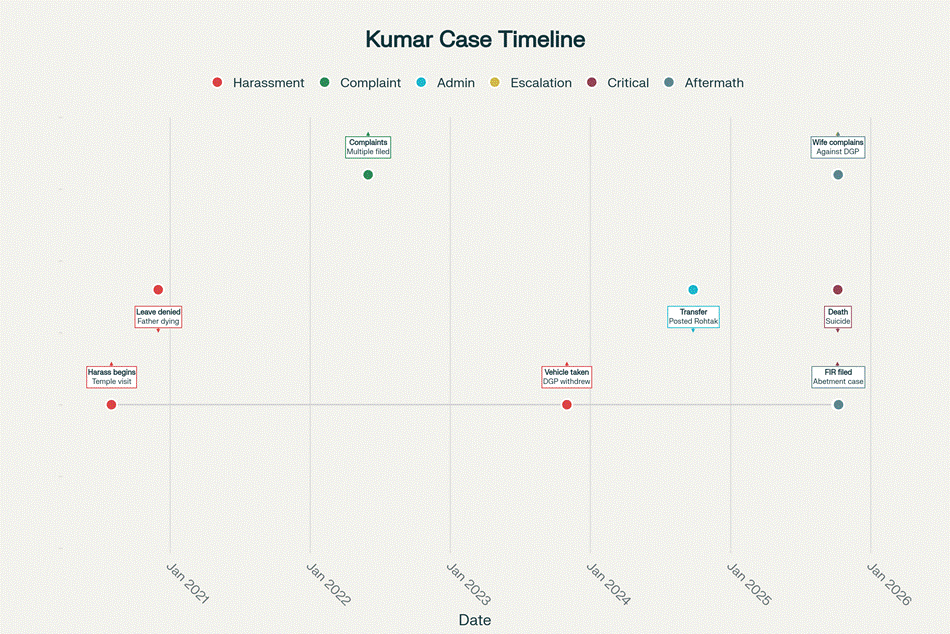
Timeline of events in Y. Puran Kumar case from alleged harassment beginning to final tragic outcome
The documents reveal a harrowing five-year ordeal that began in August 2020 when Kumar visited a temple at an Ambala police station. What should have been a routine religious observance became the catalyst for sustained harassment that would define the remaining years of his career. Kumar’s meticulous documentation of events, spanning multiple handwritten pages, provides unprecedented insight into the systematic persecution faced by Scheduled Caste officers within India’s police hierarchy. [1][2][3][4]
The Architecture of Discrimination
Institutional Harassment and Administrative Persecution
The allegations detailed in Kumar’s final note paint a disturbing picture of how senior officials weaponized administrative procedures to target a Scheduled Caste officer. Former Additional Chief Secretary Rajeev Arora’s denial of earned leave prevented Kumar from visiting his dying father. This act of administrative cruelty caused Kumar “continued immense pain and mental harassment and is an irreparable loss till date,” as he wrote in his final note. [2][5][4]
The harassment escalated under the tenure of current DGP Shatrujeet Singh Kapur, who allegedly applied discriminatory practices in matters of official accommodation and vehicle allocation. The withdrawal of Kumar’s official vehicle in November 2023 exemplifies how basic entitlements were denied to create a hostile work environment. These actions violated established service rules and demonstrated a clear pattern of targeting based on caste identity. [3][5][4][6][7][2]
The Conspiracy to Frame
Perhaps most damaging was the alleged conspiracy to implicate Kumar in false cases. On October 6, 2025, just one day before Kumar’s death, an FIR was registered against one of his staff members in Rohtak. Kumar’s wife, IAS officer Amneet P. Kumar, described this as part of a “well-planned conspiracy” orchestrated by DGP Kapur and Rohtak SP Narendra Bijarniya to falsely implicate her husband. The timing of this FIR, coming after years of sustained harassment, appears to have been the final trigger that pushed Kumar to his breaking point.[1][2][3][8][7]
The systematic nature of this persecution is evident in Kumar’s documentation of “mischievous anonymous and pseudo-anonymous complaints” that were allegedly generated and processed by senior officers to publicly humiliate him. This tactic of character assassination through fabricated complaints represents a sophisticated form of institutional bullying designed to isolate and discredit the targeted officer. [2][5][4][9]
The Broader Context of Caste-Based Violence
Statistical Reality of SC/ST Atrocities
Kumar’s case must be understood within the broader context of escalating violence against Scheduled Castes in India. National Crime Records Bureau data reveals a disturbing trend, with crimes against Downtrodden (Dalits) increasing from 40,300 incidents in 2014 to 57,582 in 2022. The rise in violence against Downtrodden (Dalit) women and girls has been particularly alarming, increasing by 78% over this period compared to a 43% increase in overall violence against Downtrodden (Dalits). [10]
Recent documentation by civil rights organizations shows that 40 reported incidents of attacks on Downtrodden (Dalits) and Adivasis occurred across the country since April 2024 alone, with 19 incidents in BJP-ruled Uttar Pradesh. These statistics underscore that Kumar’s experience, while shocking in its institutional setting, reflects a nationwide crisis of caste-based discrimination and violence.[11][12]
Police as Perpetrators
Particularly troubling is the pattern of police officers themselves perpetrating caste-based violence. Multiple incidents documented in 2024 show Downtrodden (Dalit) individuals being brutally assaulted by police personnel, including cases where officers used casteist slurs during attacks. In Uttar Pradesh, a Downtrodden (Dalit) man named Rishipal was allegedly tortured by police officers who questioned him about his caste before subjecting him to brutal beatings. Similar incidents in Madhya Pradesh and Bihar show police officers dragging Downtrodden (Dalit) women by their hair and using caste-based abuse.[11][12]
These cases reveal that the police force, which should protect vulnerable communities, has itself become a site of caste-based persecution. Kumar’s experience demonstrates how this discrimination operates not only against civilians but also within the police hierarchy itself, targeting officers from Scheduled Castes who have achieved positions of authority. [4][9]
The Institutional Response and Its Limitations

Memorial tribute to Y. Puran Kumar and officers facing discrimination
Legal Framework and Its Implementation
The Scheduled Castes and Scheduled Tribes (Prevention of Atrocities) Act, 1989, specifically criminalizes acts of intimidation and humiliation against SC/ST individuals in public view. Section 3(1)(r) of the Act makes it an offense to “intentionally insult or intimidate with intent to humiliate a member of a Scheduled Caste or a Scheduled Tribe in any place within public view”. The Act also provides for enhanced punishments and special courts to ensure swift justice. [13][14]
However, Kumar’s case highlights the gap between legal provisions and their implementation. Despite filing multiple complaints with senior officials, including the Chief Secretary and Home Minister, Kumar received no relief. His wife has specifically requested that Section 3(2)(v) of the SC/ST Act, which provides for enhanced punishment, be added to the FIR, arguing that the current charges are “diluted”. [2][5][15][4]
Administrative and Political Responses
The case has triggered responses across the political spectrum. Aam Aadmi Party leader Arvind Kejriwal demanded “harshest punishment” for the guilty, while Congress leaders Rahul Gandhi and Mallikarjun Kharge criticized the BJP government’s handling of caste-based discrimination. The National Commission for Scheduled Castes has demanded an action-taken report from Chandigarh authorities within seven days. [1][16][17][18]
However, the systemic nature of the problem suggests that individual prosecutions, while necessary, may not address the underlying institutional culture that enables such discrimination. The case reveals how senior officers can use their administrative powers to create hostile environments for subordinates from marginalized communities. [6][19]
The Human Cost of Systematic Persecution
Personal Tragedy and Family Impact
Kumar’s final note reveals the profound personal cost of sustained institutional harassment. The denial of leave that prevented him from seeing his dying father represents a particularly cruel form of psychological torture that violated basic human dignity. His expression of concern for his family’s safety in his final note demonstrates how the harassment extended beyond his professional life to threaten his loved ones. [2][4][20][21]
The impact on Kumar’s family continues even after his death. His wife, Amneet P. Kumar, has reportedly refused to permit post-mortem examination until justice is served. This stance reflects both her determination to seek accountability and her lack of faith in the system’s willingness to deliver justice without external pressure. [3][22][15][18]
The Broader Message to SC/ST Officers
Kumar’s suicide sends a chilling message to other Scheduled Caste and Scheduled Tribe officers within the police force and civil services. His case demonstrates that even achieving high rank provides no protection against caste-based discrimination. The systematic nature of the harassment he faced suggests that his caste identity was seen as incompatible with his position of authority. [4][9]
This has broader implications for representation and diversity within India’s law enforcement institutions. If talented officers from marginalized communities face systematic persecution, it deters others from pursuing careers in these fields and perpetuates the dominance of upper-caste officers in positions of power. [19][23]
Systemic Failures and Institutional Reform
The Role of Senior Leadership
The case implicates some of the highest-ranking officials in Haryana’s police and administrative hierarchy. DGP Shatrujeet Singh Kapur, a 1990 batch IPS officer with over three decades of experience, stands accused of orchestrating much of the harassment Kumar faced. The involvement of such senior officials suggests that discriminatory practices are not aberrations but may be embedded within the institutional culture. [6][19][23]
Former DGP Manoj Yadava is also named in Kumar’s note as having initiated the caste-based discrimination. This indicates that the problem transcends individual leadership and represents a systemic issue that requires comprehensive reform rather than merely replacing particular officials. [5][4][24][20]
Inadequacy of Existing Mechanisms
Kumar’s case reveals the inadequacy of existing grievance mechanisms within the police force. Despite filing multiple complaints over five years, he received no relief from the harassment. The failure of senior officials to address his concerns effectively demonstrates that internal complaint mechanisms are insufficient when the perpetrators occupy positions of power. [2][5][4][21]
The case also highlights the limitations of external oversight. Kumar approached various authorities, including the Chief Secretary and Home Minister, but found no relief. This suggests that caste-based discrimination within the police force requires more robust external monitoring and intervention mechanisms. [16][25][2]
The Path Forward: Lessons and Recommendations
Institutional Accountability
Kumar’s case demands immediate accountability from the accused officers, but it also requires broader institutional reform. The Haryana government’s reported consideration of sending DGP Kapur on leave represents a necessary first step, but more comprehensive changes are needed. These should include mandatory training on caste sensitivity, regular audits of disciplinary actions to identify patterns of bias, and protection mechanisms for officers who report discrimination. [19][25]
Strengthening Legal Protections
The case highlights the need for stronger implementation of existing legal protections under the SC/ST (Prevention of Atrocities) Act. Kumar’s wife’s request for enhanced charges under Section 3(2)(v) reflects the need for prosecutors to apply the full weight of the law in such cases. Special courts established under the Act must be adequately resourced to handle such cases expeditiously. [5][15][14]
Cultural Change and Awareness
Beyond legal and administrative measures, Kumar’s case underscores the need for fundamental cultural change within India’s law enforcement institutions. This requires acknowledging the persistence of caste-based prejudices and implementing comprehensive programs to address them. The involvement of senior officers in discriminatory practices suggests that change must come from the highest levels of leadership. [19][23]
Conclusion: A System on Trial
The Y. Puran Kumar case represents more than the tragic loss of a dedicated officer; it serves as an indictment of systemic failures that continue to plague India’s institutions. The detailed documentation Kumar left behind provides unprecedented insight into how caste-based discrimination operates within positions of power, revealing sophisticated methods of harassment that go far beyond overt prejudice. [4][9]
The case has already prompted national outrage and political responses, but the true test will be whether it leads to meaningful institutional reform. Kumar’s sacrifice must not be in vain; it must catalyze comprehensive changes that ensure no other officer faces similar persecution based on caste identity. The investigation’s outcome will determine whether India’s commitment to constitutional equality extends to protecting those who have achieved positions of authority despite their marginalized backgrounds. [1][16][17][18][13]
As the legal proceedings unfold and the investigation continues, Kumar’s case stands as a stark reminder that the promise of equality enshrined in India’s Constitution remains unfulfilled for many citizens, even those who have dedicated their lives to upholding the law. The challenge now is to transform this tragic testament into meaningful change that honors both Kumar’s memory and the principles of justice and equality that should govern India’s institutions. [3][15][18][25]
- https://timesofindia.indiatimes.com/india/dalit-ips-officer-faced-so-much-caste-based-harassment-that-he-took-his-own-life-says-kejriwal-demands-harshest-punishment-for-guilty/articleshow/124447902.cms
- https://indianexpress.com/article/cities/chandigarh/y-puran-kumar-ips-officers-final-note-caste-discrimination-public-humiliation-10295661/
- https://timesofindia.indiatimes.com/city/chandigarh/fir-filed-against-all-those-named-in-ips-officers-suicide-note/articleshow/124436079.cms
- https://www.ndtv.com/india-news/y-puran-kumar-haryana-ig-suicide-top-cops-final-decision-suicide-note-ias-wife-says-broken-spirit-9423002
- https://www.ndtv.com/india-news/y-puran-kumar-suicide-case-fir-lacks-key-details-wife-of-haryana-ips-officer-9430115
- https://theprint.in/india/haryana-dgp-booked-over-ips-suicide-who-is-shatrujeet-kapur-top-cop-with-history-of-controversies/2761051/
- https://www.indiatoday.in/india/story/haryana-ips-officer-y-puran-kumar-suicide-shoot-himself-harassment-seniors-wife-will-note-calls-unanswered-basement-chandigarh-2800294-2025-10-09
- https://timesofindia.indiatimes.com/city/chandigarh/ips-puran-kumar-suicide-ias-wife-demands-fir-against-dgp-rohtak-sp-over-alleged-persecution/articleshow/124409200.cms
- https://www.firstpost.com/explainers/haryana-ips-officer-puran-kumar-suicide-caste-discrimination-13940874.html
- https://idsn.org/wp-content/uploads/2025/03/AIDMAM-Factsheet-2024-Violence-again-women-Factsheet.pdf
- https://cjp.org.in/the-alarming-rise-of-anti-dalit-violence-and-discrimination-in-india-a-series-of-gruesome-incidents-since-july-2024/
- https://cjp.org.in/a-pattern-of-impunity-this-report-details-horrific-crimes-against-dalits-in-up-rajasthan-mp-and-beyond/
- https://www.newindianexpress.com/nation/2025/Oct/09/dalit-ips-officers-death-chandigarh-police-registers-fir-against-those-named-in-final-note
- https://www.indiacode.nic.in/bitstream/123456789/15338/1/scheduled_castes_and_the_scheduled_tribes.pdf
- https://timesofindia.indiatimes.com/city/chandigarh/haryana-ips-officer-suicide-ias-officer-amneet-p-files-fresh-plea-to-reflect-names-of-all-accused-add-appropriate-sections/articleshow/124446198.cms
- https://www.indiatoday.in/india/story/ips-officer-suicide-national-commission-for-scheduled-castes-asks-chandigarh-chief-secretary-top-cop-to-submit-action-taken-report-2800903-2025-10-10
- https://m.thewire.in/article/caste/dalit-ips-officers-suicide-haryana-top-cops-booked-in-fir-family-demands-arrests
- https://m.thewire.in/article/caste/dalit-ips-officers-suicide-haryana-top-cops-booked-in-fir-family-demands-arrests/amp
- https://indianmasterminds.com/news/dgp-shatrujeet-kapur-haryana-ips-suicide-case-151134/
- https://www.jagran.com/haryana/panchkula-ips-officer-suicide-note-haryana-adgp-y-puran-kumar-alleges-harassment-40004831.html
- https://www.hindustantimes.com/india-news/haryana-cop-s-final-note-details-mentalharassment-humiliation-names-many-officers-sources-101759958132500.html
- https://www.indiatoday.in/india/story/ips-officer-y-puran-kumar-suicide-case-widow-amneet-p-kumar-seeks-change-fir-all-accused-names-included-2800954-2025-10-10
- https://www.indiatoday.in/india/story/who-is-shatrujeet-kapur-haryana-top-cop-named-in-ips-officers-suicide-case-2800745-2025-10-09
- https://www.hindustantimes.com/cities/chandigarh-news/igps-suicide-haryana-dgp-10-others-booked-for-abetment-101760041846226.html
- https://nhapoa.gov.in
- 1-1.jpg
- 5.jpg
- 3.jpg
- 4.jpg
- 8.jpg
- 7.jpg
- 6.jpg
- whatsappimage2025-10-08at112302pm-ezgifcom-resize_1759947730.jpg
- 2.jpg
- https://www.indiatvnews.com/haryana/jind-sp-sexual-harassment-allegations-haryana-police-initiates-probe-after-female-constable-letter-surfaced-online-2024-10-28-959214
- https://www.deccanherald.com/india/haryana/haryana-police-begins-probe-into-sexual-harassment-charges-against-ips-officer-3251229
- https://indianexpress.com/article/cities/chandigarh/sexual-harassment-letter-haryana-woman-cops-complainants-namesakes-deny-role-9642256/
- https://timesofindia.indiatimes.com/city/chandigarh/investigations-intensify-as-new-fir-registered-against-ips-officer-in-haryana-sexual-harassment-case/articleshow/114864427.cms
- https://www.youtube.com/watch?v=5rdvLB-5OjM
- https://www.youtube.com/watch?v=r70glRXbmFY
- https://www.instagram.com/p/DPnp4-yEvhh/
- https://www.ndtv.com/india-news/haryana-top-cop-others-booked-in-ips-officer-suicide-case-9427703
- https://www.youtube.com/watch?v=WQR70SV9DII
- https://thelogicalindian.com/haryana-ips-officer-y-puran-kumar-allegedly-dies-by-suicide-known-for-speaking-up-against-caste-bias-and-official-misconduct/
- https://timesofindia.indiatimes.com/city/gurgaon/haryana-ips-officer-y-puran-kumar-dies-by-suicide-note-missing-police-scramble-for-answers/articleshow/124359622.cms
- https://www.youtube.com/watch?v=bVjeb2vKtBc
- https://www.youtube.com/watch?v=xoBtACw0Y6w
- https://www.youtube.com/watch?v=3LpoOoonWHA
- https://nhrc.nic.in/dalitcases
- https://article-14.com/post/2-months-after-assault-by-police-over-maharashtra-riot-scores-of-dalit-youth-say-they-will-not-be-silenced-67c7c2f604ef6
- https://clpr.org.in/blog/caste-discrimination-in-india-a-study-of-ncrb-data-part-iv/
- https://anagrasarkalyan.gov.in/documnts/07-07-2017-12-07-25.pdf
- https://pmc.ncbi.nlm.nih.gov/articles/PMC10756632/
- https://www.sciencedirect.com/science/article/pii/S0147596714001048
- https://socialjustice.gov.in/writereaddata/UploadFile/The Scheduled Castes and Scheduled Tribes.pdf
- https://ppl-ai-code-interpreter-files.s3.amazonaws.com/web/direct-files/acf0e0834c4fa4f40f97bfe13ff39c9f/0e9e9152-a137-4665-9c94-c6ee61335dfa/af80590b.csv
- https://ppl-ai-code-interpreter-files.s3.amazonaws.com/web/direct-files/acf0e0834c4fa4f40f97bfe13ff39c9f/0e9e9152-a137-4665-9c94-c6ee61335dfa/3366d306.csv
- https://ppl-ai-code-interpreter-files.s3.amazonaws.com/web/direct-files/acf0e0834c4fa4f40f97bfe13ff39c9f/0e9e9152-a137-4665-9c94-c6ee61335dfa/ad622ccb.csv