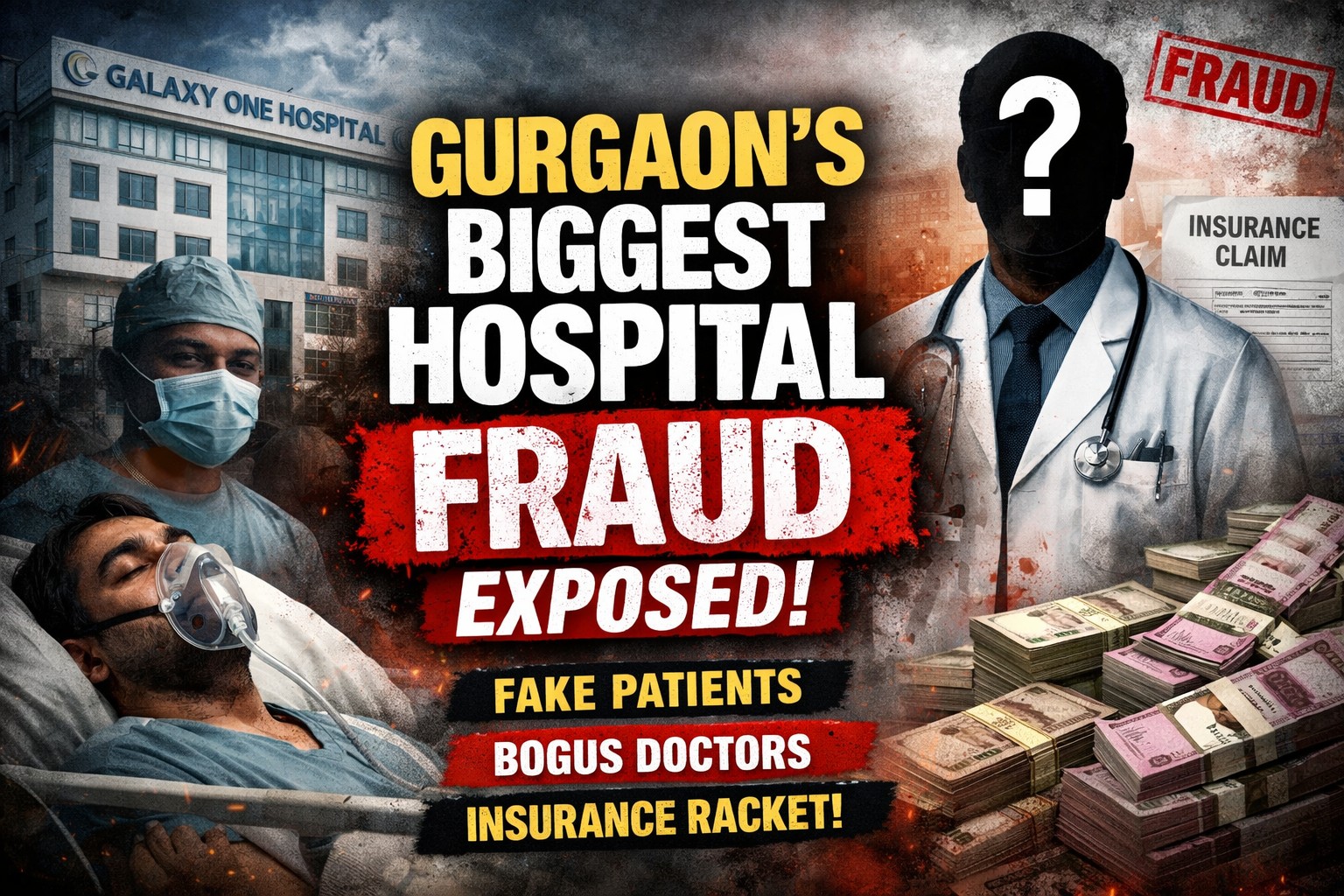
Gurgaon’s Biggest Hospital Fraud Exposed: Galaxy One Hospital’s Fake Patients, Bogus Doctors, and Insurance Racket
Introduction
In a major crackdown on healthcare fraud, Gurgaon police uncovered one of the city’s most elaborate insurance scams in February 2026—a multi-crore fake hospital racket that shook public confidence in the medical system. At the center of this sophisticated scheme was Galaxy One Hospital, located in New Nihal Colony, Palam Vihar Phase 1, which masqueraded as a legitimate medical facility while operating as an engine for insurance fraud[1].
What began as a routine audit by the Chief Minister’s flying squad in May 2025 evolved into a full-scale investigation that exposed a network of ghost patients, bogus doctors with fake degrees, fabricated medical records, and forged insurance claims affecting at least 25 major insurance companies. The investigation revealed that over Rs 1 crore was fraudulently siphoned from insurers through meticulously orchestrated schemes involving hospital staff, fake patients, compromised doctors, and suspicious private investigators[2].
The Mastermind and His Operation
The brain behind this elaborate fraud was 55-year-old A.S. Yadav, a man with no legitimate medical qualifications, who operated Galaxy One Hospital from a rented property. Police investigations revealed that Yadav was not working alone—his two sons actively participated in planning and executing the scheme, with the hospital itself registered in one son’s name to create an additional layer of insulation[3].
Yadav’s ambitions extended beyond Gurgaon. According to ACP (West) Abhilaksh Joshi, who led the investigation, Yadav was allegedly running four such fake hospitals across multiple locations including Farukhnagar (Gurgaon district) and Dwarka. These facilities existed only on paper, set up specifically between 2018 and 2020 for fraudulent purposes[4].
How the Racket Worked: A Systematic Approach to Deception
The modus operandi of this insurance fraud racket was sophisticated and well-planned, involving multiple layers of deception:
Stage 1: Creating the Facade
Galaxy One Hospital presented itself as a legitimate medical institution. The three-storey building in New Nihal Colony featured blue signboards and posters depicting surgical procedures, maternal care, and medical consultations—creating an impression of a professional healthcare facility. In reality, it was purely a paper hospital designed to defraud insurance companies[5].
Stage 2: Recruiting Ghost Patients
The racket’s success depended on recruiting hundreds of unsuspecting individuals willing to lend their identities. Over 500 fake patients were involved in the scheme, all recruited with the promise of sharing insurance claim proceeds[6].
The process was straightforward:
- Hospital staff approached individuals and offered them money to act as “patients”
- These individuals provided their Aadhaar cards and personal details
- Their names and information were used to file insurance claims
- Once claims were approved and funds disbursed, the money was divided between the hospital staff, fake patients, and other conspirators[7]
Stage 3: Fabricating Medical Records
The hospital staff, led by three key employees—Sapna, Varsha, and Gaurav—became expert forgers. For each fraudulent claim, they meticulously prepared:
- Fake IPD (In-Patient Department) admission records showing individuals admitted but never actually treated
- Fabricated laboratory test reports with false results
- Falsified diagnostic reports from non-existent medical procedures
- Counterfeit pharmacy and treatment bills ranging from Rs 60,000 to Rs 80,000 per file
- Forged medical certificates and doctor recommendations[8]
Investigative reports noted that most fraudulent files bore signatures and handwriting that appeared identical, suggesting a systematic and centralized operation where the same individuals prepared all documentation.
Stage 4: The Private Investigators’ Role—The “Actual Kingpins”
Perhaps the most shocking revelation of the investigation was the involvement of private investigators supposedly working for insurance companies. ACP Joshi described these individuals as the “actual kingpins” of the entire operation[9].
Here’s how this critical part of the scheme functioned:
These compromised private investigators would:
- Identify doctors willing to participate in the fraud
- Arrange hospital spaces for the fake operations
- Prepare false lab, admission, and diagnostic reports
- Submit fake documentation to insurance companies or their third-party administrators
- Approve claims from the insurance company’s side, using their official credentials[10]
This created a dangerous vulnerability in the insurance approval system. Insurance companies typically don’t manually verify each claim; they rely on private investigators to validate admission records, medical histories, and treatment documentation. By compromising these investigators, the entire verification system was bypassed.
Stage 5: The Money Trail
Fraudulent claim amounts would be credited to the bank accounts of the fake patients. These individuals would then transfer the money to the hospital conspirators after keeping a commission. This created multiple layers of money transfers, making it difficult for authorities to trace the financial chain[11].
The Criminal Cast and Arrests
Police arrested the following individuals in connection with the scam:
Primary Accused:
- A.S. Yadav (55 years) – The mastermind, arrested on February 25, 2026. Despite claiming to hold an MBBS-MD degree, investigations revealed his MD qualification was forged. He claimed to possess other medical degrees that are currently being verified[12].
- Yadav’s two sons – Arrested on February 25, 2026, for actively planning and executing the fraudulent scheme
Hospital Staff Employees (Arrested during initial raids):
- Sapna Kumari – Local resident, primary document forger
- Varsha Kumari – Local resident, document preparation specialist
- Gaurav Kumar – From Rajasthan, key file coordinator[13]
These three employees were responsible for preparing forged insurance files and submitting them to insurance companies via courier services.
Status of Investigation:
- Over 500 fake patients remain at large but are being traced by a Special Investigation Team (SIT)
- Private investigators allegedly involved remain under investigation
- Other hospital staff and accomplices continue to be identified and pursued
- Senior hospital management members involved in the payout chain are still being investigated[14]
The Scale of the Scam: Facts and Figures
The investigation has uncovered alarming statistics about the scope of this fraud:
| Aspect | Details |
| Confirmed Fraud Amount | Rs 1 crore (minimum) |
| Insurance Companies Targeted | 25 major insurance companies |
| Fake Insurance Files Recovered | 60-65 fraudulent claim files |
| Fake Patients Identified | 500+ individuals |
| Ghost Patients in Recovered Files | 58-60 non-existent patients |
| Per-File Fraud Amount | Rs 60,000 to Rs 80,000 |
| Fake Hospitals Operated | 4 locations (Gurgaon, Farukhnagar, Dwarka) |
| Operational Period | 2018-2020 (2 years per facility) |
| Diagnostic Center Raided | Labswell, Dayanand Colony, Sector 6 (also involved in preparing fake lab reports)[15] |
The actual fraud amount is suspected to be significantly higher than Rs 1 crore, as authorities continue to examine bank statements and digital records to build a complete financial picture.
The Investigation: From Initial Raid to Full-Scale Bust
May 2025: The Chief Minister’s Flying Squad Intervention
The first crack in the hospital’s facade appeared in May 2025 when the Chief Minister’s flying squad, acting on complaints about alleged insurance fraud, conducted a preliminary raid at Galaxy One Hospital. During this raid, authorities discovered a doctor using “MBBS/MD” credentials without possessing a valid MD degree—a red flag that prompted further investigation[16].
February 2026: Full-Scale Crackdown
Following the CM flying squad’s preliminary report, the investigation intensified. On February 14, 2026, the CM’s flying squad filed a formal complaint with Bajghera police station. This triggered the formation of a specialized investigation team under DCP (West) Karan Goyal and led by ACP Abhilaksh Joshi[17].
February 18, 2026: The Raid and Recovery
The comprehensive search operation on February 18, 2026, was meticulously planned and executed. The team included:
- Bajghera police station personnel
- Cyber forensics experts
- Drug control officers
- Health department officials
- Municipal authorities[18]
Items Seized:
- Approximately 60-65 fraudulent insurance claim files
- Hospital registration stamps and official seals
- Computers and digital devices
- Forged billing books and prescription pads
- Laboratory equipment and fake medical certificates
- Documents from Labswell diagnostic center
- Bank records and financial statements[19]
February 25, 2026: High-Profile Arrests
Following the raid, Yadav and his two sons were arrested, escalating the investigation to a much higher level. Police simultaneously froze bank accounts associated with the accused, though “hardly any money” was found—indicating the proceeds were either moved to other accounts or distributed in cash[20].
The Legal Framework: Charges Filed
The investigation team registered a comprehensive FIR at Bajghera police station under multiple sections of the Bharatiya Nyaya Sanhita (BNS), 2023:
- Section 318(4) – Cheating and dishonestly inducing delivery of property
- Section 336(3) – Forgery
- Section 338 – Forgery of valuable securities
- Section 340 – Using forged documents or electronic records as genuine[21]
These charges carry significant penalties and reflect the serious nature of the fraud committed.
Red Flags Missed: System Vulnerabilities Exposed
This case exposes critical weaknesses in India’s medical and insurance verification systems:
1. Doctor Credential Verification Gap
The hospital employed a doctor with a fake MD degree who operated undetected for an extended period, highlighting poor verification systems in healthcare registration[22].
2. Insurance Claim Processing Vulnerabilities
Insurance companies’ reliance on private investigators without adequate checks and balances created the perfect opportunity for compromised intermediaries to facilitate fraud[23].
3. Hospital Licensing Loopholes
Galaxy One Hospital’s ability to operate for extended periods without proper medical licensing suggests weak enforcement by healthcare regulatory bodies.
4. Identity Document Abuse
The easy availability of individuals willing to share Aadhaar cards and personal information indicates vulnerability in India’s identity verification systems.
5. Financial Transaction Opacity
The significant use of cash transfers and multiple bank accounts made it difficult for authorities to trace money flows and identify conspirators[24].
Impact on Patients and Public Health
While no patients received actual treatment at Galaxy One Hospital (since no real admissions occurred), the implications for public health and patient safety are severe:
- Loss of Public Trust: Such scams undermine confidence in legitimate private healthcare institutions
- Insurance Premium Increases: Fraud drives up insurance premiums for genuine policyholders
- Delayed Justice: Fraudulent claims consume insurance resources that could otherwise serve legitimate patients
- Medical Records Integrity: The creation of thousands of fake medical records pollutes patient data systems
- Risk to Unsuspecting Individuals: Fake patients whose identities were used without proper consent face potential legal complications[25]
Ongoing Investigation and Wider Network Concerns
ACP Joshi emphasized that the investigation is far from complete. Several concerning aspects indicate a much larger network:
Challenges in the Investigation:
- Tracking Fugitive Accomplices: Over 500 fake patients remain at large but are being pursued by a Special Investigation Team
- Financial Trail Complexity: Large amounts of money transferred via cash and multiple accounts make tracing the complete money chain extremely difficult
- Multiple Stakeholders: Investigation suggests involvement of corrupt insurance company officials, fake doctors, private investigators, diagnostic center staff, and agents[26]
- Possible ED Involvement: While ACP Joshi hasn’t ruled out involving the Enforcement Directorate (ED), the complexity of the money trail makes a watertight case challenging at this stage
Expanding Scope:
Police are examining:
- Complete digital records of all fake transactions
- Bank statements from multiple accounts
- Diagnostic center operations and connections
- Private investigator networks
- Insurance company employee involvement
- Other potential fake hospitals in the network[27]
Lessons and Recommendations
This case offers critical lessons for various stakeholders:
For Insurance Companies:
- Strengthen Verification Processes: Implement multi-layer verification instead of relying solely on private investigators
- Conduct Surprise Audits: Regular unannounced audits of hospitals and diagnostic centers
- Use Advanced Technology: Deploy AI-based anomaly detection in claim processing
- Verify Doctor Credentials: Cross-check medical professional qualifications with medical councils before claim approval
For Healthcare Authorities:
- Stringent Hospital Licensing: Implement stricter criteria and surprise inspections for hospital registration
- Doctor Credential Verification: Establish a real-time digital verification system for all healthcare professionals
- Regular Audits: Conduct frequent audits of hospital admission records and billing practices
For Law Enforcement:
- Specialized Fraud Units: Create dedicated economic crimes units trained in financial forensics
- Coordination Between Agencies: Improve information sharing between police, health departments, and insurance regulators
- International Cooperation: For cases involving cross-border money transfers
For the Public:
- Awareness Programs: Educate people about not renting their identities and Aadhaar numbers
- Report Suspicions: Citizens should report unusual hospital or medical facility activities
- Verify Insurance Claims: Seek clarification from insurance companies about claims made in their names
Conclusion
The Galaxy One Hospital scam represents a watershed moment in the fight against organized healthcare fraud in India. What began as a simple irregularity—a doctor without proper credentials—unraveled into a massive network involving over 500 individuals, 25 insurance companies, and at least Rs 1 crore in fraudulent transactions.
This case demonstrates that healthcare fraud is not merely an isolated crime but a sophisticated, organized racket involving multiple layers of criminals—from hospital administrators to fake doctors, from corrupted private investigators to willing accomplices. The involvement of individuals posing as insurance company representatives represents an unprecedented level of coordination and corruption[28].
The investigation, led by ACP Abhilaksh Joshi and his team, represents a significant victory for law enforcement. However, the ongoing nature of the probe—with over 500 accused still at large and a larger network yet to be fully unraveled—suggests that this may be just the tip of the iceberg.
As authorities continue their investigation, it’s clear that systemic reforms are urgently needed. Insurance companies must strengthen their verification mechanisms, healthcare authorities must tighten hospital licensing procedures, and law enforcement must establish specialized units to combat such sophisticated frauds. Only through a multi-stakeholder approach can India’s healthcare and insurance systems be protected from such elaborate schemes.
For now, the arrest of A.S. Yadav, his sons, and the three employees represents justice for the duped insurance companies and a warning to others attempting similar fraud. But the investigation’s true success will be measured by how completely the entire network is dismantled and how effectively systemic loopholes are sealed.
References
[1] Moneycontrol. (2026, March 5). Gurugram’s big insurance fraud exposed: 500 ghost patients, bogus doctors, 4 fake hospitals. Retrieved from https://www.moneycontrol.com/
[2] Times of India. (2026, February 19). Ghost admissions, fake records: Gurgaon hospital busted for insurance scam. Retrieved from https://timesofindia.indiatimes.com/
[3] Indian Express. (2026, March 5). Fake hospitals, ghost patients and bogus doctors: Inside Gurgaon’s multi-crore insurance racket. Retrieved from https://indianexpress.com/
[4] Ibid.
[5] News18. (2026, March 8). Ghost patients, fake records: How a Gurugram hospital ran a multi-crore insurance fraud. Retrieved from https://www.news18.com/
[6] Moneycontrol. (2026, March 5). Op. cit.
[7] Indian Express. (2026, March 5). Op. cit.
[8] Hindustan Times. (2026, February 20). Hospital running fake insurance claim racket busted, 3 arrested. Retrieved from https://www.hindustantimes.com/
[9] Indian Express. (2026, March 5). Op. cit.
[10] Ibid.
[11] Hindustan Times. (2026, February 20). Op. cit.
[12] Indian Express. (2026, March 5). Op. cit.
[13] Times of India. (2026, February 19). Op. cit.
[14] Moneycontrol. (2026, March 5). Op. cit.
[15] Hindustan Times. (2026, February 20). Op. cit.
[16] Indian Express. (2026, March 5). Op. cit.
[17] News18. (2026, March 8). Op. cit.
[18] NDTV. (2026, February 18). गुरुग्राम में फर्जी अस्पताल का भंडाफोड़. Retrieved from https://ndtv.in/
[19] Amar Ujala. (2026, February 19). Gurugram: फर्जी इंश्योरेंस क्लेम का भंडाफोड़. Retrieved from https://www.amarujala.com/
[20] Indian Express. (2026, March 5). Op. cit.
[21] NDTV. (2026, February 18). Op. cit.
[22] Times of India. (2026, February 19). Op. cit.
[23] Indian Express. (2026, March 5). Op. cit.
[24] Ibid.
[25] Moneycontrol. (2026, March 5). Op. cit.
[26] Indian Express. (2026, March 5). Op. cit.
[27] News18. (2026, March 8). Op. cit.
[28] Moneycontrol. (2026, March 5). Op. cit.