






Kanshi Ram: The Architect of Modern Politics and Bahujan Empowerment
The trajectory of Dalit politics in post-independence India underwent a revolutionary transformation with the emergence of Kanshi Ram, a visionary leader who fundamentally altered the landscape of Indian democracy by mobilizing the marginalized masses into a formidable political force. Born on March 15, 1934, in Punjab’s Ropar district, Kanshi Ram transcended his humble origins to become one of the most influential political strategists and social reformers in modern Indian history. His journey from a government scientist to the architect of the Bahujan movement represents one of the most significant chapters in the struggle for social justice and political empowerment of India’s oppressed communities. roundtableindia+2
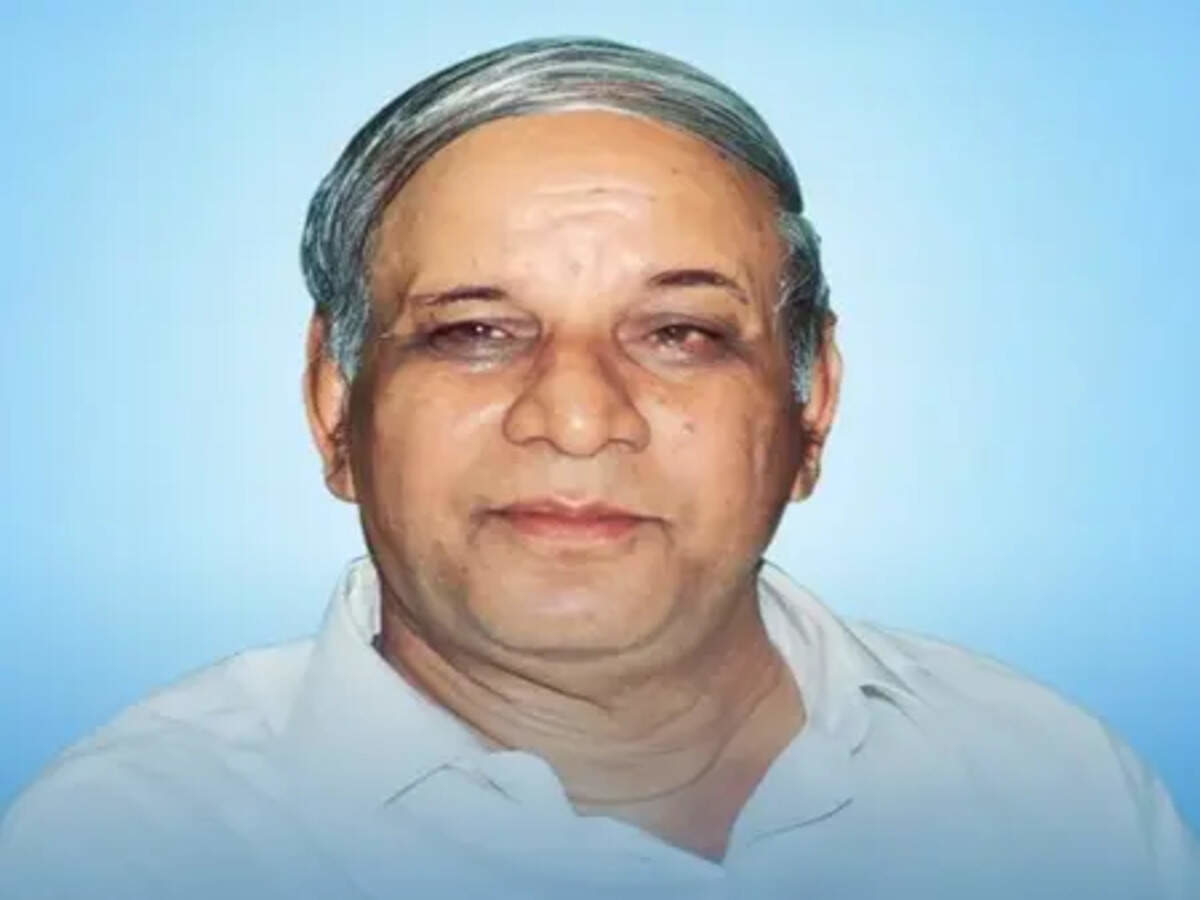
Portrait of Kanshi Ram, the founder of the Bahujan Samaj Party (BSP), symbolizing his legacy in social justice leadership economictimes
Early Life and Formative Experiences
Childhood and Education in Punjab
Kanshi Ram was born into a Ramdasia Sikh family in Pirthipur Bunga village, near Khawaspur, in Ropar district of Punjab. His family belonged to the Chamar caste, traditionally associated with leatherwork, but had converted to Sikhism, which provided them with relatively better social standing compared to their Hindu counterparts. The family possessed modest agricultural land – approximately 4-5 acres – which placed them in a comparatively better economic position than most Scheduled Caste families of that era. roundtableindia+2
His father, Hari Singh, though only slightly literate, was determined to educate all his children. Kanshi Ram was the eldest among eight siblings – four sisters and three brothers – and proved to be the most academically inclined. The name “Kanshi” was given to him because the midwife placed the newborn in a bronze tray made of “kansa” metal, a practice considered auspicious. indianexpress+3
Despite belonging to a Scheduled Caste community, Kanshi Ram’s early years were marked by relatively limited exposure to severe caste discrimination, primarily due to the more egalitarian principles of Sikhism. However, he was not entirely shielded from caste-based prejudice. At his school in Government Primary School Milakpur, separate water pots were maintained for Dalit students, and he witnessed the humiliation of his father at the hands of upper-caste officials. caravanmagazine+3
Academic Journey and Professional Entry
Kanshi Ram completed his Bachelor of Science degree in 1956 from Government College, Ropar, affiliated with Punjab University. This educational achievement was significant for a young man from a Scheduled Caste family in rural Punjab during the 1950s. His academic success opened doors to government employment through the reservation system established for Scheduled Castes and Scheduled Tribes. roundtableindia+2
In 1957, he joined the Defence Research and Development Organisation (DRDO) at the Explosive Research and Development Laboratory in Pune, Maharashtra, as an assistant scientist. This marked the beginning of a new chapter in his life, as he moved from the relatively protected environment of Sikh Punjab to Maharashtra, where caste hierarchies were more rigidly enforced and openly practiced. indianexpress+3
The Transformative Dinabhana Incident
The Catalyst for Political Awakening
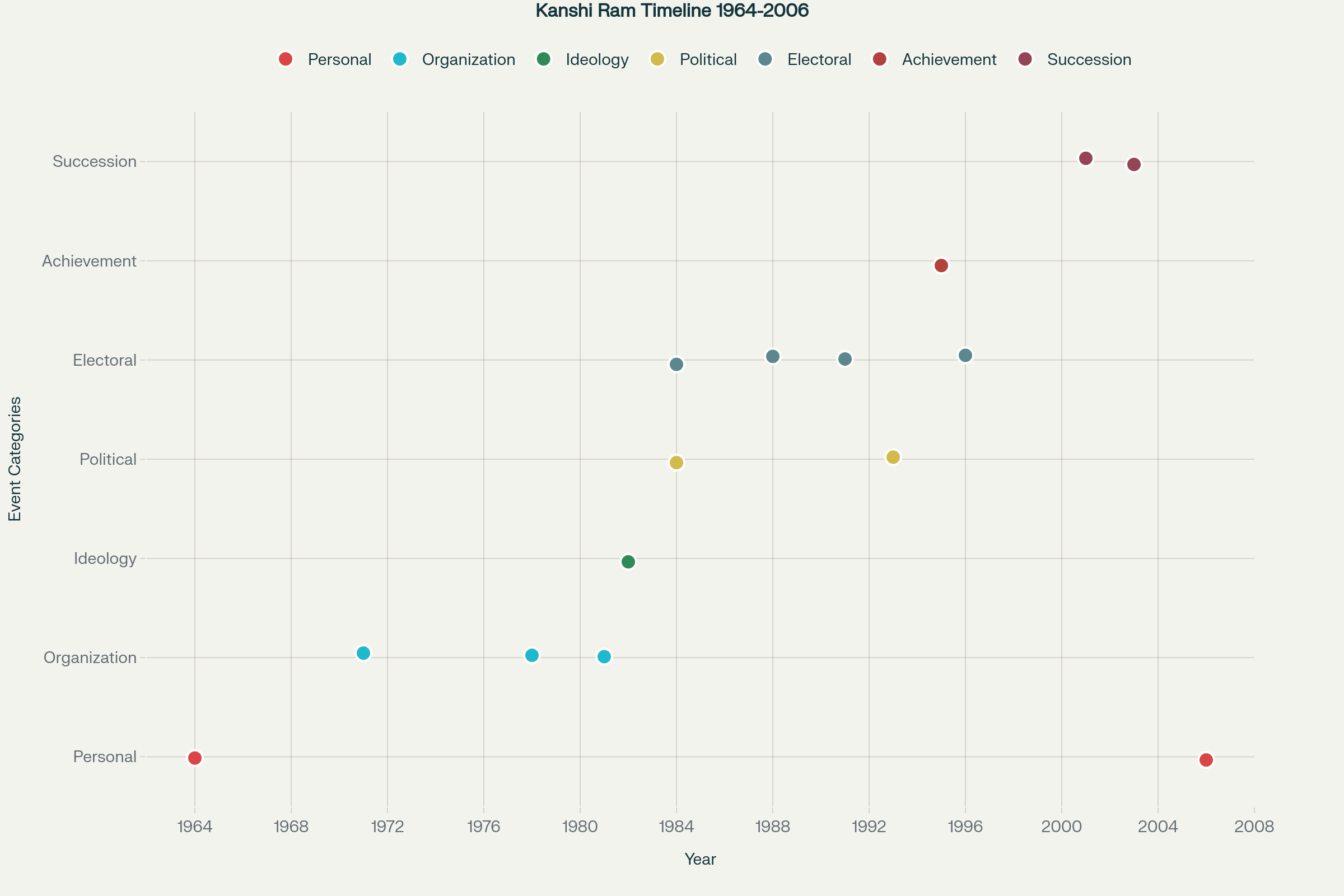
The turning point in Kanshi Ram’s life came in 1964-65 with what is now known as the Dinabhana incident. The management of the DRDO laboratory decided to cancel the official holidays for Dr. B.R. Ambedkar’s birthday and Buddha Jayanti, replacing them with Tilak Jayanti (commemorating Lokmanya Tilak) and an additional holiday during Diwali. vedantu+2
This decision sparked strong opposition from Scheduled Caste employees, led by Dinabhana (also spelled Dina Bhana), a colleague from Rajasthan. When Dinabhana protested against this discriminatory decision, he was suspended from service. The incident exposed the deep-rooted caste prejudices within government institutions and awakened Kanshi Ram to the systematic nature of caste discrimination in India.indiacontent+2
Moved by the injustice, Kanshi Ram took up Dinabhana’s cause, organizing support among other employees and fighting a legal battle for his reinstatement. The struggle was successful – not only was Dinabhana reinstated, but the holidays for Ambedkar Jayanti and Buddha Jayanti were also restored. This victory demonstrated to Kanshi Ram the power of organized resistance and solidarity among the oppressed. vedantu+1
Intellectual Awakening Through Ambedkar
It was during this period that Kanshi Ram was introduced to the writings of Dr. B.R. Ambedkar, largely through his Mahar Buddhist colleague D.K. Khaparde, who became instrumental in “Ambedkarising” Kanshi Ram. Khaparde encouraged him to read Ambedkar’s seminal work “Annihilation of Caste,” which Kanshi Ram reportedly read three times in a single night. This profound encounter with Ambedkar’s philosophy fundamentally altered his worldview and set the course for his future political activism. wikipedia+3
The experience convinced Kanshi Ram that the problems faced by Scheduled Castes were not isolated incidents but part of a systematic structure of oppression that required organized political action to dismantle. He began studying other social reformers like Jyotirao Phule and Periyar E.V. Ramasamy, developing a comprehensive understanding of anti-caste movements in India. caravanmagazine+1
The Genesis of Organization Building
The Decision to Dedicate His Life
By 1971, Kanshi Ram had made a momentous decision that would define the rest of his life. He quit his secure government job and took a vow of complete dedication to the cause of Dalit empowerment. His pledge was comprehensive: “I will never get married, I will never acquire any property, I will never visit my home, I will devote and dedicate the rest of my life to achieve the goals of Phule-Ambedkar movement”. caravanmagazine+3
This extraordinary commitment demonstrated his understanding that building a sustainable movement required complete personal sacrifice and unwavering dedication. Unlike many political leaders who entered activism while maintaining personal interests, Kanshi Ram chose the path of absolute renunciation in service of his mission. ambedkar
Formation of BAMCEF (1978)
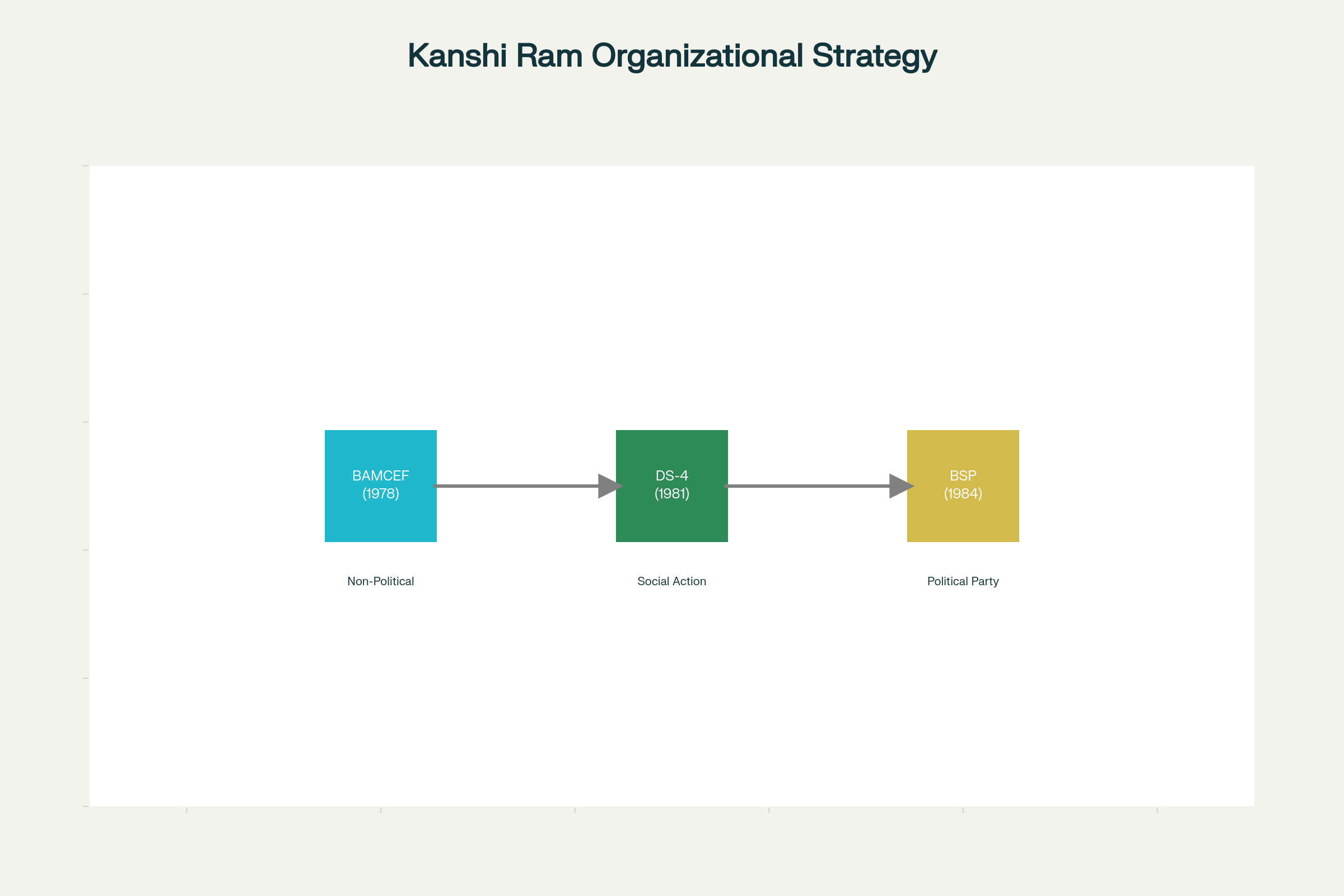
Kanshi Ram’s organizational journey began with the establishment of the All India SC, ST, OBC and Minority Employees Association in 1971, which was later reorganized and renamed as the All India Backward and Minority Communities Employees Federation (BAMCEF) on December 6, 1978 – the death anniversary of Dr. Ambedkar. caravanmagazine+2
BAMCEF was conceived as a unique organization with specific characteristics: it was strictly non-political, non-religious, and non-agitational. Kanshi Ram envisioned it as the “think tank, talent bank, and financial bank” of the Bahujan Samaj. The organization aimed to mobilize educated employees from Scheduled Castes, Scheduled Tribes, Other Backward Classes, and minorities who had benefited from reservation policies. indianexpress+2
The fundamental philosophy behind BAMCEF was to create a sense of responsibility among educated Dalits and OBCs toward their communities. Kanshi Ram criticized the “alienation of the elite” – educated members of oppressed communities who, after securing good positions through reservations, distanced themselves from their roots and failed to contribute to the upliftment of their communities. ektatrust+1
The Three Pillars Strategy
Kanshi Ram’s strategy was built on three crucial pillars, which he called “dimag, hunar aur paisa” (mind, skill, and money). He understood that sustainable political movements required intellectual leadership, organizational skills, and financial resources. BAMCEF was designed to harness these three elements from the growing educated middle class within the Bahujan communities. wikipedia
The organization adopted Ambedkar’s famous slogan “Educate, Agitate, Organise” but adapted it to the contemporary context. Through extensive travels across India, Kanshi Ram built networks of educated employees who contributed both intellectually and financially to the movement. caravanmagazine+3
The Philosophy of “The Chamcha Age”
Literary Contribution to Dalit Politics
In 1982, on the 50th anniversary of the Poona Pact, Kanshi Ram published his seminal work “The Chamcha Age (An Era of Stooges)”. This book represented his most significant intellectual contribution to Dalit political thought and provided a scathing critique of post-Ambedkar Dalit leadership. forwardpress+2
The book was dedicated to “Mahatma Jyotirao Phule, whose initiation of cultural revolt in colonial India, later taken up by Babasaheb Dr. B.R. Ambedkar, Periyar E.V. Ramaswamy and many other rebellious spirits brought us to this level where we are thinking, planning and struggling to put an end to the ‘Chamcha Age’ and usher in ‘Bright Age’ for the Shudras and the Ati-Shudras”. studocu+1
The Concept of “Chamcha” Leadership
Kanshi Ram used the term “Chamcha” (stooge) to describe Dalit leaders who he believed had compromised with the dominant caste system and served the interests of upper-caste politicians rather than their own communities. He argued that the Poona Pact of 1932, which replaced separate electorates for Dalits with joint electorates and reserved seats, had created a system where Dalit representatives were beholden to upper-caste voters for their electoral success. kids.kiddle+2
According to Kanshi Ram, this system produced leaders like Jagjivan Ram and others who, despite holding important positions, failed to challenge the fundamental structures of caste oppression. He contended that these “chamcha” leaders were more interested in personal advancement than in the collective liberation of their communities. indianexpress+1
The Vision for Social Transformation
The book outlined Kanshi Ram’s three-pronged strategy for overcoming the “Chamcha Age”: Social Action, Political Action, and Cultural Change. He argued that meeting the challenge of the chamcha age required extensive social action to awaken the masses, political action to capture power, and ultimately, cultural transformation to create a society based on equality rather than caste hierarchy. forwardpress
His analysis of the caste system as a social structure was sophisticated, presenting it as a pyramid where 85-90% of the population (Scheduled Castes, Scheduled Tribes, OBCs, and minorities) were victims of a system that benefited only 10-15% (upper castes). This statistical framework became central to his political mobilization strategy. studocu+1
From DS-4 to BSP: The Political Evolution
The Formation of DS-4 (1981)
Recognizing the limitations of BAMCEF as a purely non-political organization, Kanshi Ram established the Dalit Shoshit Samaj Sangharsh Samiti (DS-4) on December 6, 1981. This organization marked his transition from purely social work to “limited political action” and served as a testing ground for assessing the political potential of the Bahujan movement. roundtableindia+2
DS-4 was designed to be more agitational than BAMCEF, focusing on mass mobilization and social awakening. Through this platform, Kanshi Ram experimented with various forms of political action, including rallies, demonstrations, and awareness campaigns. The organization adopted the slogan “Thakur-Baniya-Baman Chhod, Baaki Sabh Hain DS-4” (Except Thakur, Bania, and Brahmin, everyone else is DS-4), which clearly demarcated the social constituencies he aimed to unite. testbook+3
The Birth of Bahujan Samaj Party (1984)
On April 14, 1984 – the birth anniversary of Dr. Ambedkar – Kanshi Ram dissolved DS-4 and founded the Bahujan Samaj Party (BSP). This transition represented the culmination of his organizational strategy, moving from non-political employee organization to social action group to finally establishing a full-fledged political party. indianexpress+2
The BSP was founded with the explicit goal of capturing political power for the Bahujan Samaj, which Kanshi Ram defined as comprising Scheduled Castes, Scheduled Tribes, Other Backward Classes, and minorities – together constituting 85% of India’s population. The party’s symbol, the elephant, was chosen to represent strength and was historically associated with Dr. Ambedkar’s political work. hindustantimes+1
Electoral Strategy and Philosophy
Kanshi Ram’s approach to electoral politics was methodical and realistic. He famously declared that the BSP would “fight the first election to lose, the second to get noticed, and the third to win”. This strategy reflected his understanding that building a sustainable political movement required patience, persistence, and gradual expansion of the support base. indianexpress+1
His most famous slogan, “Jiski jitni sankhya bhari, uski utni bhagidari” (Greater the numbers, greater the share), encapsulated his fundamental political philosophy. This principle of proportional representation became the cornerstone of BSP’s demand for political power sharing based on demographic strength. parivrajaka+2
Electoral Journey and Political Impact
Early Electoral Experiments
Kanshi Ram’s electoral career began in 1984 when he contested as an independent candidate from Janjgir-Champa constituency in Chhattisgarh (then part of Madhya Pradesh). Despite the Congress wave following Indira Gandhi’s assassination, he secured 8.81% of votes and finished third, demonstrating the potential of Bahujan politics even in adverse circumstances. kids.kiddle+1
His subsequent electoral contests were strategically chosen to gain maximum publicity and establish the BSP’s presence in Indian politics. In 1988, he contested against the formidable V.P. Singh in Allahabad, polling nearly 70,000 votes and making a strong impression. In 1989, he simultaneously contested from East Delhi (against HKL Bhagat) and Amethi (against Rajiv Gandhi), finishing third in both constituencies but successfully raising the profile of Dalit politics. indianexpress+1
Parliamentary Success
Kanshi Ram’s persistence paid off when he was elected to the Lok Sabha from Etawah constituency in Uttar Pradesh in 1991. He was re-elected from Hoshiarpur, Punjab, in 1996, and later became a Rajya Sabha member from Uttar Pradesh (1998-2004). His parliamentary presence provided a platform to articulate the concerns of Dalits and OBCs at the national level. kids.kiddle+2
The UP Political Laboratory
Kanshi Ram chose Uttar Pradesh as his primary political laboratory, recognizing its significance as India’s most populous state and the heartland of caste-based politics. Unlike Punjab, where Dalits were less likely to vote along caste lines due to Sikh egalitarian influence, UP offered a more conducive environment for caste-based political mobilization. parivrajaka
The BSP’s growth in UP was remarkable. Starting as a small party, it gradually expanded its base beyond Scheduled Castes to include Other Backward Classes and even some upper-caste voters. The party’s ability to give political representation to communities that had been historically marginalized was revolutionary – many OBC sub-castes got their first elected representatives through the BSP. wikipedia
Alliance Politics and Strategic Partnerships
The Historic BSP-SP Alliance
One of Kanshi Ram’s most significant political achievements was forging an alliance with Mulayam Singh Yadav’s Samajwadi Party after the demolition of the Babri Masjid in 1992. This partnership was born out of a shared commitment to keeping “communal forces” (referring to the BJP) out of power in Uttar Pradesh. indianexpress
The alliance produced the famous slogan: “Mile Mulayam-Kanshi Ram, hawa mein ud gaye Jai Shri Ram” (When Mulayam and Kanshi Ram unite, Jai Shri Ram vanishes in the air). This catchy phrase captured the essence of their secular coalition against the BJP’s Hindutva politics. parivrajaka+1
The BSP-SP coalition government was formed in UP in 1993 with Mulayam Singh as Chief Minister. However, the alliance proved fragile and broke down by June 1995 when Mayawati withdrew support, citing differences over policy and governance. Subsequently, Mayawati formed a government with BJP support, becoming the first Dalit woman Chief Minister of any Indian state. hindustantimes+2
Revolutionary Representation Strategy
During Mayawati’s brief tenure as Chief Minister in 1995, Kanshi Ram demonstrated his commitment to inclusive representation. Of the eleven MLAs from Most Backward Classes elected on BSP tickets, all were made ministers. Remarkably, despite being from the Chamar community himself, Kanshi Ram ensured that no Chamar caste member other than Mayawati became a minister, arguing that “many other parties have made Chamars ministers before, but only those who never had an MLA from their communities should become ministers”. wikipedia
This strategy reflected his broader vision of empowering the most marginalized sections within the Bahujan category and ensuring that political power was distributed equitably among different sub-castes and communities.
Mentorship and Succession Planning
Discovering Mayawati
One of Kanshi Ram’s most consequential decisions was identifying and mentoring Mayawati, a young B.Ed teacher from Gautam Buddh Nagar who had initially aspired to become an IAS officer. Recognizing her potential for leadership and her ability to connect with Dalit masses, Kanshi Ram gradually groomed her for political leadership. philosophy
Mayawati’s rise under Kanshi Ram’s guidance represented a revolutionary moment in Indian politics – the emergence of a Dalit woman as a major political leader. Her success as Chief Minister of Uttar Pradesh (serving four terms) vindicated Kanshi Ram’s judgment and demonstrated the potential for Dalit political empowerment. business-standard+1
The Succession Process
As Kanshi Ram’s health began deteriorating in the early 2000s, he formally declared Mayawati as his successor in December 2001 during a rally in Lucknow. The succession was completed in September 2003 when Mayawati was elected as the national president of the BSP. newindianexpress+1
However, the succession was not without controversy. Some of Kanshi Ram’s family members alleged that Mayawati had isolated the ailing leader from his relatives and supporters during his final years. Legal battles ensued, with family members even demanding a post-mortem after his death, though the Delhi High Court rejected this request. roundtableindia+1
Personal Philosophy and Sacrifices
The Vow of Renunciation
Kanshi Ram’s personal life was characterized by extraordinary sacrifice and dedication to his mission. His decision to remain unmarried, not acquire property, and dedicate his entire life to the Bahujan movement set him apart from most political leaders. This renunciation gave moral authority to his leadership and demonstrated his complete commitment to the cause. caravanmagazine+2
His lifestyle remained simple throughout his life. He lived modestly, often staying in party offices or guest houses during his extensive travels across India. This austere lifestyle reinforced his credibility as a leader who practiced what he preached about serving the oppressed rather than personal enrichment. ambedkar+1
Buddhist Influence and Spiritual Dimension
While Kanshi Ram never formally converted to Buddhism during his lifetime, he was deeply influenced by Buddhist philosophy and drew inspiration from the Buddha’s message of “Bahujan Hitaya Bahujan Sukhaya” (for the welfare and happiness of the many). He had planned to convert to Buddhism along with two crore followers on October 14, 2006, the 50th anniversary of Dr. Ambedkar’s conversion, but died five days before the planned ceremony. wikipedia
This spiritual dimension of his politics was important – he saw the struggle for social justice not merely as a political endeavor but as a moral and spiritual mission to create a more equitable society. ambedkar+1
Health Decline and Final Years
The Onset of Illness
Kanshi Ram’s relentless schedule of travel and political activism began taking a toll on his health by the early 2000s. He suffered from multiple ailments including stroke, diabetes, and hypertension, which gradually confined him to bed. For more than two years before his death, he was virtually bedridden and unable to participate actively in politics. roundtableindia+2
The deterioration in his health coincided with growing tensions within his family and the BSP leadership over his care and the party’s direction. Some family members alleged that Mayawati had effectively isolated Kanshi Ram, preventing them from meeting him during his final years. business-standard+2
Death and Controversy
Kanshi Ram died on October 9, 2006, at 12:30 AM at his residence in New Delhi due to complications arising from his multiple health conditions. His death was followed by disputes between his family and Mayawati over funeral arrangements and allegations of foul play. roundtableindia+2
The family’s demands for a post-mortem were rejected by the Delhi High Court, and Kanshi Ram was cremated according to Buddhist rites at Nigambodh Ghat in Delhi. As per his wishes, his ashes were not immersed in any river but were kept at BSP party offices in Delhi and Lucknow. rediff+1
Legacy and Impact on Indian Politics
Transformation of Dalit Politics
Kanshi Ram’s impact on Indian politics extends far beyond the BSP’s electoral performance. He fundamentally transformed the nature of Dalit politics by moving it from a position of dependence on upper-caste patronage to independent assertion of political power. His concept of “Bahujan” politics provided a framework for uniting various oppressed communities under a common political platform. impriindia+2
The BSP’s success in Uttar Pradesh, including forming governments and producing India’s first Dalit woman Chief Minister, demonstrated the viability of autonomous Dalit political organization. This achievement inspired similar movements across India and forced mainstream political parties to take Dalit aspirations more seriously. ektatrust+1
Influence on Contemporary Politics
The principles and strategies developed by Kanshi Ram continue to influence Indian politics long after his death. His emphasis on proportional representation based on population demographics has been adopted by various political parties and social movements. The slogan “Jiski jitni sankhya bhari, uski utni bhagidari” remains relevant in contemporary debates about reservation and representation. ektatrust+3
Even parties that once opposed the BSP have incorporated elements of Kanshi Ram’s political strategy, recognizing the importance of Dalit and OBC votes in Indian elections. The BJP’s recent efforts to woo non-Jatav Dalits and OBCs can be seen as an acknowledgment of the political space created by Kanshi Ram’s movement. legaldesire+1
Critique and Limitations
Despite his achievements, Kanshi Ram’s legacy is not without criticism. Some argue that his movement failed to achieve the broader cultural transformation he envisioned in “The Chamcha Age”. The BSP under Mayawati’s leadership has been accused of deviating from his original vision, particularly in its alliance with upper-caste groups and alleged focus on power rather than social transformation. forwardpress+2
Critics also point to the fragmentation of the Bahujan movement after Kanshi Ram’s death, with various OBC communities forming separate parties or aligning with other political formations. The BSP’s electoral decline in recent years has raised questions about the sustainability of his political model without his unifying leadership. legaldesire
Conclusion: The Enduring Revolution
Kanshi Ram’s life represents one of the most remarkable stories of personal transformation and social revolution in modern Indian history. From his humble beginnings as a government scientist to becoming the architect of independent Dalit politics, his journey embodies the possibility of radical change through organized struggle and unwavering commitment.
His greatest achievement was not just the formation of the BSP or the electoral successes it achieved, but the fundamental shift in consciousness he brought about among India’s oppressed communities. By providing them with a vision of political power as the key to social transformation, he changed the discourse of Indian politics permanently.
The three-stage organizational strategy he developed – from BAMCEF to DS-4 to BSP – offers valuable lessons for social movements globally about the importance of building strong foundations before attempting to capture political power. His emphasis on developing indigenous leadership, financial self-reliance, and ideological clarity remains relevant for contemporary social justice movements.
While the BSP may have faced electoral setbacks in recent years, the political space created by Kanshi Ram’s movement continues to influence Indian democracy. The very fact that no major political party can afford to ignore Dalit and OBC aspirations is testimony to the permanent changes he brought about in the Indian political landscape.
Kanshi Ram’s legacy challenges us to think beyond electoral politics to the deeper questions of social transformation and cultural change. His vision of moving from the “Chamcha Age” to a “Bright Age” of genuine equality remains an unfinished project, one that continues to inspire new generations of activists and leaders working for social justice in India and beyond.
As India grapples with persistent inequalities and the ongoing struggle for social justice, Kanshi Ram’s life and work remind us that fundamental change is possible when oppressed communities organize themselves, develop their own leadership, and refuse to accept the status quo. His greatest contribution was not just political success but the creation of hope and dignity among millions of people who had been told they were born to serve rather than to lead. In this transformation of consciousness lies his most enduring legacy.
- https://www.roundtableindia.co.in/kanshi-ram-1934-2006-kanshi-ram-founder-of-bahujan-samaj-party/
- https://kids.kiddle.co/Kanshi_Ram
- https://indianexpress.com/article/opinion/columns/the-legacy-of-kanshi-ram-the-man-who-consolidated-dalit-identity-9214694/
- https://en.wikipedia.org/wiki/Kanshi_Ram
- https://www.vedantu.com/question-answer/founder-of-the-bahujan-samaj-party-bsp-a-class-10-social-science-cbse-5ff49e95fe0724513fa3a9c7
- https://caravanmagazine.in/politics/kanshiram-unseat-ruling-class
- https://www.ambedkaritetoday.com/2019/04/about-kanshiram-biography-life-history.html
- https://testbook.com/question-answer/who-was-the-founder-of-bahujan-samaj-party–5d6fd5eafdb8bb067e4b60c1
- https://blog.indiacontent.in/people/buy-images-remembering-kanshi-ram-on-his-birth-anniversary_6252/
- https://www.forwardpress.in/2015/11/kanshi-ram-leader-of-the-masses/
- https://en.wikipedia.org/wiki/Bahujan_Samaj_Party
- https://www.iloveindia.com/indian-heroes/kanshi-ram.html
- https://www.itshindi.com/kanshi-ram.html
- http://ambedkar.org/research/The_Chamcha_Age.htm
- https://www.isec.ac.in/wp-content/uploads/2023/07/WP-242-Shyam-Singh.pdf
- https://www.roundtableindia.co.in/kanshi-ram-man-legacy-and-modern-dalit-bahujan-political-dynamics/
- https://www.ektatrust.org.in/Kanshi%20Ram%20book/The%20Chamcha%20Age.pdf
- https://www.forwardpress.in/2022/10/how-kanshiram-painstakingly-built-the-bahujan-movement/
- https://en.wikipedia.org/wiki/BAMCEF
- https://www.studocu.com/in/document/university-of-delhi/dalit-bahujan-thought/the-chamcha-age-its-a-book-about-the-dalit-leader-kanshiram-who-himself-wrote-this-its-a/45868220
- https://bahujansamajparty.net/the-founder
- https://www.forwardpress.in/2019/12/dynamics-of-kanshi-rams-movement/
- https://testbook.com/question-answer/kanshi-ram-a-proponent-of-bahujan-empowerment–62b356993a9c7465e376d7cd
- https://parivrajaka.in/kanshi-ram/
- https://www.readersdigest.in/culturescape/story-kanshiram-harbinger-of-change-in-modern-dalit-history-in-india-127209
- https://www.rediff.com/news/report/kanshi/20061009.htm
- https://philosophy.institute/dalit-philosophy/kanshi-ram-dalit-political-pioneer/
- https://www.hindustantimes.com/india-news/in-the-battle-over-kanshi-ram-s-legacy-mayawati-faces-challenge-from-rebels/story-98MDo0A6PvjQLORLUHppLO.html
- https://velivada.com/2020/03/15/tribute-to-saheb-kanshi-ram-voice-for-indias-outcasts/
- https://www.linkedin.com/pulse/kanshi-ram-architect-dalit-empowerment-bahujan-politics-asif-ansari-75ktc
- https://www.newindianexpress.com/nation/2025/Mar/05/defeats-succession-battle-behind-bsp-rumblingss
- https://www.business-standard.com/article/economy-policy/bsp-founder-kanshi-ram-dead-106101001003_1.html
- https://www.impriindia.com/insights/kanshi-rams-impact-unifying-dalits/
- https://www.rediff.com/news/2006/oct/09kanshi5.htm
- https://www.hindustantimes.com/india/kanshi-ram-cremated-amid-drama/story-Mb86hw9YcHKIQ4pajc7mcM.html
- https://en.wikipedia.org/wiki/Mayawati
- https://openthemagazine.com/features/india/has-mayawati-forgotten-kanshi-ram/
- https://www.thenewsminute.com/news/the-enduring-buddhist-legacy-of-kanshi-ram
- https://sanhati.com/articles/12184/
- https://www.ambedkartimes.com/sahib_kanshi_ram.htm
- https://www.roundtableindia.co.in/manyawar-shri-kanshi-ram-ji/
- https://doingsociology.org/2021/05/31/manyavar-kanshiram-and-a-sense-of-responsibility-narendra-kumar/
- https://en.themooknayak.com/bahujan-nayak/remembering-dk-khaparde-the-man-who-ambedkarised-kanshiram
- https://legaldesire.com/manyavar-kanshi-ram-his-legacy-socio-legal-governance-perspective/
- http://sarvajan.ambedkar.org/?m=20130314
- https://www.roundtableindia.co.in/kanshi-ram-from-bamcef-to-the-bahujana-samaj-party/
- https://www.business-standard.com/article/specials/bsp-to-gain-from-cong-victory-kanshi-ram-198120201032_1.html
- https://www.forwardpress.in/2020/10/slogans-kanshiram-hindi/
- https://indianexpress.com/article/political-pulse/kanshi-ram-bsp-founder-mayawati-dalits-oppressed-politics-7823177/
- https://dalitawaaz.com/kanshi-ram/manyavar-kanshi-ram-5-motivational-slogans-created-stir-in-politics-dalits-awakened/18065
- https://www.hindustantimes.com/india-news/focus-on-bsp-founder-kanshi-ram-as-congress-looks-to-woo-dalits-ahead-2024-polls-101696418951408.html
- https://navbharattimes.indiatimes.com/metro/lucknow/politics/kanshiram-birth-anniversary-those-slogans-of-veteran-dalit-leader-which-brought-shakes-up-politics/articleshow/98640336.cms
- https://www.roundtableindia.co.in/tag/biography-of-kanshiram/
- https://caravanmagazine.in/perspectives/stolen-turf-bjp-usurped-kanshi-ram-dream
- https://www.bbc.com/hindi/india-39276134
- https://drambedkarbooks.com/2016/11/30/a-tribute-to-the-great-revolutionary-and-true-inheritor-of-dr-ambedkars-legacy-bahujan-nayak-manyawar-kanshiram/