





Kuldeep Singh Sengar Case: A Landmark Judgment on Sexual Assault, Conviction, and Sentence Suspension
Overview
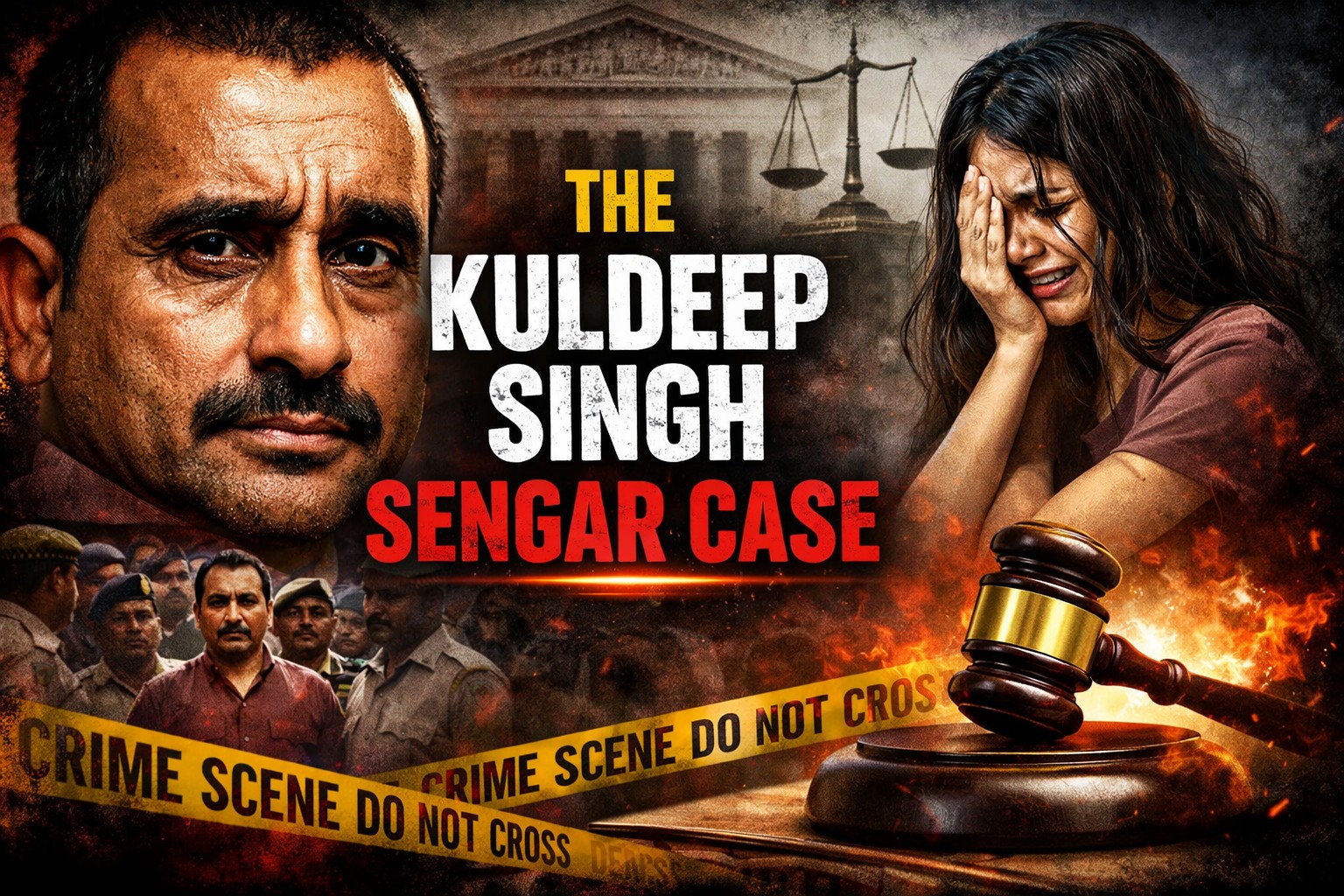
On December 23, 2025, the High Court of Delhi delivered a significant judgment in Criminal Appeal No. 53/2020 regarding the conviction of Kuldeep Singh Sengar, a four-time Member of Legislative Assembly (MLA) from Unnao, Uttar Pradesh, who was convicted of rape and aggravated sexual assault against a minor girl in June 2017. The judgment addresses critical legal issues including the definition of “public servant” under the Protection of Children from Sexual Offences (POCSO) Act, 2012, the reliability of school records in determining the victim’s age, the credibility of alibi evidence, and the appropriate exercise of judicial discretion in suspending sentences during appeals. This case represents one of the most high-profile sexual assault convictions in contemporary Indian criminal jurisprudence, marked by institutional failures, police negligence, and the determination of a traumatized victim to seek justice against a politically powerful accused.
The Background and Facts of the Case
The Incident and Investigation
The case originated from a harrowing incident that allegedly occurred on June 4, 2017, at approximately 8:00 PM in Village Makhi, Unnao, Uttar Pradesh. According to the prosecution’s narrative, a woman named “SS” (Accused No. 1) enticed and induced the victim, identified as a child, to accompany her to the residence of Kuldeep Singh Sengar, the appellant, under the false pretext of providing employment. The victim was allegedly taken through the rear portion of Sengar’s property, bypassing security personnel, where the appellant then forcibly raped the minor girl. The victim, terrified by threats of harm to herself and her family, remained silent about the incident for an extended period.[1]
The involvement of law enforcement agencies was marked by serious institutional failures. Although the victim’s uncle eventually learned of the incident and informed the victim’s mother, the local police at Police Station Makhi took no substantive action despite receiving complaints. The investigation was ultimately transferred to the Central Bureau of Investigation (CBI) via a notification dated April 12, 2018, issued by the Government of Uttar Pradesh. Multiple related cases were registered with the CBI: RC 08(S)/2018 involving the rape allegation, RC 09(S)/2018 addressing charges against the victim’s father, and RC 10(S)/2018 concerning an assault on the victim’s mother’s husband.[1]
Complications and Familial Tragedy
A particularly disturbing aspect of this case involves the circumstances surrounding the death of the victim’s father. According to the CBI’s Final Report, after the victim’s family attempted to seek justice, the victim’s father was assaulted at the District Court in Unnao by the brother of the appellant on April 3, 2018, and was subsequently falsely implicated in a criminal case involving a country-made pistol allegedly planted on him. The victim’s father was taken into judicial custody, where he succumbed to his injuries on April 9, 2019. This tragic death formed the subject matter of RC 09(S)/2018 and demonstrated the predatory behavior of the appellant and his associates in suppressing evidence and intimidating witnesses.[1]
The Complex Case History
The case was further complicated by the existence of multiple parallel investigations. A separate FIR No. 316/2018 dated June 20, 2017, was transferred to the CBI, which registered it as RC 11(S)/2018, involving allegations of kidnapping, confinement for sexual exploitation, and gang rape. Additionally, in 2019, RC 12(S)/2019 was registered following a road accident on July 29, 2019, that resulted in injuries to the victim and the death of her aunt and her lawyer, with the appellant arraigned as an accused in this case.[1]
The Trial and Conviction
The Trial Court’s Findings
The District & Sessions Judge of West District, Tis Hazari Courts, Delhi, delivered the conviction judgment on December 16, 2019, and the sentencing order on December 20, 2019. The appellant was convicted under Sections 376/363/366 of the Indian Penal Code (IPC), read with Sections 5(c)/6 of the POCSO Act. The learned Trial Court sentenced the appellant to undergo life imprisonment for the remainder of his natural life, along with a fine of Rs. 25,00,000 (twenty-five lakhs) and additional compensation of Rs. 10,00,000 (ten lakhs) payable to the victim’s mother.[1]
Key Evidentiary Issues
One of the most critical aspects of the trial involved establishing the victim’s age at the time of the alleged offense. The prosecution relied primarily on the Admission Register of ABS Public School, wherein the victim’s date of birth was recorded as August 17, 2001, confirming her status as a minor (approximately 15-16 years old) at the time of the alleged rape in June 2017. The trial court accepted the testimonies of school officials and family members who corroborated the victim’s enrollment and attendance at ABS Public School for her primary education, thereby establishing her age according to Section 94 of the Juvenile Justice Act, 2015.[1]
The trial court also considered the victim’s statement recorded under Section 164 of the Code of Criminal Procedure, wherein she disclosed the incident, and noted that despite some variations in her narrative, the core allegation remained consistent. The trial court observed that the victim had suffered from threats and intimidation, which explained any delays in reporting or minor inconsistencies in her testimony.[1]
The High Court’s Analysis and the Definition of “Public Servant” Under POCSO
The Critical Legal Question
The High Court’s December 2025 judgment focuses substantially on whether Kuldeep Singh Sengar, as a Member of Legislative Assembly, qualifies as a “public servant” within the ambit of Section 5(c) of the POCSO Act, which provides enhanced punishment for aggravated penetrative sexual assault committed by a public servant. This question became pivotal because the definition of “public servant” is not explicitly provided in the POCSO Act itself.[1]
The Statutory Framework
Section 2(2) of the POCSO Act provides that words and expressions used in the Act but not defined therein shall have the meanings assigned to them in the Indian Penal Code (IPC), the Code of Criminal Procedure (CrPC), the Juvenile Justice Act, 2015, and the Information Technology Act, 2000. Significantly, the POCSO Act does not refer to the Prevention of Corruption Act, 1988, which contains a broader definition of “public servant.”[1]
Section 21 of the IPC defines “public servant” with meticulous precision, delineating twelve categories of individuals falling within its ambit, including judges, military officers, government employees, and persons empowered to levy taxes or administer public property. Notably, a Member of Legislative Assembly is conspicuously absent from this enumeration.[1]
The Supreme Court’s Precedent
The High Court extensively relied on the Supreme Court judgment in A.R. Antulay v. CBI, wherein the Apex Court categorically held that an MLA does not fall within the definition of “public servant” under Section 21 of the IPC. In that landmark judgment, the Supreme Court meticulously examined each clause of Section 21 and concluded that no clause comprehends an elected representative. The Court rejected the argument that an MLA could be classified as a public servant merely because he might possess the power to impose punishment for breach of parliamentary privilege.[1]
The Delhi High Court’s Holding
The Delhi High Court agreed with this settled jurisprudence and concluded that the appellant, despite being a four-time MLA, cannot be brought within the definition of “public servant” for purposes of the POCSO Act. Consequently, the Court held that the appellant’s conviction under Section 5(c) of the POCSO Act, punishable under Section 6, was legally unsustainable. The Court further noted that the Trial Court’s reliance on the Prevention of Corruption Act definition was improper, as the POCSO Act explicitly restricts the definitional cross-reference to the IPC, CrPC, Juvenile Justice Act, and Information Technology Act.[1]
Implications for Sentencing
This determination has profound implications for the appellant’s sentence. Under Section 5(c) of the POCSO Act, aggravated penetrative sexual assault committed by a public servant carries a minimum sentence of twenty years imprisonment, potentially extending to life imprisonment. Had the appellant been properly classified as a “public servant” under the statute, the enhanced sentencing provisions would have applied with greater force. However, with the conviction under Section 5(c) being legally infirm, the High Court suggested that only a conviction under Section 3 of the POCSO Act would be sustainable, which carries a minimum punishment of seven years.[1]
Contentions Regarding the Victim’s Age
The Appellant’s Arguments
The appellant mounted a vigorous challenge regarding the victim’s age, presenting conflicting documentary evidence. The appellant argued that the Admission Register of Government Primary School, Khande Sarai, wherein the victim’s date of birth was recorded as July 5, 1998, was the authentic record. This would have made the victim over eighteen years old at the time of the alleged offense, thereby negating the applicability of POCSO Act provisions designed to protect minors. The appellant further contended that the ABS Public School Admission Register entry at Serial Number 45 had been “rubbed and rewritten,” casting doubt on its authenticity.[1]
The appellant also invoked medical and radiological evidence to support the contention of the victim’s majority age. Medical examinations conducted at the District Hospital, Unnao, recorded the victim’s age as nineteen years and five months as of June 21, 2017. Subsequent X-ray reports from Ram Manohar Lohia (RML) Hospital, Lucknow, indicated that the victim’s age was more than eighteen years. A joint memorandum dated June 18, 2018, prepared by both hospitals and the AIIMS Medical Board in New Delhi similarly concluded that the victim was more than eighteen years of age on June 22, 2017.[1]
The Prosecution’s Rejoinder and the Trial Court’s Acceptance
The prosecution contended that school records, particularly those from ABS Public School corroborated by consistent testimony from family members and school officials, were superior evidence to medical examinations in determining age. The learned trial court accepted the prosecution’s position, relying on the Admission Register of ABS Public School and testimonies of PW-3 (the school principal) and PW-4 (the assistant teacher) who recorded the victim’s date of birth. The trial court observed that in the absence of school certificates prescribed under Section 94 of the Juvenile Justice Act, medical evidence need not be considered.[1]
The High Court’s Prudent Restraint
Significantly, the High Court, while hearing the application for suspension of sentence, deliberately refrained from re-examining the evidence regarding the victim’s age. Relying on the Supreme Court’s judgment in Lilaben v. State of Gujarat, the High Court noted that at the stage of considering an application for suspension of sentence under Section 389 of the CrPC, an appellate court should not ordinarily re-appreciate evidence or alter findings of the trial court. The Court stated that all issues relating to age determination could be thoroughly examined during the final hearing of the appeal on merits.[1]
The Alibi Defense and Cell Tower Evidence
The Appellant’s Alibi Claim
The appellant presented an elaborate alibi defense, claiming that at the time of the alleged offense (approximately 8:00 PM to 8:30 PM on June 4, 2017), he was present at his Unnao City Office, located approximately 14 kilometers from his residence in Village Makhi. The appellant called several witnesses (DW-1 through DW-9) to corroborate this alibi. DW-1, the appellant’s security officer since September 2012, testified that on June 4, 2017, he joined the appellant at his village at approximately 9:00 AM and remained with him throughout the day, accompanying him to the City Office in Unnao, where they stayed until approximately 8:45 PM.[1]
The appellant also presented evidence of phone calls received at his City Office during the alleged time of offense. DW-2 testified to a phone conversation with the appellant at 20:03:56 hours (approximately 8:04 PM) regarding construction of a road near a college. DW-5 testified to calling the appellant at approximately 8:29 PM to invite him to a social gathering. These witnesses collectively portrayed a narrative wherein the appellant was demonstrably present at his City Office during the critical time period.[1]
Cell Derived Location Information (CDLI) Evidence
The appellant’s defense heavily relied on Cell Derived Location Information (CDLI) from mobile phone records. The appellant possessed two mobile handsets: a Samsung phone with two SIM slots carrying BSNL and Vodafone numbers (9415905570 and 9839120151) and an Apple iPhone carrying a Vodafone number (8052616161). The appellant argued that Call Detail Records (CDRs) of these phones demonstrated that from 7:30 PM to 8:30 PM, all three mobile phone numbers were not located at Village Makhi but rather at his City Office in Unnao. The appellant contended that cell tower locations, particularly the tower at Civil Lines, Unnao (located 300 meters from his City Office), pinged by his phone at 20:30:53 hours, definitively established his physical presence at the office.[1]
The appellant further argued that if he had allegedly committed rape from 8:00 PM to 8:30 PM, covering a distance of 14 kilometers in 53 seconds to answer a call at 20:30:53 at his office would have been physically impossible, thereby conclusively establishing his alibi.[1]
The Trial Court’s Rejection of the Alibi
The learned trial court rejected the alibi defense, observing that the appellant failed to prove, even by a preponderance of probabilities, that he was not present at his residence or that he could not have accessed his house in a short time during the day on June 4, 2017. The trial court cast doubts on the credibility of DW-1 and DW-9 (the appellant’s personal attendant), noting that both were close associates of the appellant who failed to provide information regarding his movements on any other day. Regarding the CDR evidence, the trial court emphasized that cell tower locations possess inherent margins of error and that without substantiation by expert witnesses, they could not be relied upon as conclusive evidence of the appellant’s physical location.[1]
The High Court’s Position
The High Court noted that substantial arguments had been raised regarding the alibi and that the question of its veracity would be appropriately addressed during the final hearing of the appeal. However, the Court observed that the trial court’s observations on the reliability of CDLI evidence and the credibility of the defense witnesses would require careful examination at the appellate stage.[1]
The Victim’s Mobile Phone and The “Being on Call” Claim
The Disputed Mobile Number
A contentious issue arose regarding whether the victim was actively engaged in phone calls during the precise time of the alleged offense, which would have rendered her unavailable for rape. The appellant’s defense introduced evidence regarding mobile number 8112802913, which allegedly belonged to one Priya Singh but was allegedly used by the victim from May 29, 2017, to June 10, 2017. The appellant contended that Call Detail Records demonstrated that the victim was using this mobile number during calls from 7:52 PM to 8:30 PM and even at 9:00 PM on June 4, 2017, thereby establishing that she could not have been subjected to rape simultaneously.[1]
Conflicting Evidence
DW-3, Smt. Hira Singh, testified that she had subscribed to a SIM card (ending in 802913) in the name of her daughter Priya and that one day, when her phone fell and its battery separated, the victim picked up the phone, returned the handset to DW-3, but retained the SIM card. The appellant’s lead investigator in the parallel case RC 11(S)/2018, being PW-13, concluded in his investigation that the victim herself was the user of mobile number 8112802913.[1]
However, the trial court rejected this evidence, observing that since the mobile number was registered in Priya Singh’s name, a legal presumption arose that Priya Singh was the user. Furthermore, the trial court found DW-3’s testimony unreliable, noting that the claim that someone would return a phone but retain only the SIM card contradicted common sense. The trial court also noted that Priya Singh was never examined as a defense witness to corroborate DW-3’s narrative.[1]
The Timing Discrepancies in the Victim’s Account
The appellant raised another significant contention regarding temporal inconsistencies in the victim’s account. In a handwritten complaint addressed to the Chief Minister of Uttar Pradesh dated August 17, 2017—approximately two months and ten days after the alleged June 4, 2017, incident—the victim alleged that SS gave her a telephone call at approximately 10:00 PM on June 11, 2017, inviting her to accompany her to Kanpur where a job had been arranged. The victim also alleged in this letter that SS had taken her to the appellant’s residence on June 4, 2017, at 2:00 PM (not 8:00 PM as stated in FIR submissions), where she was raped.[1]
The appellant found this extraordinary, contending that if the victim had truly been raped on June 4, 2017, it defied logic that she would again go to the same house on June 11, 2017, upon a call from the same person, on the same pretext, without any subsequent complaint or resistance. In a media interview on September 12, 2017, the victim had also stated the alleged time of offense as 6:00 PM, further creating confusion regarding the precise time.[1]
The Application for Suspension of Sentence: Legal Principles and Court’s Reasoning
The Statutory Framework Under Section 389, CrPC
The High Court’s decision to suspend the appellant’s sentence was grounded in Section 389 of the CrPC, which grants an appellate court the discretion to suspend execution of a sentence pending appeal and to release the convicted person on bail or personal bond. The statute provides that in cases of conviction for offenses punishable with death, life imprisonment, or imprisonment for ten years or more, the appellate court must provide the Public Prosecutor an opportunity to show cause against release before granting bail.[1]
The Kashmira Singh Doctrine
The High Court relied extensively on the Supreme Court’s landmark judgment in Kashmira Singh v. State of Punjab (1977), which established that the practice of denying bail to persons sentenced to life imprisonment should not be applied mechanically. The Supreme Court in Kashmira Singh held that this practice was predicated on the assumption that appeals would be disposed of within a reasonable timeframe, so that unjustly convicted individuals would not languish in jail for extended periods. However, where there is a realistic prospect that the appeal may not be decided for five or six years, the practice loses its rationale and would constitute a travesty of justice.[1]
Incarceration Period as a Critical Factor
The High Court noted that as of November 30, 2025, the appellant had already spent approximately seven years and five months in incarceration. Applying the reasoning in Kashmira Singh, the Court observed that this period of incarceration exceeded the minimum punishment of seven years prescribed under Section 4 of the POCSO Act as it existed at the time the alleged offense was committed. The Court reasoned that if the appellant were ultimately found not guilty or convicted under Section 3 of the POCSO Act (rather than Section 5(c)), he would have already served or nearly completed his sentence, making further incarceration during the pendency of appeal unjust.[1]
The Prima Facie Determination on Sentencing
Crucially, the High Court made a prima facie determination for the purposes of the suspension of sentence application that the appellant could not be held guilty of the offense under Section 5(c) of the POCSO Act (which mandates life imprisonment) because he does not qualify as a “public servant.” If only a conviction under Section 3 of the POCSO Act were sustainable, the minimum punishment of seven years had already been undergone. This determination, though made only for the purpose of the suspension application, was sufficient to tip the balance toward granting relief under Section 389 of the CrPC.[1]
The Threat Perception and Security Concerns
The learned Counsel for the victim advanced a compelling argument that suspension of the appellant’s sentence would endanger the victim and her family, given the appellant’s demonstrated propensity for violence and his significant political connections. The victim’s father had been killed under circumstances suggesting the appellant’s involvement, her aunt and lawyer were killed in a road accident allegedly involving the appellant, and multiple associates of the appellant had been implicated in attempts to suppress evidence and intimidate witnesses.[1]
However, the High Court rejected the argument that threat perception could justify continued incarceration of the appellant, reasoning that to do so would undermine the credibility and effectiveness of law enforcement and paramilitary forces. Instead, the Court directed that the concerned DCP of the area where the victim resides personally supervise the protection granted to the victim, and that the Directorate of Child Welfare (DCW) ensure adequate accommodation for the victim during the appeal pendency. The Court noted that the Supreme Court had previously granted the victim CRPF security, which would continue throughout the appeal process.[1]
The Conditions Imposed on Suspension of Sentence
The High Court imposed stringent conditions on the suspension of the appellant’s sentence to ensure the safety of the victim and the interests of justice:
First, the appellant was required to furnish security of Rs. 15,00,000 (fifteen lakhs) with three sureties of equal amounts, to be approved by the concerned Jail Superintendent and residing in Delhi.[1]
Second, the appellant was directed not to come within a 5-kilometer radius of the victim’s place of residence.[1]
Third, the appellant must remain in Delhi during the pendency of the appeal to ensure his availability for resuming incarceration if ultimately found guilty.[1]
Fourth, the appellant was explicitly prohibited from threatening the victim or her mother.[1]
Fifth, the appellant was required to deposit his passport with the Trial Court.[1]
Sixth, the appellant must report in person to the local police station every Monday between 10:00 AM and 5:00 PM (as per the judgment).[1]
Conclusion and Broader Implications
This judgment represents a complex and nuanced exercise of judicial discretion in balancing multiple competing interests: the presumption of innocence pending appeal, the rights of a traumatized victim, the practical realities of delayed justice delivery, the rule of law, and constitutional protections against arbitrary detention. The High Court’s determination that an MLA does not qualify as a “public servant” under the POCSO Act has significant jurisprudential consequences, potentially necessitating Parliament’s consideration of whether the definitional framework of the POCSO Act adequately captures elected representatives in positions of political power who exploit vulnerable children.
The case also underscores systemic failures in Indian law enforcement, ranging from the initial inaction by local police at Police Station Makhi to suggestions of investigative compromises at higher levels. The victim’s father’s death in judicial custody stands as a chilling reminder of the dangers faced by victims of sexual assault who challenge politically powerful perpetrators.
While the High Court granted suspension of sentence, it did so with careful safeguards protecting the victim’s security and ensuring the appellant’s availability for trial resumption. The decision is subject to appeal before the Supreme Court, and the substantive issues regarding the victim’s age, the veracity of the alibi defense, and the ultimate culpability of the appellant remain to be definitively adjudicated during the final hearing of Criminal Appeal No. 53/2020. This case will likely be cited extensively in future litigation involving the interpretation of the POCSO Act, the definition of “public servant,” the evidentiary value of school records in age determination, and the proper exercise of judicial discretion in suspending sentences pending appeal in cases involving vulnerable victims.