








New GST Reforms 2025: India’s Bold Tax Revolution Transforms Economic Landscape
India has embarked on its most ambitious tax reform since the introduction of the Goods and Services Tax (GST) in 2017. The 56th GST Council meeting held on September 3, 2025, approved sweeping changes to the nation’s indirect tax framework, marking the beginning of what officials are calling “GST 2.0” or “Next-Gen GST reforms” [1][2]. These comprehensive reforms, effective from September 22, 2025, represent a fundamental restructuring of India’s tax architecture, transitioning from a complex four-tier system to a simplified three-tier structure while delivering substantial relief to consumers and businesses across multiple sectors.

Government officials at a formal meeting discussing GST reform policies in India.
The timing of these reforms is particularly strategic, coinciding with the festive season and designed to counter potential headwinds from US tariff policies while boosting domestic consumption [3][4]. Finance Minister Nirmala Sitharaman emphasized that all decisions were taken unanimously by the GST Council, with complete state backing, reflecting the consensus-driven approach to this transformative economic policy [5].
The Architectural Revolution: From Complexity to Simplicity
The cornerstone of the GST 2.0 reforms lies in the dramatic simplification of the tax structure. The existing four-tier system comprising rates of 5%, 12%, 18%, and 28% has been consolidated into a more streamlined framework [6][7]. This new structure features three primary categories: a merit rate of 5% for essential goods and services, a standard rate of 18% for most goods and services, and a newly introduced de-merit rate of 40% specifically reserved for luxury and socially harmful products [6][7].
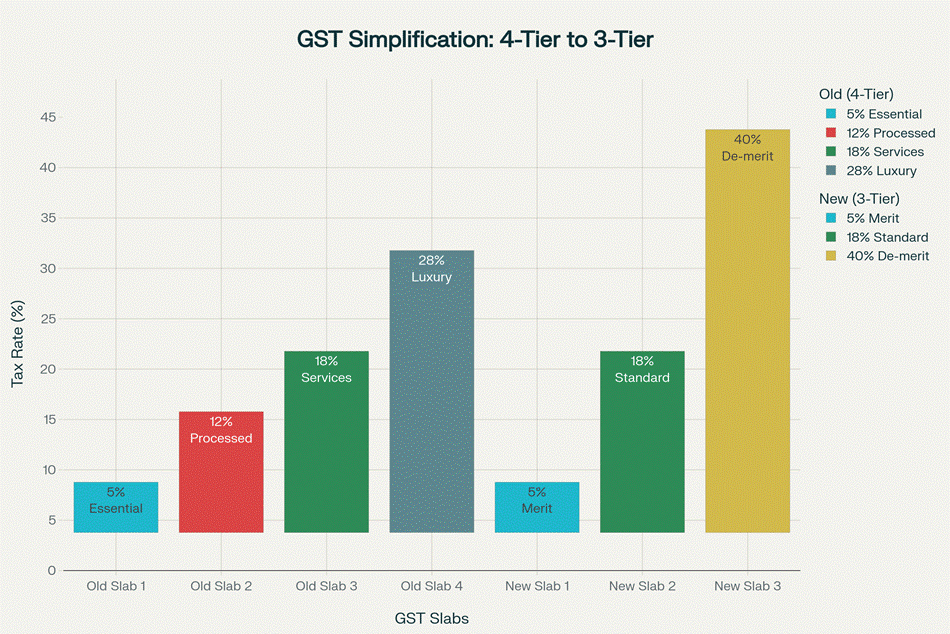
GST structure transformation from 4-tier to simplified 3-tier system in 2025 reforms
The rationalization addresses long-standing classification disputes that have plagued businesses since GST’s inception in 2017. Under the previous system, businesses frequently faced challenges determining whether items fell under the 12% or 18% brackets, leading to litigation and compliance complexity [8]. The simplified structure eliminates the 12% and 28% slabs for most items, creating clearer categorization and reducing administrative burden [9].
Revenue Secretary Arvind Shrivastava noted that the reforms reflect a belief that “GST is not a static situation—when rates come down, buoyancy goes up” [4]. This philosophy underpins the government’s expectation that increased consumption will offset initial revenue losses through enhanced economic activity.
Sectoral Impact Analysis: Winners and Transformation
Healthcare and Essential Services Revolution
| Item Category | Old GST Rate | New GST Rate |
| Life-saving medicines, UHT milk, life & health insurance | 5% | Exempt (0%) |
| Oxygen cylinders, anaesthetics, hydrogen peroxide, diagnostic kits, surgical items, Ayurvedic & allopathic medicaments | 12% / 18% | 5% |
The healthcare sector emerges as one of the biggest beneficiaries of the GST reforms. Individual health and life insurance policies have been completely exempted from GST, moving from the previous 18% rate to zero taxation [10][9]. This change is expected to make insurance more affordable and support the government’s “Insurance for All” initiative [11].
Additionally, 33 life-saving medicines that previously attracted 12% GST have been moved to the exempted category [10]. Medical devices, diagnostic kits, glucometers, and corrective spectacles have all seen significant rate reductions, with spectacles moving from 28% to just 5% GST [8][9]. These changes collectively aim to make healthcare more accessible and affordable for India’s vast population.
Consumer Goods and Daily Essentials
| Item Category | Old GST Rate | New GST Rate |
| Butter, ghee, cheese, condensed milk, chocolates, jams, sauces, soups, namkeens, biscuits, ice cream | 12% / 18% | 5% |
| Soaps, shampoos, toothpaste, hair oil, talcum powder, shaving products | 12% / 18% | 5% |
The reforms deliver substantial relief for household budgets through comprehensive rate reductions on daily consumption items. Hair oil, shampoo, toothpaste, toilet soap bars, and toothbrushes have all moved from 18% to the 5% slab [10][9]. Food items including butter, ghee, cheese, and packaged namkeens have been reclassified from 12% to 5% [8][9].
Ultra-high temperature milk, paneer, and basic Indian breads have been moved to the nil bracket, providing direct relief to consumers on staple food items [12]. These changes are estimated to impact nearly 14% of the Consumer Price Index (CPI) basket, potentially reducing inflation by 50-100 basis points [13][3].
Automotive Sector Transformation
| Item Category | Old GST Rate | New GST Rate |
| Small cars, EVs, hybrids (within prescribed limits), tractors, ambulances, two-wheelers ≤ 350 cc, bicycles, toys, sports goods | 28% / 12% | 18% / 5% |
| Luxury cars, large hybrids, motorcycles > 350 cc, yachts, private aircraft | 28% + cess | 40% |
The automobile industry receives significant support through the GST restructuring. Small cars with engines below 1200cc, diesel and diesel hybrid vehicles under 1500cc, and motorcycles with engines up to 350cc all benefit from rate reductions from 28% to 18% [8][9]. Three-wheelers, trucks, buses, and ambulances also move to the 18% bracket, making commercial transportation more affordable [12].
However, luxury automobiles face higher taxation under the new de-merit category. High-end vehicles and motorcycles above 350cc engine capacity now attract the 40% GST rate, reflecting the government’s intent to discourage luxury consumption while promoting essential mobility [10][9].
Electronics and Consumer Durables
| Item Category | Old GST Rate | New GST Rate |
|---|---|---|
| Air conditioners, televisions (> 32″ LED/LCD), monitors, projectors, dishwashers | 28% | 18% |
| Refrigerators, washing machines, microwave ovens, ovens, water heaters | 18% | 18% |
| Mobile phones, laptops, desktop PCs, cameras, printers, scanners | 18% | 18% |
| Mixers, juicers, vacuum cleaners, fans, small kitchen appliances | 18% | 18% |
| Audio systems, home theatres, smart speakers, wearable devices | 18% | 18% |
Consumer electronics witness substantial relief with air conditioners, televisions above 32 inches, washing machines, monitors, and projectors all moving from 28% to 18% GST [8][9]. This 10-percentage point reduction is expected to boost demand significantly, particularly during the festive season [11].
The changes align with the government’s push toward digital adoption and improved living standards, making technology products more accessible to middle-class consumers [14].
Agricultural and Rural Economy Empowerment
| Item Category | Old GST Rate | New GST Rate |
|---|---|---|
| Tractors (≤ 1,800 cc) | 12% | 5% |
| Tractor parts (tyres, tubes, hydraulic pumps) | 18% | 5% |
| Sprinklers, drip‐irrigation systems, threshers, diesel engines (≤ 15 HP) | 12% | 5% |
| Fertiliser inputs (ammonia, sulphuric acid, nitric acid) | 18% | 5% |
| Bio‐pesticides and micronutrients | 12% | 5% |
| Plant‐based milk drinks (except soya) | 18% | 5% |
| Soya milk drinks | 12% | 5% |
| Paneer (pre‐packaged and labelled) | 12% | Exempt (0%) |
| UHT milk | 5% | Exempt (0%) |
The GST reforms demonstrate strong support for India’s agricultural sector and rural economy. Tractors, agricultural machinery, drip irrigation systems, and sprinklers have been moved from 12% to 5% GST [8][9]. Tractor tyres and parts benefit from rate reductions from 18% to 5%, while bio-pesticides and micro-nutrients also move to the lower slab [8].
These changes are designed to enhance farm productivity and support rural incomes by reducing input costs for farmers [11]. The reforms complement other government initiatives aimed at doubling farmer incomes and modernizing Indian agriculture.
The Luxury Tax Revolution: 40% De-Merit Slab
| Item Category | Old GST Rate | New GST Rate |
| Pan masala, gutkha, cigarettes, chewing tobacco, aerated beverages, caffeinated energy drinks, firearms, yachts, private aircraft | 28% + cess | 40% |
A defining feature of the GST 2.0 framework is the introduction of the 40% de-merit rate for luxury and sin goods. This category includes aerated beverages, carbonated drinks, caffeinated beverages, high-end automobiles, helicopters, yachts, and casino services [10][5]. The government’s rationale centers on discouraging consumption of items deemed harmful to health or purely indulgent [8].
Notably, traditional sin goods including cigarettes, chewing tobacco, zarda, unmanufactured tobacco, and bidis continue at existing rates with compensation cess until all loan and interest obligations under the compensation cess framework are fully discharged [1][2]. This exception ensures fiscal stability while the government manages its compensation obligations to states.
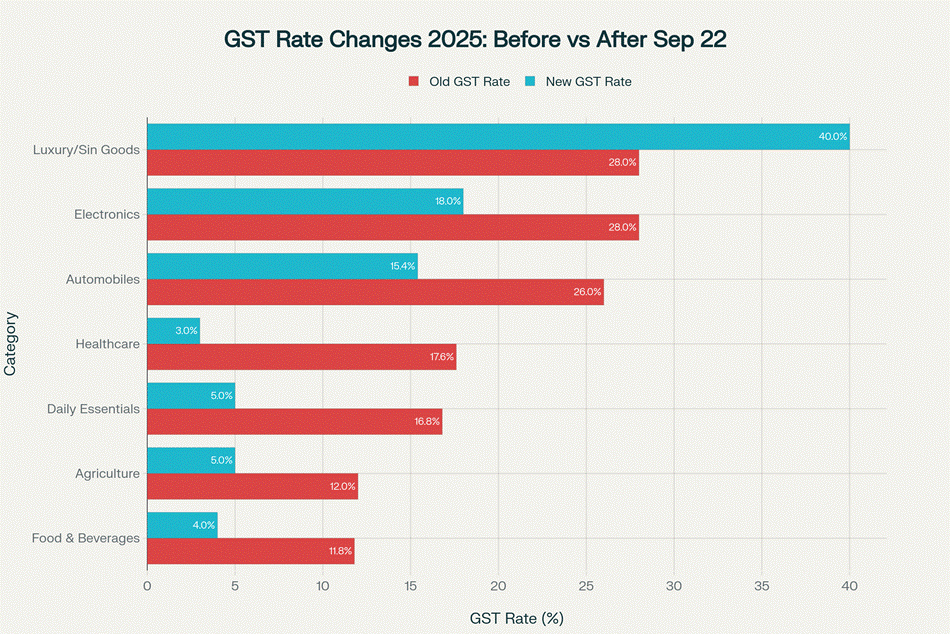
GST Rate Changes 2025: Comparison of old vs new tax rates across different product categories
Economic Impact and Fiscal Implications
The GST reforms carry significant economic implications across multiple dimensions. The government estimates a net revenue impact of Rs 48,000 crore annually, approximately 0.13% of GDP [15][3]. However, contrasting analysis from SBI Research suggests the actual revenue loss could be minimal at Rs 3,700 crore, citing increased consumption and compliance buoyancy [16][17].
Economists project the reforms could add 100-120 basis points to GDP growth over the next 4-6 quarters, potentially offsetting negative impacts from US tariff policies [15]. The consumption boost is expected to be particularly pronounced given that private consumption accounts for 60% of India’s GDP [4].
Inflation Dynamics
The reforms are projected to create significant disinflationary pressure across the economy. Economists estimate potential CPI inflation reduction of 65-75 basis points in 2026-27, with immediate impact expected from reduced costs of essential items [3][13]. The changes affect nearly 14% of the inflation basket, with potential for 50-100 basis points reduction if producers fully pass through rate benefits to consumers [13].
This disinflationary impact comes at a crucial time when India’s retail inflation had already declined to an eight-year low of 1.55% in July 2025 [3]. The sustained reduction in tax rates on essential goods could help maintain price stability while supporting consumption growth.
Administrative and Compliance Reforms
Beyond rate rationalization, the GST 2.0 framework introduces comprehensive administrative improvements designed to enhance ease of doing business and reduce compliance burden [18][19].
Registration Process Simplification
New guidelines effective from April 2025 have streamlined the GST registration process, with low-risk applicants comprising 96% of new registrations now receiving approval within three working days [20]. Enhanced Aadhaar authentication and biometric verification requirements aim to prevent fraudulent registrations while expediting legitimate applications [21][22].
Refund Mechanism Enhancement
The reforms introduce significant improvements to the refund process, particularly benefiting exporters and manufacturers facing inverted duty structures. Starting November 1, 2025, businesses can receive 90% provisional refunds based on automated risk assessment, similar to existing export refund mechanisms [23]. This change addresses long-standing working capital concerns and improves cash flow for affected businesses.
The transition to invoice-based refund filing for export services, SEZ supplies, and deemed exports eliminates period-wise complexities while ensuring greater accuracy and traceability [24][25]. These procedural improvements are expected to significantly reduce refund processing times and administrative burden.
Digital Infrastructure Strengthening
Mandatory multi-factor authentication (MFA) has been implemented across all GST portal users to enhance security and prevent fraudulent activities [19][26]. The phased rollout, starting with high-turnover businesses and extending to all taxpayers, reflects the government’s commitment to digital security while maintaining accessibility.
Enhanced e-way bill regulations, including restrictions on document age and extension limits, aim to prevent backdated transactions and improve supply chain transparency [19]. These measures strengthen the integrity of the GST system while maintaining operational flexibility for legitimate businesses.
State Revenue Implications and Federal Cooperation
The unanimous approval of GST 2.0 reforms by all states demonstrates remarkable federal cooperation in India’s tax policy formulation. States’ willingness to accept potential revenue impacts in favor of long-term economic growth reflects confidence in the reforms’ ability to generate increased tax buoyancy through enhanced economic activity [1].
The decision to maintain existing rates on certain tobacco products until compensation cess obligations are cleared ensures states retain revenue streams while transitioning to the new framework [1][2]. This graduated approach balances immediate reform benefits with fiscal responsibility toward existing commitments.
Industry Response and Market Sentiment
The business community has responded positively to the GST reforms, with several industry leaders welcoming the simplification and rate reductions. Mukesh Ambani described the changes as representing “India’s second-generation GST reforms,” highlighting their potential to boost manufacturing and consumption [5].
FICCI President Harsha Vardhan Agarwal noted that “the simplification of the tax structure will offer multiple benefits including reduced classification disputes, improved compliance, and addressing anomalies on account of inverted duty structure” [3]. The Institute of Chartered Accountants of India emphasized the importance of timely system preparedness for successful implementation [3].
Financial markets have reacted favorably to the reforms, with analysts projecting positive impacts across multiple sectors. The combination of GST cuts with other policy measures including income tax reductions and monetary policy easing creates a supportive environment for consumption-led growth [15].
Implementation Challenges and Preparedness
Despite the positive outlook, the GST 2.0 implementation faces several challenges requiring careful management. The transition of numerous items across rate slabs necessitates comprehensive system updates and taxpayer education to ensure smooth compliance [27].
Businesses must adapt their pricing strategies, inventory management, and billing systems to reflect new rates while managing the transition period effectively. The government has released 75 FAQs addressing common concerns and providing guidance on practical implementation aspects [27].
The Goods and Services Tax Network (GSTN) bears responsibility for ensuring system readiness to handle the massive rate changes and increased transaction volumes expected from enhanced consumption [3]. Robust testing and backup systems will be crucial for maintaining operational continuity during the transition.
Global Context and Competitive Positioning
The GST 2.0 reforms position India favorably in the global tax competitiveness landscape. The simplified structure and reduced rates on manufacturing inputs enhance India’s attractiveness as a production destination, supporting the “Make in India” initiative [28].
The timing of reforms to coincide with potential US tariff pressures demonstrates proactive policy management aimed at maintaining export competitiveness while boosting domestic demand [3][4]. This dual approach helps insulate the Indian economy from external shocks while building internal resilience.
Future Outlook and Long-term Implications
The GST 2.0 reforms represent more than a tax policy adjustment; they embody a comprehensive economic strategy aimed at transforming India’s growth trajectory. The emphasis on consumption-led growth through reduced taxation on essentials while maintaining revenue through luxury taxation reflects a nuanced approach to economic development.
The success of these reforms will largely depend on the extent to which rate reductions translate into consumer price benefits and subsequent demand increases. If successfully implemented, the reforms could establish a new paradigm for Indian taxation policy, balancing revenue requirements with growth objectives [29].
The foundation laid by GST 2.0 also creates opportunities for future refinements and optimizations based on economic outcomes and technological advances. The emphasis on digital infrastructure and data-driven compliance suggests continued evolution toward a more responsive and efficient tax system.
Conclusion
The GST 2.0 reforms represent a watershed moment in India’s economic policy framework, demonstrating the government’s commitment to simplification, growth orientation, and consumer welfare. The comprehensive nature of changes across rate structure, administrative processes, and compliance mechanisms positions India for a new phase of tax-driven economic expansion.
While implementation challenges remain, the unanimous support from states, positive industry response, and careful phasing of changes suggest strong prospects for successful execution. The reforms’ potential to boost consumption, reduce inflation, and enhance business efficiency could deliver sustained benefits to India’s economic trajectory.
The true measure of GST 2.0’s success will emerge through its impact on consumption patterns, business investment decisions, and overall economic growth in the months ahead. Early indicators suggest a positive transformation that could serve as a model for tax policy evolution in emerging economies worldwide [30].
As India embarks on this ambitious tax reform journey, the GST 2.0 framework stands as a testament to the nation’s capacity for bold policy innovation in service of inclusive economic growth and prosperity.
- https://www.pib.gov.in/PressNoteDetails.aspx?NoteId=155151&ModuleId=3
- https://www.taxmann.com/post/blog/key-decisions-from-the-56th-gst-council-meeting
- https://www.deccanherald.com/business/gst-20-to-cushion-economy-from-us-tariff-headwinds-india-inc-3712663
- https://www.hindustantimes.com/business/gst-reforms-vs-us-tariffs-what-it-means-for-indias-gdp-inflation-fiscal-deficit-101756975869329.html
- https://www.cnbctv18.com/economy/gst-council-meet-live-updates-rate-cut-proposals-nirmala-sitharaman-two-slab-structure-taxation-reforms-liveblog-19663671.htm
- https://www.india-briefing.com/news/india-gst-reform-2025-rate-revisions-list-goods-39619.html/
- https://tallysolutions.com/accounting/new-gst-rates-september-2025-business-impact/
- https://www.ujjivansfb.in/banking-blogs/personal-finance/new-gst-rates-gst-2-0-reform-billest-compliance
- https://www.cashe.co.in/our-blog/gst-new-rate-list/
- https://www.indiatoday.in/business/personal-finance/story/gst-new-rules-what-items-taxed-at-40-percent-nirmala-sitharaman-announcements-cigarette-tobacco-drinks-2781600-2025-09-03
- https://www.imtcdl.ac.in/articles-written-by-our-alumni-faculty/gst-reforms-2025-indian-economy/
- https://www.caalley.com/news-updates/indian-news/two-rate-gst-structure-approved-new-rates-to-kick-in-from-sept-22-fm
- https://www.moneycontrol.com/news/business/economy/gst-cuts-will-impact-nearly-14-of-inflation-basket-essential-and-household-goods-to-benefit-the-most-13521129.html
- https://bostoninstituteofanalytics.org/blog/the-latest-gst-reforms-what-businesses-and-professionals-must-know/
- https://www.financialexpress.com/business/industry-two-day-gst-council-meeting-next-gen-reforms-gst-on-auto-insurance-sector-fmcg-sin-tax-finance-minister-nirmala-sitharaman-3965203/
- https://economictimes.com/news/economy/finance/gst-reforms-will-cause-rs-3700-crore-revenue-loss-to-govt-sbi-report/articleshow/123713634.cms
- https://www.ndtv.com/india-news/gst-reforms-will-cause-rs-3-700-crore-revenue-loss-to-govt-sbi-report-9221061
- https://static.pib.gov.in/WriteReadData/specificdocs/documents/2025/sep/doc202594628401.pdf
- https://www.india-briefing.com/news/india-gst-compliance-changes-from-2025-what-businesses-need-to-know-35523.html/
- https://www.lawrbit.com/article/56th-gst-council-meeting-simplified-gst-compliance/
- https://www.mygstrefund.com/gst-registration-guidelines-2025/
- https://cleartax.in/s/gst-registration
- https://www.business-standard.com/economy/news/gst-council-reforms-refunds-inverted-duty-structure-exports-125090400155_1.html
- https://taxpowergst.com/gst-refund-invoice-based-filing-update-2025/
- https://njjain.com/industry-news/gst-refund-filing-revamped/
- https://www.ginesys.in/blog/gst-updates-february-2025-key-changes-you-must-know
- https://www.taxmann.com/post/blog/key-faqs-on-56th-gst-council-meeting-decisions
- https://www.credlix.com/blogs/new-gst-rates-2025-impact-on-export-and-import-business
- https://www.kotakmf.com/Information/blogs/gst-2-point-0_
- https://www.drishtiias.com/daily-updates/daily-news-analysis/gst-2-0-with-next-generation-reforms
- https://treelife.in/taxation/gst-amendments-effective-from-1st-april-2025/
- https://www.biyanicolleges.org/new-gst-amendments-from-1st-april-2025-affect-your-business/
- https://www.visionias.in/blog/current-affairs/gst-reform-2025-indias-two-slab-tax-revolution
- https://www.indiafilings.com/learn/gst-rule-changes-for-fy-2025-26/
- https://www.pib.gov.in/PressReleseDetailm.aspx?PRID=2163555
- https://upstox.com/news/personal-finance/tax/gst-rate-cut-2025-faqs-live-updates-what-is-cheaper-costlier-new-gst-returns-and-registration-rules/liveblog-180671/
- https://cleartax.in/s/gst-changes-from-april-2025
- https://www.pib.gov.in/PressReleasePage.aspx?PRID=2163555
- https://cbic-gst.gov.in/pdf/gst-ct-11-2025.pdf
- https://timesofindia.indiatimes.com/business/india-business/gst-rate-cuts-from-september-22-all-you-need-to-know-about-new-tax-rates-for-items-75-faqs-answered/articleshow/123682611.cms
- https://www.swastika.co.in/blog/next-gen-gst-reform-2025-how-tax-cuts-could-fuel-indias-consumption-stock-market-rally
- https://gstlearn.com/2025/07/09/gst-2-0-compliance-reforms-what-taxpayers-need-to-know-from-july-2025/
- https://www.ey.com/en_in/technical/alerts-hub/2025/09/gst-council-announces-major-rate-rationalization-and-trade-facilitation-measures
- https://static.pib.gov.in/WriteReadData/specificdocs/documents/2025/sep/doc202593627501.pdf
- https://www.gimbooks.com/blog/gst-changes-july-2025/
- https://gstcouncil.gov.in/sites/default/files/2025-08/meeting_notice_56th_gst_council_meeting_0.pdf
- https://indianexpress.com/article/business/gst-council-meeting-rate-rationalisation-live-updates-10228709/
- https://cleartax.in/s/gst-return-filing-rule-changes-from-july-2025
- https://www.scconline.com/blog/post/2025/09/04/gst-council-56th-meeting-slab-reforms-tribunal-rollouts-2025/
- https://paytm.com/blog/news/gst-council-tax-cuts-reforms-2025/
- https://www.pwc.in/assets/pdfs/eight-years-of-gst-a-time-to-reflect-a-time-to-reform-wcag.pdf
- https://ddnews.gov.in/en/gst-reforms-generous-simplified-and-timed-well/
- https://economictimes.com/news/economy/indicators/gst-reforms-will-mitigate-the-us-tariff-impact-on-the-indian-economy/articleshow/123720814.cms
- https://timesofindia.indiatimes.com/business/india-business/gst-council-meeting-live-updates-gst-rate-cut-reforms-fm-nirmala-sitharaman-new-gst-tax-rates-cheaper-costlier-list-impact/liveblog/123688578.cms
- https://caalley.com/news-updates/indian-news/gst-refund-made-easy-gstn-has-done-this-change-in-gst-portal-for-hassle-free-tax-refund-claims
- https://economictimes.com/wealth/tax/gst-refund-made-easy-gstn-has-done-this-change-in-gst-portal-for-hassle-free-tax-refund-claims/articleshow/123563023.cms
- https://www.setindiabiz.com/blog/july-2025-compliance-calendar-india
- https://www.taxmann.com/post/blog/gstn-switches-to-invoice-based-refund-filing-for-exports-and-sez-supplies
- https://static.pib.gov.in/WriteReadData/specificdocs/documents/2025/apr/doc2025418542101.pdf
- https://ppl-ai-code-interpreter-files.s3.amazonaws.com/web/direct-files/137eed7d933e7e73569c73549990501b/a0ed64eb-a3ae-4612-afd9-625b497bf179/38d6131e.csv
- https://ppl-ai-code-interpreter-files.s3.amazonaws.com/web/direct-files/137eed7d933e7e73569c73549990501b/a0ed64eb-a3ae-4612-afd9-625b497bf179/ecf7bde6.csv