







The Scheduled Castes and Scheduled Tribes (Prevention of Atrocities) Act, 1989: A Critical Analysis of Protection Mechanisms and Future Amendments
The Scheduled Castes and Scheduled Tribes (Prevention of Atrocities) Act, 1989, represents one of India’s most significant legislative attempts to address centuries of caste-based discrimination and violence. This comprehensive analysis reveals that while the Act has provided crucial legal protections to marginalized communities, its implementation faces significant challenges that require urgent reforms. Despite recording over 67,000 cases in 2022 alone, conviction rates remain dismally low at around 16% nationally, with some states recording rates as low as 5%, indicating systemic failures in the justice delivery mechanism. The Act’s effectiveness in protecting SC/ST communities from upper caste atrocities has been limited by police apathy, witness intimidation, judicial delays, and inadequate infrastructure, necessitating comprehensive amendments to strengthen victim protection, enhance judicial mechanisms, and ensure swift justice delivery.[1][2][3]
Visual representation of SC/ST Act providing legal protection to marginalized communities
Historical Context and Legislative Genesis
The Roots of Caste-Based Violence
The enactment of the SC/ST Act emerged from the recognition that existing legal frameworks were inadequate to address the persistent and systematic violence against Scheduled Castes and Scheduled Tribes. A comprehensive study conducted by the National Commission for SCs and STs in 1990 identified multiple causal factors for atrocities, including land disputes, land alienation, bonded labor, indebtedness, non-payment of minimum wages, caste prejudice, practice of untouchability, political factions based on caste lines, and refusal to perform traditional caste-based occupations. These deep-rooted issues stemmed from the hierarchical caste system that had relegated SC/ST communities to the margins of society for centuries. [4]
The inadequacy of existing laws became apparent as the Protection of Civil Rights Act, 1955, and provisions under the Indian Penal Code, 1860, proved insufficient to check the mounting atrocities against these communities. The Parliament acknowledged this legislative gap in the Statement of Objects and Reasons, noting that “despite various measures to improve the socioeconomic conditions of SCs & STs, they remain vulnerable. They are denied a number of civil rights; they are subjected to various offences, indignities, humiliations and harassment”. [5][6][4]
Legislative Framework and Objectives
The Act was passed by Parliament on September 11, 1989, and notified on January 30, 1990, with the primary objective of preventing atrocities against SC/ST communities and providing for special courts to ensure speedy trials. The Act defines “atrocity” comprehensively, covering physical violence, sexual exploitation, economic exploitation, social humiliation, and political discrimination. The legislation operates on three fundamental principles: defining specific crimes against SCs and STs as atrocities, establishing special judicial mechanisms for trial, and providing relief and rehabilitation to victims. [5][7][4]
Protective Mechanisms Against Dominant Caste Atrocities
Defining and Categorizing Atrocities
The Act’s protection mechanisms begin with its comprehensive definition of atrocities that specifically target the vulnerabilities of SC/ST communities. Section 3 of the Act categorizes offenses that can only be committed by non-SC/ST persons against SC/ST members, ensuring that the law addresses the specific power dynamics inherent in caste-based violence. The original Act was significantly strengthened through the 2015 Amendment, which added numerous new offenses including garlanding with footwear, compelling manual scavenging, verbal abuse using caste names in public, and imposing social or economic boycotts. [3][8][9]
The Act recognizes various forms of exploitation including forcing SC/ST individuals to drink or eat inedible substances, causing injury or insult intended to humiliate, wrongfully occupying or cultivating land belonging to SC/ST persons, and preventing access to common property resources. Sexual offenses receive special attention, with provisions covering rape, gang rape, sexual exploitation, and outraging the modesty of SC/ST women. [5][8][9]
Special Judicial Infrastructure
The establishment of Special Courts represents a crucial protective mechanism designed to ensure swift justice for atrocity victims. Section 14 mandates that State Governments, with the concurrence of the Chief Justice of the High Court, establish Special Courts in each district for the speedy trial of offenses under the Act. The 2015 Amendment further strengthened this provision by mandating Exclusive Special Courts in districts with higher caseloads and specifying that cases should be disposed of within two months. [5][7][9][10]
These Special Courts have been granted significant powers including the authority to take direct cognizance of offenses after charge-sheet submission, eliminating the need for committal proceedings in many cases. The courts can order registration of FIRs and conduct investigations under Sections 156(3) and 190 of the Criminal Procedure Code when complaints are filed directly before them. [11][12]
Investigative Safeguards
The Act incorporates several investigative safeguards to ensure thorough and unbiased investigations. All offenses under the Act are cognizable, allowing police to arrest without warrant and commence investigations without court orders. Investigations must be conducted by officers not below the rank of Deputy Superintendent of Police and completed within 30 days. The 2018 Amendment specifically prohibits preliminary inquiry before FIR registration and removes the requirement for approval before arrests, ensuring immediate action against perpetrators. [5][7][13][3]
Victim Protection and Compensation
The Act establishes comprehensive victim protection mechanisms through Chapter IVA, which was added in the 2015 Amendment. These provisions guarantee rights of victims and witnesses including immediate relief in cash or kind, protection from intimidation, medical aid, transport facilities, and legal assistance. The relief structure is detailed in the Rules, providing monetary compensation ranging from ₹25,000 to ₹8,25,000 depending on the nature and severity of the offense. [5][9][14][15]
Special attention is given to vulnerable victims, with provisions ensuring that women witnesses, minors, elderly persons, and disabled individuals are entitled to attendants of their choice during proceedings. The Act also mandates video recording of all proceedings to prevent tampering and ensure transparency. [16][17][18]
Statistical Evidence of Protection and Challenges
Rising Cases and Geographic Distribution
Data from the National Crime Records Bureau reveals a concerning trend of increasing cases under the SC/ST Act, with total registered cases rising from 47,338 in 2018 to 67,646 in 2022. Uttar Pradesh consistently reports the highest number of cases, accounting for 23.78% of all SC cases in 2022, followed by Rajasthan (16.75%) and Madhya Pradesh (14.97%). For ST communities, Madhya Pradesh leads with 30.61% of cases, followed by Rajasthan (25.66%). [1][2][3][19]
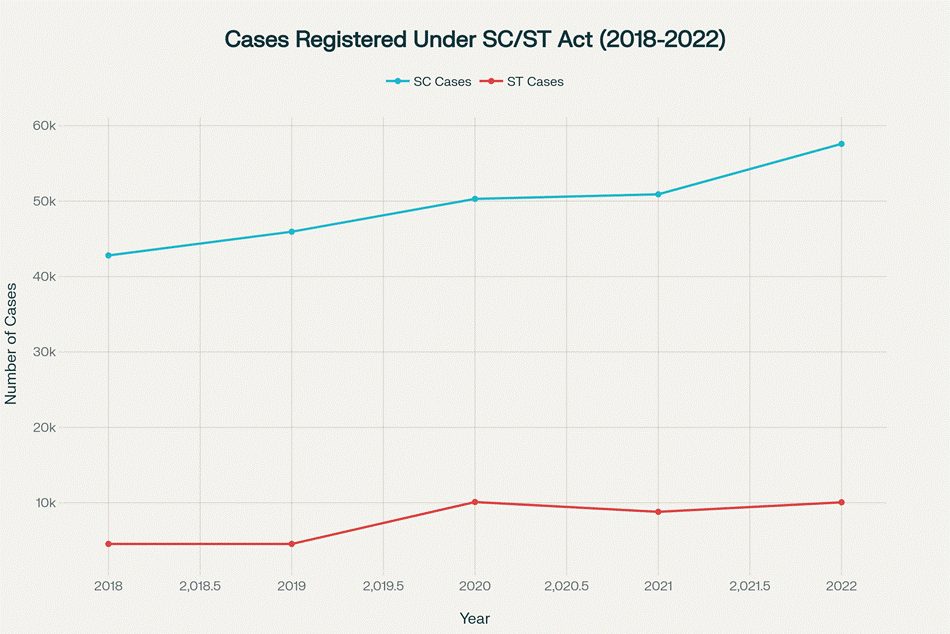
Trend of cases registered under SC/ST Act showing increasing incidents of atrocities from 2018-2022
Conviction Rate Crisis
Despite the increasing number of registered cases, conviction rates remain alarmingly low, indicating significant implementation challenges. The national conviction rate for SC cases dropped to 32.4% in 2022 from 39.2% in 2020. Some states record even lower rates, with Karnataka showing only 5% conviction rate in 2018, while states like Andhra Pradesh and Odisha also report poor conviction outcomes. [3][20][19]

Comparison of conviction rates under SC/ST Act showing poor judicial outcomes in most states
This low conviction rate severely undermines the deterrent effect of the law and perpetuates a climate of impunity. Studies indicate that the vast majority of cases either result in acquittals or remain pending for years, with many witnesses turning hostile due to intimidation and lack of protection. [3][21]
Implementation Gaps
Research reveals significant implementation gaps across states. A comprehensive evaluation study of SC/ST Protection Cells found that while states like Tamil Nadu and Karnataka have undertaken innovative measures resulting in effective crime reduction, other states like Bihar, Madhya Pradesh, and Rajasthan require more creative approaches to decrease atrocities. The study noted that only 40% of social leaders reported significant decrease in crimes, while 55% observed only marginal improvements. [22]
Challenges in Current Implementation
Police Apathy and Systemic Bias
One of the most significant challenges in implementing the SC/ST Act is police apathy and systemic bias within law enforcement agencies. Victims frequently face resistance and hostility at police stations, with reports of delays in registering FIRs, faulty investigations, and lack of sensitization among police personnel. The deep-rooted caste prejudices within the police force often result in cases being registered under general IPC sections rather than the specific provisions of the SC/ST Act, diluting the legal protection intended for victims. [3][23][24]
Witness Protection Failures
The lack of effective witness protection remains a critical weakness in the implementation of the Act. Despite the 2018 Witness Protection Scheme, victims and witnesses continue to face immense pressure, threats, and social boycotts to withdraw their cases. The economic dependence of victims on perpetrators, particularly in rural areas, creates additional vulnerabilities that the current protection mechanisms fail to address adequately. [3][25][26]
Judicial Infrastructure Deficits
The inadequate number of Special Courts constitutes a major implementation challenge. According to recent reports, only 194 out of 498 districts in 14 states have established special courts to handle cases under the Act. This shortage results in case backlogs, prolonged trials, and delayed justice, with many cases taking years to reach conclusion. [3][23][19]
Relief and Rehabilitation Delays
The disbursement of monetary relief and provision of rehabilitation measures are often delayed due to bureaucratic red tape and inadequate coordination between departments. Evaluation studies reveal that delays in payment of relief compensation undermine the effectiveness of the support system designed for victims. [3][22]
Successful Interventions and Best Practices
Tamil Nadu Model
Tamil Nadu has emerged as a model state in implementing the SC/ST Act through its innovative Social Justice and Human Rights Units. These units have demonstrated effectiveness in reducing crimes against SCs and STs through proactive measures including regular surveys of atrocity-prone areas, prompt information sharing with nodal officers and District Magistrates about victim rights implementation, and coordinated approach with multiple agencies. [22]
Karnataka’s Directorate of Civil Rights Enforcement
Karnataka’s Directorate of Civil Rights Enforcement (DCRE) offices have shown significant success in coordinating with District Collectors, local police, and Social Welfare Departments for effective implementation of victim and witness rights. The state has established a systematic approach to monitoring and intervention that has contributed to crime reduction in recent years. [22]
Relief and Compensation Mechanisms
Several states have developed comprehensive relief and compensation schemes that go beyond the minimum requirements. The “Dr. Ambedkar National Relief to the SC/ST Victims of Atrocities Scheme” provides instant monetary relief up to ₹5 lakhs for heinous offenses including murder, rape, arson, and permanent disability. States like Haryana have established detailed compensation structures ranging from ₹85,000 to ₹8,25,000 based on the nature of the offense.[17][15]
Proposed Amendments for Enhanced Protection
Strengthening Witness Protection Framework
The most critical amendment required is the establishment of a comprehensive witness protection framework with legal backing. Current proposals include creating a dedicated Witness Protection Act with provisions for safe houses, armed escorts, identity protection, and long-term rehabilitation support. The amendment should mandate state governments to allocate specific budgets for witness protection and establish specialized units in each district to coordinate protection measures. [27][25]
Expanding Scope of Atrocities
Legal experts and civil rights organizations have proposed expanding the definition of atrocities to include cyber-crimes, digital harassment, and online caste-based discrimination. With increasing use of social media and digital platforms for caste-based abuse, the Act requires amendments to address these emerging forms of violence. Additionally, provisions should be included to address inter-caste marriages-related violence and honor killings targeting SC/ST individuals. [27][24][28]
Institutional Strengthening
Proposed amendments include mandatory establishment of Exclusive Special Courts in all districts, regardless of caseload, to ensure uniform access to justice. The amendment should also mandate appointment of Special Public Prosecutors with expertise in caste-based violence and regular training programs for judicial officers, police personnel, and administrative officials. [27][24][29]
Enhanced Accountability Mechanisms
Civil rights organizations have proposed amendments to strengthen accountability mechanisms for public servants who fail to implement the Act effectively. This includes automatic suspension of officials who delay FIR registration, mandatory departmental action against investigating officers who conduct poor investigations, and periodic performance evaluation of Special Courts based on disposal rates and conviction outcomes. [27][24]
Economic Empowerment Provisions
Proposed amendments include provisions for economic empowerment of SC/ST communities through mandatory land redistribution in cases of land-related atrocities, preferential employment opportunities for victims’ families, and establishment of special economic zones with reserved opportunities for SC/ST entrepreneurs. These measures aim to address the root causes of economic vulnerability that perpetuate caste-based exploitation. [30][29]
Technology Integration
Amendments should mandate use of technology for case tracking, online FIR registration specifically for atrocity cases, digital case management systems for Special Courts, and mobile applications for immediate reporting of atrocities. Video conferencing facilities should be made mandatory for recording victim statements to reduce trauma and ensure safety. [24]
Recommendations from National Commissions
National Commission for Scheduled Castes Recommendations
The National Commission for Scheduled Castes has proposed several amendments including mandatory constitution of State and District Level Vigilance and Monitoring Committees with adequate representation of SC community members, regular review meetings to assess implementation effectiveness, and penalty provisions for non-compliance by state governments. The Commission has also recommended amending Article 338 to provide enforcement powers to NCSC recommendations rather than merely advisory functions. [29][31]
Human Rights Watch Recommendations
International human rights organizations have recommended amendments to ensure strict implementation through establishment of SC/ST atrocities cells in every police station, appointment of special deputy superintendents in each revenue district for investigation, and statutory empowerment of National Commission for Scheduled Castes to initiate prosecution. These organizations emphasize the need for civilian oversight mechanisms to monitor police performance and ensure accountability.[27]
National Human Rights Commission Findings
The NHRC has identified the need for amendments addressing institutional discrimination and social exclusion that contribute to atrocities. Recommendations include provisions for social audit of implementation, mandatory reporting of atrocities by government institutions, and establishment of rehabilitation centers for victims of severe atrocities. [3][9]
Comparative Analysis with International Models
Learning from International Experience
International experience with hate crime legislation provides valuable insights for strengthening the SC/ST Act. The United States’ hate crime laws include provisions for federal intervention when local authorities fail to act, enhanced penalties for bias-motivated crimes, and comprehensive victim support services. Similarly, the United Kingdom’s approach to hate crime includes community-based reporting mechanisms and restorative justice programs that could be adapted for the Indian context.[32]
Best Practices in Victim Protection
International best practices in witness and victim protection emphasize long-term support systems, psychological counseling, economic rehabilitation, and community integration programs. These models suggest that amendments to the SC/ST Act should include provisions for comprehensive rehabilitation packages, trauma counseling services, and community sensitization programs to address social ostracism of victims. [26][32]
Future Directions and Implementation Strategies
Comprehensive Legal Reform
The path forward requires comprehensive legal reform that addresses both structural and procedural aspects of the Act. Proposed amendments should focus on creating a more robust legal framework with enhanced punishment provisions, streamlined procedures for quick disposal of cases, and mandatory time-bound implementation of relief measures. The reform should also include provisions for regular review and updating of the Act to address emerging forms of caste-based discrimination.[24][28]
Capacity Building and Training
Successful implementation of amended provisions will require extensive capacity building programs for all stakeholders. This includes specialized training for police officers on investigation techniques specific to caste-based crimes, judicial training programs for Special Court judges, and awareness programs for SC/ST communities about their rights under the Act. The amendment should mandate regular training and certification requirements for officials dealing with atrocity cases.[23][27]
Monitoring and Evaluation Framework
Amendments should include provisions for establishing a robust monitoring and evaluation framework with regular assessment of implementation effectiveness, public reporting of statistics and outcomes, and independent evaluation by civil society organizations. This framework should include specific indicators for measuring success in crime prevention, justice delivery, and victim rehabilitation.[24][28]
Conclusion
The Scheduled Castes and Scheduled Tribes (Prevention of Atrocities) Act, 1989, has provided crucial legal protection to marginalized communities against caste-based violence and discrimination. However, three decades of implementation have revealed significant gaps that require comprehensive amendments to enhance its effectiveness. While the Act has succeeded in creating legal awareness and providing a framework for addressing atrocities, the low conviction rates, inadequate witness protection, and systemic implementation challenges indicate the need for substantial reforms. [3][21][24]
The proposed amendments focusing on strengthening witness protection, expanding the scope of atrocities to include digital crimes, enhancing institutional mechanisms, and providing economic empowerment opportunities represent essential steps toward making the Act more effective for SC/ST communities. Success in implementing these amendments will require sustained political will, adequate resource allocation, and coordinated efforts by all stakeholders including government agencies, civil society organizations, and the communities themselves. [27][24][28][22]
The ultimate goal of these amendments should be to create a comprehensive framework that not only punishes perpetrators but also prevents atrocities through social transformation, economic empowerment, and institutional change. Only through such holistic reform can the SC/ST Act fulfill its original promise of ensuring dignity, equality, and justice for India’s most marginalized communities.
- https://cjp.org.in/up-leads-in-cases-of-atrocities-against-dalits-madhya-pradesh-tops-in-most-crimes-reported-against-sts/
- https://timesofindia.indiatimes.com/city/agra/with-41k-cases-in-2020-22-up-tops-in-atrocities-on-scs/articleshow/118152915.cms
- https://airacle.in/blog/sc-st-act-1989/
- https://en.wikipedia.org/wiki/Scheduled_Caste_and_Scheduled_Tribe_(Prevention_of_Atrocities)_Act,_1989
- https://www.pmfias.com/sc-st-prevention-of-atrocities-act-1989/
- https://www.cvmc.in/about/
- https://www.drishtiias.com/daily-news-analysis/sc-upholds-changes-to-sc-st-atrocities-law
- https://www.pib.gov.in/newsite/PrintRelease.aspx?relid=136514
- https://www.clearias.com/sc-st-prevention-of-atrocities-act/
- https://www.drishtiias.com/to-the-points/Paper2/special-courts-3
- https://blog.ipleaders.in/special-courts-under-sc-st-act/
- https://www.scconline.com/blog/post/2023/02/17/special-courts-under-sc-st-act-can-order-lodging-of-fir-and-pre-trial-proceedings-under-section-1563-of-crpc-allahabad-high-court-reiterates-legal-research-legal-news-updates/
- https://www.scobserver.in/reports/prathvi-raj-chauhan-union-of-india-legality-sc-st-amendment-act-judgment-in-plain-english/
- https://socialwelfare.uk.gov.in/organization/sc-and-st-prevention-of-atrocities-act-1989/
- https://sewa.haryana.gov.in/monetary-relief-to-the-victim-of-atrocities-5050/
- https://www.indiacode.nic.in/bitstream/123456789/15338/1/scheduled_castes_and_the_scheduled_tribes.pdf
- https://www.cvmc.in/relief/
- https://nyaaya.org/legal-explainer/relief-and-rehabilitation-for-victims-of-atrocities/
- https://www.nextias.com/ca/current-affairs/24-09-2024/report-under-the-scheduled-castes-and-scheduled-tribes-prevention-of-atrocities-act
- https://www.deccanherald.com/india/karnataka/conviction-rate-sc-st-700772.html
- https://www.hindustantimes.com/india-news/sc-st-act-more-symbolic-than-effective/story-S9ZgRCOl2kPDivsPhQJ18M.html
- https://socialjustice.gov.in/public/ckeditor/upload/Summary Report-Evaluation of SCST Protection Cells_1648793671.pdf
- https://clpr.org.in/blog/lawyers-workshop-on-the-scheduled-castes-and-scheduled-tribes-prevention-of-atrocities-act-1989/
- https://idsn.org/rights-defenders-legislation-meant-stop-caste-atrocities-failing/
- https://www.drishtiias.com/daily-updates/daily-news-analysis/need-for-a-dedicated-witness-protection-law
- https://ijcrt.org/papers/IJCRT2306881.pdf
- https://www.hrw.org/reports/1999/india/India994-03.htm
- https://idsn.org/india-non-implementation-of-the-scheduled-castes-scheduled-tribes-poa-act-1989/
- https://vajiramandravi.com/upsc-exam/ncsc/
- https://theiashub.com/upsc-notes/upsc-mains-marks-booster/national-commission-sc-st-backward-classes
- https://ncsccmis.nic.in/about_us.aspx
- https://www.research.ed.ac.uk/files/264236442/FuchsS2022SAMAJRethinkingTheAtrocitiesAct.pdf
- https://ignited.in/index.php/jasrae/article/download/11021/21846/54578?inline=1
- https://nhapoa.gov.in/en/cms/constitutional-provisions
- https://www.scobserver.in/cases/prithvi-raj-chauhan-union-of-india-legality-of-sc-st-act-amendment-case-background/
- https://www.drishtiias.com/daily-updates/daily-news-analysis/report-on-atrocities-against-scs-and-sts
- https://indianexpress.com/article/india/sc-verdict-sc-st-atrocities-act-6259976/
- https://anagrasarkalyan.gov.in/documnts/07-07-2017-09-57-52.pdf
- https://iasbaba.com/2023/01/day-39-q-2-how-effective-are-existing-legal-frameworks-such-as-the-scheduled-castes-and-scheduled-tribes-prevention-of-atrocities-act-1989-in-preventing-and-punishing-discrimination-and-violenc/
- https://papers.ssrn.com/sol3/papers.cfm?abstract_id=3732709
- https://www.scconline.com/blog/post/2020/02/10/supreme-court-upholds-constitutional-validity-of-the-sc-st-prevention-of-atrocities-amendment-act-2018/
- https://scstwelfare.delhi.gov.in/scstwelfare/sc-and-st-prevention-atrocities-rules-1995
- https://visionias.in/current-affairs/monthly-magazine/2025-01-22/polity-and-governance/atrocities-against-scheduled-castes
- https://prsindia.org/billtrack/the-scheduled-castes-and-the-scheduled-tribes-prevention-of-atrocities-amendment-bill-2018
- https://socialjustice.gov.in/writereaddata/UploadFile/The Scheduled Castes and Scheduled Tribes.pdf
- https://socialjustice.gov.in/writereaddata/UploadFile/PoA_Act_2018636706385256863314.pdf
- https://www.data.gov.in/resource/stateut-wise-number-cases-registered-under-scst-prevention-atrocities-act-only-and
- https://www.cvmc.in/wp-content/uploads/2024/10/20240724-RS-AU301-Crime-statistics-2018-2022.pdf
- https://sansad.in/getFile/annex/266/AU1082_jDzlTx.pdf
- https://jrtdd.com/index.php/journal/article/download/3102/2308/4624
- https://www.mha.gov.in/MHA1/Par2017/pdfs/par2025-pdfs/LS18032025/2946.pdf
- https://www.sciencedirect.com/science/article/pii/S0147596714001048
- https://www.pib.gov.in/Pressreleaseshare.aspx?PRID=1781362
- https://www.data.gov.in/resource/stateut-wise-cases-registered-relating-sc-and-st-under-scs-and-sts-prevention-atrocities
- https://sansad.in/getFile/annex/267/AU3650_3LM9tI.pdf
- https://journals.openedition.org/samaj/7884
- https://socialjustice.gov.in/writereaddata/UploadFile/24771752148499.pdf
- https://papers.ssrn.com/sol3/Delivery.cfm/SSRN_ID4312008_code4796295.pdf?abstractid=4312008&mirid=1
- https://sansad.in/getFile/annex/265/AU303_b1Qf0g.pdf
- https://restthecase.com/knowledge-bank/sc-st-atrocity-act-a-complete-guide
- https://clpr.org.in/wp-content/uploads/2024/12/35.-National_Campaign_on_Dalit_Human_Rights_and_Ors_vsSC20162212161644463COM260229.pdf
- https://documents.doptcirculars.nic.in/D2/D02adm/Chapter-18.pdf
- https://testbook.com/question-answer/national-commission-of-scheduled-castes-and-schedu–5f5886a633836e54155acdef
- https://ncst.nic.in/uploads-dev/recommendation_of_ncscst_annual_report/Subject_wise_Recommendation_Atrocity6720213322.doc
- https://nhrc.nic.in/sites/default/files/reportKBSaxena_1.pdf
- https://www.drishtiias.com/daily-updates/daily-news-analysis/national-commission-for-scheduled-castes-2
- https://police.tripura.gov.in/sites/default/files/2024-02/SC ST(POA) Amendment Act,2015 and 2016..pdf.pdf
- https://idsn.org/wp-content/uploads/user_folder/pdf/New_files/India/SCST_Postionpaper_final.pdf
- https://globalforumcdwd.org/india-data-shows-rise-in-atrocities-against-dalits-tribal-people/
- https://www.lawjournals.net/assets/archives/2025/vol7issue3/7086.pdf
- https://economictimes.com/news/india/57789-cases-registered-for-committing-crime-against-scheduled-castes-in-2023-ncrb/articleshow/124240911.cms
- https://clpr.org.in/blog/protecting-the-rights-of-victims-witnesses-in-caste-based-atrocities/
- https://iasscore.in/current-affairs/rising-atrocities-against-dalits
- https://officeofpartapsingh.com/our-presence/f/the-failure-of-witness-protection-in-india-legal-analysis?blogcategory=Insurance+Law
- https://timesofindia.indiatimes.com/india/crimes-against-scs-went-up-13-and-against-sts-by-14-3-in-2022-ncrb/articleshow/105790790.cms
- https://www.mha.gov.in/sites/default/files/2022-08/Documents_PolNGuide_finalWPS_08072019[1].pdf
- https://opo.iisj.net/index.php/osls/article/view/1484/1828
- https://idsn.org/wp-content/uploads/user_folder/pdf/New_files/India/Performan_of_courts_SCST_act-_Study.pdf
- https://www.insightsonindia.com/2015/10/21/2-critically-discuss-the-effectiveness-of-the-scheduled-caste-and-scheduled-tribes-act-in-stopping-atrocities-against-sc-st-communities-in-india/
- https://cdnbbsr.s3waas.gov.in/s3ec021160453108d3e537255e9f7b931f/documents/circular/1_64.pdf
- https://ignited.in/index.php/jasrae/article/download/15361/30333/75052
- https://socialjustice.gov.in/writereaddata/UploadFile/POA Act.pdf
- https://www.drishtiias.com/daily-updates/daily-news-analysis/advancing-sc-st-welfare-in-india
- https://www.indiacode.nic.in/show-data?actid=AC_CEN_25_35_00002_198933_1517807322896§ionId=12256§ionno=14&orderno=14