





Statement Recording in Criminal Proceedings: A Comprehensive Guide for Legal Practitioners on Accused and Victim Statement Procedures
The recording of statements from accused persons and victims represents one of the most critical and legally complex aspects of criminal procedure, requiring lawyers to navigate intricate constitutional protections, statutory requirements, and procedural safeguards. With the implementation of the Bharatiya Nagarik Suraksha Sanhita (BNSS) 2023, replacing the Code of Criminal Procedure 1973, significant procedural changes have enhanced both the rights of accused persons and the protection of victims during statement recording processes. This comprehensive analysis provides legal practitioners with essential knowledge about the distinct procedures, constitutional protections, and strategic considerations governing statement recording for both accused persons and victims in criminal proceedings, ensuring effective representation while maintaining compliance with evolving legal standards.[1][2][3]
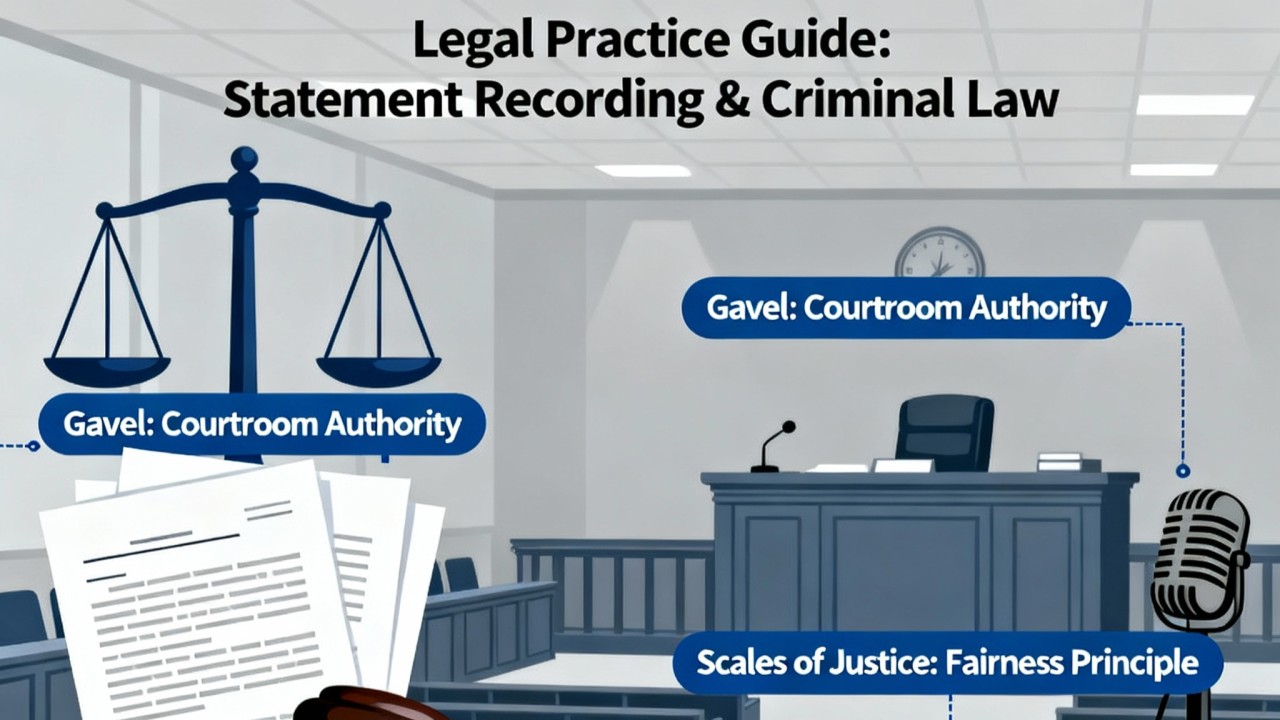
Statement Recording Process: Accused vs Victim Procedures in Criminal Cases
Constitutional and Legal Framework
Fundamental Rights and Procedural Safeguards
The constitutional foundation for statement recording procedures rests primarily on Article 20(3) of the Constitution, which provides that “no person accused of an offence shall be compelled to be a witness against himself.” This fundamental protection against self-incrimination extends beyond mere testimonial compulsion to encompass all forms of evidence that might incriminate an accused person. The Supreme Court has consistently held that this protection is absolute and cannot be circumvented through procedural manipulation or investigative techniques that effectively compel self-incriminating disclosures.[1][4]
The BNSS has strengthened constitutional protections by explicitly incorporating technological safeguards and expanding the scope of protection for vulnerable witnesses and accused persons. Section 180 of BNSS, corresponding to Section 161 of CrPC, maintains the fundamental principle that any person being questioned by police can refuse to answer questions that might expose them to criminal charges, penalties, or forfeitures. This protection extends to both direct questioning and circumstances where responses might provide investigative leads that could result in incriminating evidence.[1]
The legislative evolution from CrPC to BNSS reflects growing recognition of the need for enhanced procedural safeguards in an increasingly complex criminal justice system. The new provisions emphasize transparency through mandatory audio-video recording in specific circumstances, while simultaneously strengthening traditional protections against coercive interrogation practices. These changes require lawyers to understand both the enhanced protections available to their clients and the new obligations imposed on investigating authorities.[2][3]
Statutory Provisions and Recent Developments
The transition from CrPC to BNSS has introduced significant procedural modifications that affect statement recording practices across all categories of cases. Section 180 BNSS expands upon Section 161 CrPC by explicitly providing for audio-video recording of statements, while Section 183 BNSS enhances Section 164 CrPC through improved technological integration and stronger procedural safeguards. These changes reflect contemporary understanding of the importance of accurate record-keeping and the prevention of procedural irregularities that could compromise case integrity.[3][5]
The BNSS introduces mandatory audio-video recording for specific categories of cases, including statements from disabled victims and certain high-profile investigations involving serious offenses. This technological integration serves dual purposes: protecting the rights of persons giving statements and creating reliable evidence for court proceedings. However, the legislation also recognizes practical limitations by allowing flexibility in recording methods while maintaining core procedural requirements.[2][6]
Recent judicial developments have emphasized the importance of strict compliance with procedural requirements, particularly regarding the voluntariness of statements and the adequacy of constitutional warnings. Courts have increasingly scrutinized statement recording procedures, leading to exclusion of evidence where proper safeguards were not observed. This trend requires lawyers to maintain detailed knowledge of procedural requirements and to challenge statement evidence where appropriate safeguards were not followed.[7][8]
Statement Recording Procedures for Accused Persons
Police Statement Recording Under Section 161 CrPC/180 BNSS
The recording of statements from accused persons by police represents a fundamental investigative tool that must balance effective law enforcement with constitutional protections. Under Section 161 CrPC and its successor Section 180 BNSS, police officers are authorized to examine orally any person “supposed to be acquainted with the facts and circumstances of the case,” which judicial interpretation has extended to include accused persons and suspects. This examination serves investigative purposes but is subject to strict constitutional limitations regarding self-incrimination.[1][4]
The procedural framework requires that persons being questioned must “answer truly all questions” except those that could expose them to criminal charges, penalties, or forfeitures. This exception, derived from Article 20(3), creates a practical framework where accused persons can be questioned about non-incriminating matters while retaining the right to refuse answers that might be self-incriminating. The determination of what constitutes potentially incriminating information often requires careful legal analysis and may be the subject of dispute during proceedings.[1]
The BNSS introduces enhanced recording requirements that may include audio-video documentation of police questioning, providing greater transparency and accountability in the interrogation process. However, lawyers must understand that these statements, regardless of recording method, cannot be used as direct evidence against the accused in court proceedings. Section 162 CrPC and corresponding BNSS provisions explicitly prohibit the use of police statements as substantive evidence, limiting their utility to contradiction purposes under Section 145 of the Evidence Act.[4][9][2]
Judicial Confession Recording Under Section 164 CrPC/183 BNSS
The recording of judicial confessions represents one of the most procedurally complex areas of criminal law, requiring strict adherence to constitutional and statutory safeguards to ensure admissibility and reliability. Section 164 CrPC and Section 183 BNSS authorize Judicial Magistrates and Metropolitan Magistrates to record confessions made by accused persons, but only under circumstances that guarantee complete voluntariness and freedom from coercive influences. The procedural requirements are designed to prevent false confessions while preserving the evidentiary value of genuine admissions.[7][3][5]
The confession recording process begins with the fundamental requirement that the accused must be completely free from police influence before any confession can be recorded. Courts have established that this typically requires a minimum of 24 hours in judicial custody away from police contact, though circumstances may require longer periods to ensure complete independence. The Magistrate must conduct a thorough inquiry into the accused’s treatment while in police custody and must be satisfied that the confession is being made voluntarily without any inducement, threat, or promise.[7]
The statutory warning required under Section 164(2) represents a critical procedural safeguard that must be administered before any confession recording begins. The Magistrate must explain that the accused is not bound to make a confession and that any confession made may be used as evidence against them. This warning must be meaningful and comprehensive, ensuring that the accused fully understands the implications of their decision to confess. The BNSS enhances this process by requiring that such warnings be recorded through audio-video means when advocates are present, providing additional protection against procedural irregularities.[3][7]
The Supreme Court has established detailed guidelines for confession recording that go beyond statutory requirements to ensure constitutional compliance. In Rabindra Kumar Pal v. Republic of India, the Court emphasized that magistrates must conduct searching inquiries about the accused’s custody and treatment, ensure adequate reflection time, and maintain complete separation from police influence during the confession process. Non-compliance with these requirements renders confessions inadmissible regardless of their apparent voluntariness or truthfulness.[7]
Rights and Protections for Accused Persons
Accused persons enjoy comprehensive constitutional and statutory protections during statement recording procedures that lawyers must understand and vigilantly protect. The right against self-incrimination under Article 20(3) provides the foundation for these protections, but practical implementation requires understanding of how this right applies in various investigative contexts. Lawyers must be prepared to challenge any procedural violations that compromise these fundamental protections.[1]
The right to legal representation during statement recording has evolved significantly with recent legislative changes. While the original CrPC did not mandate legal representation during police questioning, the BNSS provides enhanced protections by allowing advocate presence during audio-video recording of judicial confessions. This development recognizes the importance of legal guidance during critical phases of criminal proceedings and provides additional safeguards against procedural violations.[2][3]
Practical protection of accused persons’ rights requires lawyers to understand the distinction between different types of statements and their respective procedural requirements. Police statements under Section 161/180 cannot be used as direct evidence but may be used for contradiction, while judicial confessions under Section 164/183 can form the basis for conviction if properly recorded. This distinction affects strategic decisions about cooperation with investigating authorities and the advisability of making statements at various stages of proceedings.
Statement Recording Procedures for Victims
Initial Complaint and FIR Recording
The recording of victim statements begins with the First Information Report (FIR) process under Section 154 CrPC and Section 173 BNSS, which serves as both the formal complaint mechanism and the foundation for criminal investigation. The FIR represents the victim’s first formal interaction with the criminal justice system and sets the tone for subsequent proceedings. The procedure requires police officers to record victim statements accurately and comprehensively, ensuring that all relevant facts are documented while maintaining sensitivity to the victim’s trauma and circumstances.[10]
The BNSS introduces significant enhancements to victim protection during FIR recording, including mandatory female officer involvement in sexual assault cases and provisions for recording statements at the victim’s residence when circumstances warrant. These changes recognize that traditional police station environments may be intimidating or inappropriate for traumatized victims, particularly in cases involving sexual violence or domestic abuse. The legislation also provides for audio-video recording of statements from disabled victims, ensuring that their communications are accurately captured and preserved.[11][10]
Recent judicial developments have emphasized the critical importance of accurate FIR recording, as discrepancies between initial complaints and subsequent statements can significantly impact case outcomes. Courts have recognized that victims may not immediately disclose all relevant facts due to trauma, embarrassment, or fear, but have also noted that material contradictions between FIR and later statements may affect credibility assessments. Lawyers representing victims must ensure that initial statements are as complete and accurate as possible while understanding that some evolution in victim accounts may be natural and explicable.[12][10]
Investigation Stage Statement Recording
During the investigation phase, victims may be required to provide detailed statements to investigating officers under Section 161 CrPC/180 BNSS, which serve as the foundation for evidence collection and case development. These statements are more comprehensive than initial FIR recordings and may cover additional details that emerge as investigations progress. The procedural requirements emphasize victim comfort and dignity while ensuring thorough documentation of relevant facts.[4]
The BNSS mandates that statements from female victims of sexual assault must be recorded by female police officers, recognizing the importance of gender-sensitive procedures in trauma-informed investigation practices. This requirement extends beyond mere preference to become a mandatory procedural safeguard that, if violated, may affect the admissibility or weight of statement evidence. Additionally, the legislation provides flexibility in recording locations, allowing statements to be taken at victims’ residences or other comfortable environments when police station attendance would be inappropriate or traumatic.[10][11]
The recording of victim statements during investigation requires careful attention to both legal requirements and practical considerations related to trauma and memory. Research has shown that traumatic experiences can affect memory formation and recall, leading to variations in victim accounts that may be misinterpreted as inconsistencies or fabrications. Experienced lawyers understand that some variation in victim statements may be consistent with genuine trauma responses and work to ensure that such variations are properly explained and contextualized in court proceedings.[12]
Judicial Statement Recording Under Section 164 CrPC/183 BNSS
The recording of victim statements before Judicial Magistrates under Section 164(5A) CrPC and Section 183(6) BNSS represents a critical procedural safeguard designed to preserve victim testimony and protect against intimidation or coercion that might lead to statement retraction. This procedure is mandatory in cases involving sexual offenses and other serious crimes, recognizing that victim cooperation may be vulnerable to external pressures that could compromise the integrity of criminal proceedings.[7][12][13]
The judicial recording process provides enhanced procedural protections compared to police statement recording, including administration of oaths, in-camera proceedings when appropriate, and direct judicial supervision of the statement process. The BNSS strengthens these protections by requiring female Judicial Magistrates to record statements from women victims whenever possible, and mandating male magistrates to conduct such recordings in the presence of women when female magistrates are unavailable.[13][3][11][14]
The evidentiary value of judicially recorded victim statements is significantly higher than police statements, as they can be used as substantive evidence during trial proceedings rather than merely for contradiction or corroboration purposes. This enhanced evidentiary status reflects the additional procedural safeguards and judicial oversight involved in the recording process. However, lawyers must understand that such statements remain subject to cross-examination and that victims who have provided judicial statements may still be called to testify during trial proceedings.[14][13]
Special Provisions for Vulnerable Victims
The legal framework provides enhanced protections for vulnerable victims, including children, disabled persons, and elderly individuals, recognizing that standard statement recording procedures may be inadequate or inappropriate for these populations. The Protection of Children from Sexual Offences (POCSO) Act 2012 establishes specialized procedures for child victims that prioritize their psychological well-being while ensuring accurate evidence collection.[15][16][17]
For child victims, the POCSO Act requires that statements be recorded in child-friendly environments with specially trained personnel, and provides for the assistance of psychologists, social workers, or other support professionals during the statement process. The Act also establishes time limits for statement recording to minimize trauma and prevent memory degradation, requiring that child victim statements be recorded within 24 hours of receiving information about the offense.[17][15]
The BNSS expands protections for disabled victims by mandating audio-video recording of their statements and requiring the assistance of interpreters or special educators when necessary. These provisions recognize that disabled victims may have unique communication needs that require specialized attention to ensure accurate statement recording. The legislation also provides that such recorded statements can serve as examination-in-chief evidence, reducing the need for disabled victims to testify repeatedly in court proceedings.[3][11][5]
| Procedural Requirement | Accused Police Statement | Accused Judicial Confession | Victim Police Statement | Victim Judicial Statement |
| Prior Permission/Authorization | No special authorization required for routine questioning | Magistrate must ensure complete freedom from police influence | Female officer authorization for sexual assault cases | Mandatory judicial authorization for sexual offense cases |
| Timing Requirements | During investigation as needed, no strict timeline | Minimum 24 hours reflection time after removal from police custody | As soon as possible after complaint, preferably within 24-48 hours | Immediate recording after FIR for sexual offenses, within 24 hours |
| Location Restrictions | Police station or place of arrest/detention | Court premises before competent magistrate | Police station, victim’s residence, or convenient location | Court premises, in-camera for sensitive cases |
| Documentation Standards | Written record or audio-video as per BNSS provisions | Strict compliance with Section 281 format and magistrate memorandum | Detailed written statement, audio-video for vulnerable victims | Audio-video recording mandatory for disabled, detailed written record |
| Witness/Third Party Presence | Legal counsel can be present but not mandatory | Advocate can be present during audio-video recording (BNSS) | Support person can be present, legal counsel advisable | Legal counsel, support person, interpreter as needed |
| Recording Quality Standards | Clear and audible recording if audio-video used | High quality audio-video recording with clear documentation | Clear recording ensuring victim’s comfort and dignity | High quality recording ensuring victim comfort and clear testimony |
| Language and Communication | Must be in language understood by accused or use interpreter | Must be in accused’s language or with certified interpreter | Victim’s preferred language or certified interpreter | Victim’s language with interpreter/special educator if needed |
| Follow-up Procedures | Can be used for contradiction in court proceedings | Forwarded to trial magistrate, can be used as substantive evidence | Can be used for corroboration and contradiction purposes | Admissible as examination-in-chief, subject to cross-examination |
| Storage and Access | Part of case diary, accessible to defense as per law | Confidential until trial, then becomes part of court record | Part of investigation records, copies to victim as per law | Confidential court record with restricted access |
| Admissibility Prerequisites | Cannot be used as direct evidence, only for contradiction | Must be voluntary, warned, and procedurally compliant | Not direct evidence but can support other evidence | Must be voluntary, on oath, with proper judicial supervision |
Admissibility and Evidentiary Value
Legal Standards for Statement Admissibility
The admissibility of statements in criminal proceedings depends on complex interactions between constitutional protections, statutory requirements, and judicial precedents that have evolved significantly over recent decades. For accused persons’ statements, the fundamental principle remains that police statements under Section 161/180 are not admissible as substantive evidence but may be used for contradiction purposes under Section 145 of the Evidence Act. This limitation reflects the constitutional protection against self-incrimination and the recognition that police interrogation environments may not provide adequate safeguards for voluntary statement-making.[4][9]
Judicial confessions recorded under Section 164/183 face different admissibility standards that emphasize procedural compliance and voluntariness verification. Courts apply strict scrutiny to confession evidence, requiring proof that all statutory procedures were followed and that the confession was made without any form of coercion, inducement, or promise. The burden of proving voluntariness rests with the prosecution, and any doubt about the genuineness of procedural compliance may result in confession exclusion.[7][18]
Victim statements present distinct admissibility considerations that reflect their role as evidence supporting prosecution cases rather than admissions against interest. Police statements from victims are generally not admissible as direct evidence but may be used for corroboration and contradiction purposes. However, judicial statements from victims recorded under Section 164(5A)/183(6) are admissible as substantive evidence, reflecting the enhanced procedural protections and judicial oversight involved in their recording.[13][14][4]
Evidentiary Weight and Judicial Assessment
Courts assess the evidentiary weight of statements based on multiple factors including procedural compliance, internal consistency, corroboration by other evidence, and the circumstances surrounding statement recording. For confession evidence, courts require independent corroboration before basing convictions on confessions alone, recognizing that even voluntary confessions may contain inaccuracies or may be motivated by factors other than genuine guilt acknowledgment. This requirement protects against wrongful convictions while preserving the evidentiary value of reliable confession evidence.[7]
The assessment of victim statement evidence involves considerations of trauma impact, consistency across multiple statements, and corroboration by physical or circumstantial evidence. Courts have developed sophisticated understanding of trauma psychology and its effects on memory and communication, leading to more nuanced evaluation of apparent inconsistencies in victim accounts. Modern judicial training emphasizes the importance of distinguishing between material inconsistencies that affect credibility and minor variations that may reflect normal memory processes or trauma responses.[12][13]
Recent judicial trends emphasize the importance of procedural compliance in determining evidentiary weight, with courts increasingly excluding or reducing the weight of statements where proper procedures were not followed. This development reflects growing recognition that procedural safeguards serve important truth-finding functions and that violations may compromise the reliability of statement evidence regardless of apparent truthfulness. Lawyers must therefore maintain detailed knowledge of procedural requirements and be prepared to challenge statement evidence where appropriate safeguards were not observed.[8][18]
Strategic Considerations for Legal Practice
The strategic use of statement evidence requires comprehensive understanding of admissibility rules, evidentiary limitations, and procedural requirements that affect both the prosecution and defense of criminal cases. Defense lawyers must carefully evaluate whether to challenge procedural violations in statement recording, considering both the likelihood of successful exclusion and the potential impact on overall case strategy. In some circumstances, challenging statement admissibility may highlight procedural irregularities that undermine the prosecution’s case credibility.
Prosecution strategies must account for the limitations of different types of statement evidence and the importance of corroboration in building reliable cases. Over-reliance on uncorroborated confession evidence or victim statements may create vulnerabilities that skilled defense lawyers can exploit through cross-examination or procedural challenges. Effective prosecution requires building comprehensive evidence portfolios that use statement evidence strategically while maintaining compliance with all procedural requirements.[7][13]
Victim representation involves unique strategic considerations related to statement recording procedures and their impact on case outcomes. Lawyers representing victims must balance the desire for comprehensive evidence preservation with concern for client trauma and privacy. This may involve advocating for appropriate procedural accommodations while ensuring that statement evidence is recorded in ways that maximize its reliability and admissibility in court proceedings.[12][13]
Practical Guidelines for Legal Practitioners
Pre-Statement Preparation and Client Counseling
Effective legal representation during statement recording requires comprehensive preparation that begins well before any formal statement procedures occur. For accused persons, lawyers must explain the fundamental distinction between different types of statements, their respective admissibility rules, and the strategic implications of cooperation or non-cooperation with investigating authorities. This counseling must be specific to the client’s circumstances and the nature of the charges or potential charges they may face.
Client preparation should include detailed explanation of constitutional rights, particularly the right against self-incrimination and its practical application during police questioning and judicial proceedings. Many clients do not understand the distinction between statements that may be used for contradiction and those that can form the basis for conviction, requiring careful explanation of these technical but critical differences. Lawyers must also explain the potential consequences of making statements, including how they might be used in subsequent proceedings.
For victim clients, preparation involves different considerations related to trauma-informed representation and the importance of accurate, comprehensive statement recording. Lawyers should explain the various statement recording procedures their clients may encounter, the protections available during these processes, and the role of statement evidence in prosecution cases. This preparation helps clients understand what to expect and reduces anxiety that might affect their ability to provide clear, accurate statements.[12][13]
Monitoring Procedural Compliance
Active monitoring of statement recording procedures represents a critical aspect of effective legal representation that requires lawyers to understand detailed procedural requirements and to be prepared to intervene when violations occur. For judicial confession recording, lawyers should ensure that adequate reflection time is provided, that proper warnings are given, and that the accused is completely free from police influence. Any procedural irregularity should be documented and challenged appropriately.[7][18]
During victim statement recording, lawyers should monitor compliance with gender-sensitivity requirements, trauma-informed procedures, and special accommodations for vulnerable victims. This may involve ensuring that female officers are present when required, that appropriate support persons are available, and that recording environments are suitable for the victim’s needs and circumstances.[10][16]
Documentation of procedural compliance or violations is essential for subsequent court proceedings where statement admissibility may be challenged. Lawyers should maintain detailed records of statement recording circumstances, including the persons present, the warnings given, the duration of proceedings, and any irregularities observed. This documentation becomes crucial evidence in admissibility hearings and may determine whether statement evidence is ultimately excluded from trial proceedings.
Post-Statement Strategic Planning
The strategic implications of statement recording extend well beyond the immediate recording process to affect all subsequent phases of criminal proceedings. Defense lawyers must carefully analyze recorded statements to identify potential inconsistencies, procedural violations, or strategic opportunities for cross-examination or exclusion motions. This analysis should consider both the content of statements and the circumstances under which they were recorded.[9]
Prosecution planning must account for the evidentiary limitations of different types of statement evidence and the need for corroboration to build reliable cases. This may involve identifying additional evidence sources, preparing witnesses for potential cross-examination about statement inconsistencies, and developing strategies to address procedural challenges that defense lawyers may raise.[13][14]
Long-term case strategy should integrate statement evidence with other available evidence to create comprehensive case presentations that account for potential weaknesses or challenges. This requires understanding not only the technical rules governing statement admissibility but also the practical dynamics of jury trials and judicial decision-making processes that affect how statement evidence is ultimately evaluated.[7][12]
| Right/Protection | Accused Police Statement | Accused Judicial Confession | Victim Police Statement | Victim Judicial Statement |
| Right Against Self-Incrimination | Article 20(3) – Can refuse incriminating questions | Enhanced Article 20(3) protection with procedural safeguards | Not applicable – victim not accused of crime | Not applicable – victim providing evidence against accused |
| Right to Legal Representation | Available but not mandatory during recording | Advocate can be present during audio-video recording | Available and advisable, especially for serious crimes | Can be present and advisable for complex cases |
| Right to Interpreter/Translator | Available if language barrier exists | Available and must be provided if needed | Must be provided if victim needs language assistance | Mandatory for disabled victims, available for others |
| Protection from Coercion | Cannot be compelled to answer against interest | Strict prohibition – must be completely free from police influence | Protection from intimidation or pressure to change statement | Strict protection from any form of coercion or intimidation |
| Audio-Video Recording Rights | Optional under BNSS (with advocate if audio-video) | Mandatory with advocate present under BNSS | Mandatory for disabled victims, optional for others | Mandatory for disabled victims, preferably using mobile phone |
| Gender-Sensitive Procedures | Female officer for female accused in sexual cases | Standard court procedures apply | Female officer mandatory for sexual assault cases | Female magistrate preferred for women victims |
| Comfortable Recording Environment | Police station or convenient location | Court premises in appropriate setting | Victim-friendly location, can be at residence if needed | In-camera court proceedings for sensitive cases |
| Adequate Time for Reflection | Not required – can be questioned immediately | Mandatory minimum 24 hours away from police custody | Time to compose and recall events properly | Adequate time for composure and clear recollection |
| Warning About Legal Consequences | Informed of right to remain silent on incriminating questions | Statutory warning that confession may be used against accused | Informed about legal process and rights as victim | Oath administered with explanation of perjury consequences |
| Right to Refuse Cooperation | Can refuse to answer incriminating questions | Can refuse to confess at any time | Cannot refuse in serious crimes but procedures must be sensitive | Generally cannot refuse but procedures must be trauma-informed |
| Judicial Supervision | No direct judicial oversight during recording | Direct judicial supervision throughout process | No direct judicial oversight but supervisory mechanisms exist | Direct judicial supervision with magistrate oversight |
| Protection of Vulnerable Witnesses | Standard procedures apply | Enhanced procedural protections | Special procedures for child victims, disabled victims, elderly | Comprehensive protection for children, disabled, and vulnerable victims |
Emerging Challenges and Future Developments
Technology Integration and Digital Evidence
The integration of audio-video recording technology into statement recording procedures represents both an opportunity for enhanced accuracy and accountability and a source of new technical and legal challenges. The BNSS mandate for audio-video recording in specific circumstances requires legal practitioners to understand both the technical requirements for proper recording and the legal standards for digital evidence authentication. This includes knowledge of equipment requirements, storage protocols, and chain of custody procedures for digital evidence.[2][6]
The admissibility of audio-video recorded statements depends on compliance with Section 65B of the Evidence Act, which requires certification of electronic records to establish their authenticity and accuracy. Lawyers must understand these technical requirements and be prepared to challenge digital evidence where proper authentication procedures have not been followed. The Supreme Court’s decision in Arjun Panditrao Khotkar has made such compliance mandatory, creating new technical requirements that affect the admissibility of digitally recorded statements.[2]
Future developments in recording technology may create additional opportunities and challenges for statement recording procedures. Advances in artificial intelligence, voice recognition, and digital authentication may enhance the accuracy and reliability of statement recording while creating new possibilities for manipulation or technical failure. Legal practitioners must stay informed about these technological developments and their implications for evidence law and criminal procedure.[6]
Vulnerable Population Protection
The legal framework’s recognition of vulnerable populations’ special needs during statement recording continues to evolve as understanding of trauma psychology and disability accommodation improves. Recent legislative changes reflect growing awareness that standard procedures may be inadequate for children, disabled persons, elderly individuals, and trauma survivors. This evolution requires lawyers to understand not only current legal requirements but also emerging best practices in trauma-informed legal representation.[15][16][17]
The implementation of specialized procedures for vulnerable populations presents both opportunities and challenges for legal practitioners. While enhanced protections may improve the quality and reliability of evidence from vulnerable witnesses, they also create additional procedural requirements that must be carefully followed to ensure admissibility. Lawyers must understand these specialized procedures and be prepared to advocate for their proper implementation.[3][5]
Future developments in vulnerable population protection may expand current requirements and create new categories of special protection. This could include enhanced procedures for victims of domestic violence, human trafficking survivors, or individuals with specific types of mental health conditions. Legal practitioners must remain informed about these developments and their implications for statement recording procedures and evidence law.
Professional Responsibility and Ethical Considerations
The evolution of statement recording procedures creates new ethical considerations for legal practitioners that extend beyond traditional confidentiality and zealous advocacy requirements. Lawyers representing accused persons must balance their duty to protect client rights with their obligations as officers of the court, particularly when they become aware of procedural violations or potential false statements. This may require careful navigation of competing ethical obligations and consultation with ethics authorities when necessary.
Victim representation involves distinct ethical considerations related to trauma-informed practice, client autonomy, and the tension between individual client interests and broader prosecutorial objectives. Lawyers must understand these ethical dimensions and be prepared to address conflicts that may arise between their duties to individual clients and the broader goals of the criminal justice system.[12][13]
The increasing complexity of statement recording procedures requires ongoing professional education and competence maintenance that goes beyond traditional legal knowledge to encompass understanding of trauma psychology, technology requirements, and specialized procedural safeguards. Bar associations and continuing education providers must develop programs that address these evolving competence requirements and help practitioners maintain current knowledge in this rapidly changing area of law.
| Statement Type | Recording Authority | Legal Basis | Voluntariness | Constitutional Protection | Admissibility | Court Use | Special Safeguards | Recording Method | Signature Requirement |
| Accused Police Statement (Sec 161/180) | Police Officer (any investigating officer) | CrPC Sec 161 / BNSS Sec 180 | Cannot compel self-incriminating answers | Article 20(3) – Right against self-incrimination | Not admissible as substantive evidence | Contradiction under Evidence Act Sec 145 | Right to silence, legal counsel available | Written or audio-video (optional) | Not signed by accused |
| Accused Judicial Confession (Sec 164/183) | Judicial/Metropolitan Magistrate only | CrPC Sec 164 / BNSS Sec 183 | Must be completely voluntary with warning | Enhanced Article 20(3) protection + procedural safeguards | Admissible if voluntary and procedural compliance | Can be basis for conviction if corroborated | Reflection time (24 hrs), advocate presence, judicial oversight | Written with audio-video and advocate present | Signed by accused with magistrate memorandum |
| Victim Police Statement (Sec 161/180) | Police Officer (female for sexual offenses) | CrPC Sec 161 / BNSS Sec 180 | Generally voluntary cooperation | General constitutional protections | Not directly admissible as evidence | Contradiction/corroboration purposes | Female officer for sexual crimes, comfortable environment | Written, audio-video for disabled victims | Signed by victim/witness |
| Victim Judicial Statement (Sec 164/183) | Judicial Magistrate (female preferred) | CrPC Sec 164(5A) / BNSS Sec 183(6) | Must be voluntary, no coercion allowed | Enhanced protection for vulnerable witnesses | Admissible as substantive evidence | Can be used as examination-in-chief evidence | In-camera recording, oath, female magistrate preferred | Audio-video mandatory for disabled, mobile phone preferred | Signed under oath with judicial certification |
Conclusion
The recording of statements from accused persons and victims in criminal proceedings represents one of the most technically complex and constitutionally sensitive areas of criminal law practice, requiring lawyers to master intricate procedural requirements while maintaining vigilant protection of fundamental rights. The transition from CrPC to BNSS has introduced significant enhancements to both constitutional protections and procedural safeguards, creating new opportunities for effective representation while imposing additional compliance obligations on legal practitioners. Success in this area requires not only technical knowledge of statutory provisions and constitutional principles but also practical understanding of trauma psychology, technology requirements, and the strategic implications of different statement recording procedures.
The fundamental distinction between accused and victim statement procedures reflects the different roles these statements play in criminal proceedings and the distinct constitutional and policy considerations that govern their recording and use. Accused persons enjoy comprehensive protection against self-incrimination that extends from initial police questioning through judicial confession procedures, while victims receive enhanced protection through trauma-informed procedures and technological safeguards designed to preserve evidence while minimizing additional victimization. Legal practitioners must understand these distinctions and be prepared to advocate effectively within the appropriate procedural framework for each type of statement.
The future development of statement recording law will likely continue to emphasize technological integration, vulnerable population protection, and enhanced procedural safeguards that balance effective law enforcement with fundamental rights protection. Legal practitioners who master these evolving requirements while maintaining commitment to constitutional principles and professional ethics will be best positioned to provide effective representation in an increasingly complex criminal justice system. The investment in understanding these technical requirements pays dividends not only in case outcomes but also in the broader goal of maintaining public confidence in the fairness and reliability of criminal proceedings.
- https://www.ijllr.com/post/section-180-bnss-echoes-of-section-161-crpc-with-a-constitutional-core
- https://p39ablog.com/2023/11/criminal-law-bills-2023-decoded-12-audio-video-recordings-during-investigation/
- https://www.lawgratis.com/blog-detail/section-183-of-the-bharatiya-nagarik-suraksha-sanhita-bnss-2023
- https://tripakshalitigation.com/statements-recorded-u-s-161-and-164-of-the-crpc/
- https://www.apnilaw.com/bare-act/bnss/section-183-bharatiya-nagarik-suraksha-sanhitabnss-recording-of-confessions-and-statements/
- https://bprd.nic.in/uploads/pdf/SOP of Audio Video Recording of Scene of Crime.pdf
- https://blog.ipleaders.in/recording-of-statement-under-section-164-crpc/
- https://api.sci.gov.in/supremecourt/2012/28231/28231_2012_4_1501_59084_Judgement_04-Feb-2025.pdf
- https://www.scconline.com/blog/post/2025/05/09/omissions-and-contradictions-assessing-their-effect-on-the-evidence/
- https://delhipolice.gov.in/doc/standing-order/303.pdf
- https://bprd.nic.in/uploads/pdf/BNSS_Handbook_English.pdf
- https://www.juscorpus.com/the-procedure-of-recording-the-statement-of-a-rape-victim/
- https://www.scconline.com/blog/post/2023/03/28/164-statement-a-judicial-cloak-of-justice-for-victims/
- https://articles.manupatra.com/article-details/Conviction-in-Rape-Cases-The-Significance-of-Victims-Statements-recorded-under-Section-164-CrPC
- https://www.tnsja.tn.gov.in/article/RCVS_164.pdf
- https://delhicourts.nic.in/public/Circulars/2024/10/25aa.pdf
- https://ghcjjmc.assam.gov.in/documents/guidelines/211.pdf
- https://www.livelaw.in/articles/comparison-between-section-183-bharatiya-nagarik-suraksha-sanhita-and-section-164-code-of-criminal-procedure-269492
- https://devgan.in/crpc/chapter_12.php
- https://www.youtube.com/watch?v=sjsFqKiTU-k
- https://cdnbbsr.s3waas.gov.in/s3ec01a0ba2648acd23dc7a5829968ce53/uploads/2024/12/2024122715.pdf
- https://hcs.gov.in/hcs/hg_orders/202100000272023_12.pdf
- https://prsindia.org/billtrack/the-bharatiya-nagarik-suraksha-sanhita-2023
- https://cdnbbsr.s3waas.gov.in/s3ec01a0ba2648acd23dc7a5829968ce53/uploads/2024/12/2024122787.pdf
- https://megpolice.gov.in/sites/default/files/circular-no.02-2024-audio-video-recording-crime-scene.pdf
- https://bprd.nic.in/uploads/pdf/Comparison summary BNSS to CrPC.pdf
- https://www.scribd.com/document/638268901/Scope-of-Statements-recorded-sec-161-and-164
- https://devgan.in/crpc/section/164/
- https://lawbeat.in/news-updates/arrest-illegal-if-police-do-not-record-reasons-after-compliance-with-notice-under-bnss-bombay-hc-1532661
- https://cdnbbsr.s3waas.gov.in/s3ec03bdd8817990ef209f0fb6b049f2d2/uploads/2025/09/2025090811.pdf
- https://www.indiacode.nic.in/show-data?abv=CEN&statehandle=123456789%2F1362&actid=AC_CEN_5_23_00049_202346_1719552320687§ionId=91169§ionno=183&orderno=183&orgactid=AC_CEN_5_23_00049_202346_1719552320687
- https://bprd.nic.in/uploads/table_c/Section of BNSS 183(5)(6).pdf
- https://prsindia.org/billtrack/the-bharatiya-nagarik-suraksha-second-sanhita-2023
- https://jajharkhand.in/wp-content/uploads/2025/09/ppt-BNSS-CAPT_Ranchi.pdf
- https://highcourtchd.gov.in/sub_pages/left_menu/Rules_orders/high_court_rules/vol-III-pdf/chap13.pdf
- https://ppl-ai-code-interpreter-files.s3.amazonaws.com/web/direct-files/77972e6aa781251ec609ad6b94ff2c25/2f7be952-2991-44e3-9c00-741d59b5dbc7/7ba88c93.csv
- https://ppl-ai-code-interpreter-files.s3.amazonaws.com/web/direct-files/77972e6aa781251ec609ad6b94ff2c25/2f7be952-2991-44e3-9c00-741d59b5dbc7/7be40e61.csv
- https://ppl-ai-code-interpreter-files.s3.amazonaws.com/web/direct-files/77972e6aa781251ec609ad6b94ff2c25/2f7be952-2991-44e3-9c00-741d59b5dbc7/bb6b014c.csv