
Supreme Court’s Historic Judgment on COVID-19 Insurance for Healthcare Workers: Interpreting Requisitioning Under the Pradhan Mantri Garib Kalyan Yojana
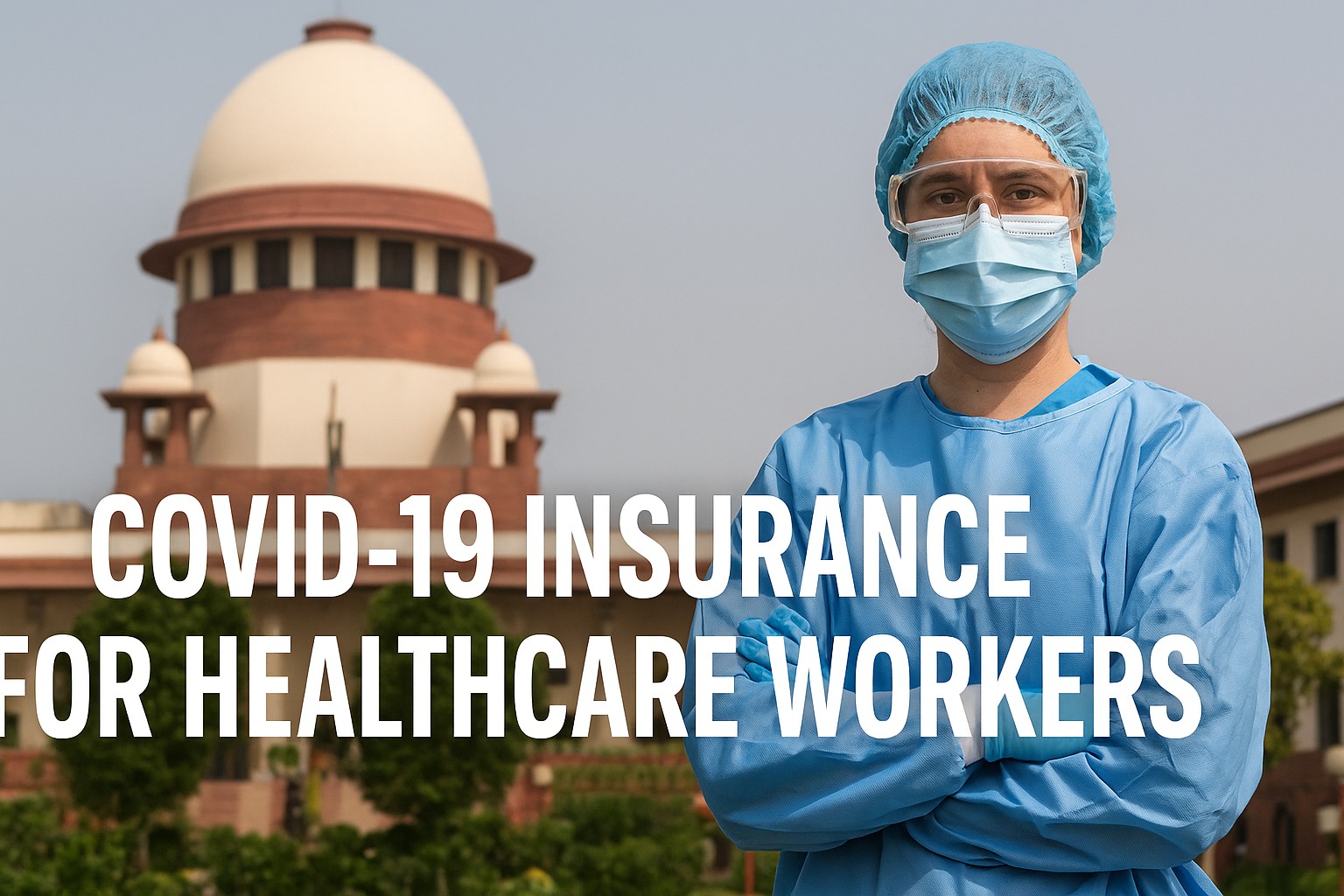
The Supreme Court of India delivered a landmark judgment on December 11, 2025, in the case of Pradeep Arora v. Director, Health Department, Government of Maharashtra (2025 INSC 1420), fundamentally reinterpreting the scope of the Pradhan Mantri Garib Kalyan Yojana (PMGKY) Insurance Scheme for healthcare workers who sacrificed their lives during the COVID-19 pandemic. This decision provides crucial clarity on what constitutes “requisitioning” of medical professionals’ services and expands the potential coverage for private practitioners’ beneficiaries. The judgment represents a significant victory for healthcare workers’ families and demonstrates the Court’s recognition of the extraordinary circumstances that prevailed during the pandemic’s onset.
The Background: Understanding the PMGKY Insurance Scheme
Origins of the Scheme and Its Scope
The Pradhan Mantri Garib Kalyan Yojana Insurance Scheme was announced by the Finance Ministry on March 26, 2020, as part of a comprehensive relief package designed to protect healthcare workers fighting the COVID-19 pandemic. The scheme was formally launched by the Ministry of Health and Family Welfare on March 28, 2020, offering a personal accident insurance cover of Rs. 50 lakh for ninety days to approximately 22.12 lakh public healthcare providers. This included community health workers, nurses, paramedics, technicians, doctors, and specialists who came into direct contact with COVID-19 patients and faced the risk of infection or death.[1]
The scheme’s announcement came at a critical juncture when India was grappling with an unprecedented health crisis. The Supreme Court noted in its judgment that since the 1918 influenza pandemic, no single infectious disease had inflicted such widespread crisis on human civilization. The Indian Medical Association’s COVID-19 registry documented that 748 doctors died during the first wave alone, with approximately 798 more losing their lives during the second wave. This devastating toll underscored the urgent need to provide comprehensive protection and financial security to healthcare workers and their families.[1]
Extension to Private Healthcare Workers
A crucial aspect of the PMGKY scheme was its extension to private healthcare workers. According to the scheme’s terms, while primarily designed for public healthcare providers, private hospital staff, retired professionals, volunteers, contract workers, daily wage workers, and ad-hoc staff could also be covered if their services were requisitioned by States or Central hospitals. This conditional inclusion of private practitioners created a critical ambiguity that would later become the subject of judicial interpretation.[1]
The Legal Framework: The Epidemic Diseases Act and COVID-19 Regulations
Powers Invoked for Emergency Response
The Government of Maharashtra, under the authority conferred by Sections 2, 3, and 4 of the Epidemic Diseases Act, 1897, issued the Prevention and Containment of Coronavirus Disease 2019 (COVID-19) Regulations on March 14, 2020. Regulation 10 of these rules granted significant powers to the Collector of the concerned District or the Municipal Commissioner, enabling them to implement containment measures including sealing of geographical areas, restricting movement, closure of institutions, and crucially, requisitioning the services of any person if required.[1]
This regulatory framework was not merely permissive but prescriptive, empowering government authorities to mandate the involvement of healthcare professionals in COVID-19 response efforts. The regulations also included stringent enforcement provisions: Regulation 11 declared that violations would be punishable under Section 188 of the Indian Penal Code, effectively criminalizing non-compliance with requisitioning orders. The regulations’ validity period was set for one year or until further orders, establishing a comprehensive legal architecture for emergency mobilization of resources and personnel.[1]
The NMMC Notice: A Case Study in Requisitioning
In exercise of powers under Regulation 10, the Commissioner of the Navi Mumbai Municipal Corporation (NMMC) issued a notice on March 31, 2020, to Dr. B S Surgade, the late husband of appellant no. 3, directing him to keep his hospital/dispensary open during the lockdown period. The notice invoked Regulation 10 explicitly and warned of criminal prosecution under Section 188 of the IPC for non-compliance. This notice became the critical document at the heart of the Supreme Court’s interpretation.[1]
The Case: Facts and Lower Court Reasoning
The Tragedy of Dr. Surgade
Dr. B S Surgade was a medical practitioner operating a private medical clinic in Navi Mumbai. His case exemplifies the tragic losses that healthcare workers and their families endured during the pandemic. After receiving the NMMC notice directing him to keep his clinic operational, Dr. Surgade contracted COVID-19 and tested positive on June 8, 2020. He succumbed to the infection just two days later on June 10, 2020.[1]
Following his death, Dr. Surgade’s widow (appellant no. 3) applied for insurance benefits under the PMGKY scheme. However, on September 7, 2020, the Joint Director of Medical Services rejected her claim on three grounds: first, that Dr. Surgade was a private practitioner and therefore ineligible; second, that his clinic was not a designated COVID-19 facility; and third, that his services were not requisitioned.[1]
High Court’s Interpretation: The Narrow Reading
The High Court of Bombay upheld the rejection of Dr. Surgade’s widow’s claim, but its reasoning proved critical for the Supreme Court’s appeal. The High Court drew a distinction between specific requisitioning and merely directing practitioners to not keep their clinics closed. It held that the NMMC notice’s primary purpose was to encourage medical practitioners to maintain operational facilities rather than specifically requisitioning their services for COVID-19 treatment.[1]
The High Court further argued that while the PMGKY scheme mentioned private practitioners as potentially covered, concrete evidence of requisitioning was necessary. In contrast to the NMMC notice, the High Court noted that a circular issued by the Directorate of Medical Education and Research on May 8-9, 2020, specifically stated “that your services are required for the prevention and treatment of COVID-19 patient at least for 15 days,” which constituted genuine requisitioning. Since Dr. Surgade had not responded to this specific circular, the High Court concluded his services were not requisitioned.[1]
The High Court also relied on various administrative letters and reports from NMMC stating that Dr. Surgade’s services and clinic were never formally requisitioned as COVID-19 facilities. This led to the dismissal of the writ petition and the rejection of the widow’s claim.[1]
The Supreme Court’s Landmark Decision
Reconsidering “Requisitioning” in Context
The Supreme Court took a fundamentally different approach. Justice Pamidighantam Sri Narasimha and Justice R. Mahadevan, writing for the bench, explicitly rejected the narrow interpretation adopted by the High Court. The Court emphasized that the circumstances prevailing in March 2020 must be considered when interpreting what constitutes “requisitioning.”[1]
The judgment noted that the country faced unprecedented circumstances requiring immediate implementation of compelling measures. The invocation of the Epidemic Diseases Act, 1897, was not a routine administrative action but an extraordinary step taken to address an existential crisis. In this context, the Court held that individual appointment letters or formal requisitioning documents might not always be possible or practical.[1]
The Context-Based Interpretation
The Supreme Court’s analysis centered on the conjoint reading of multiple documents and the legal framework. The Court examined:
- The Provisions of the Epidemic Diseases Act, 1897 – which conferred extraordinary powers on state authorities during epidemics
- The Maharashtra Prevention and Containment of COVID-19 Regulations 2020 – which explicitly authorized requisitioning
- The NMMC Order dated March 31, 2020 – which invoked these regulations and threatened criminal prosecution for non-compliance
- The PMGKY Scheme itself – which explicitly included private practitioners whose services were requisitioned
- The Finance Ministry’s March 26, 2020 Press Release – which announced the insurance scheme with language indicating its application to a broad class of healthcare workers
- The Frequently Asked Questions (FAQs) to the scheme – which elaborated on coverage for private practitioners
From this holistic reading, the Court concluded that the issuance of the NMMC notice dated March 31, 2020, to Dr. Surgade, coupled with the threat of criminal prosecution under Section 188 of the IPC, constituted a requisition of his services under the law and regulations.[1]
Rejecting the High Court’s Distinction
The Supreme Court explicitly rejected the High Court’s distinction between “specific requisitioning” and “mere direction to keep the clinic open.” The Court observed that in the extraordinary circumstances of March 2020, when the pandemic was spreading rapidly and governments were implementing immediate containment measures, it would be unrealistic to expect individual appointment letters or formal requisitioning documents for every healthcare professional.[1]
The judgment stated: “There is no gainsaying about the fact that circumstances in which the country was reeling under the COVID-19 pandemic required States and their instrumentalities to take immediate measures. This included requisitioning and drafting of doctors and other healthcare professionals as an emergent measure, as many as possible and as early as State can.”[1]
The Court’s Historical Perspective
Notably, the Supreme Court placed significant emphasis on the historical context and the collective sacrifice made during the pandemic. The judgment included poignant observations about the heroism of healthcare workers: “The courage and sacrifice of by our doctors remain indelible, as five years following the pandemic that spared us, we are now called upon to interpret the laws and regulations enacted for urgent requisition of doctors and health professionals to safeguard public from the seemingly overwhelming onslaught of Covid 2019.”[1]
The Court further stated: “The country has not forgotten the situation that prevailed at the onset of Covid-19, when every citizen contributed in some measure, despite fear of infection or imminent death. That is also a moment of pride and recognition of the strength of character and discipline that our people demonstrated when circumstances demanded it.”[1]
Key Holdings and Their Implications
The Declaration on Requisitioning
The Supreme Court made two crucial declarations:
First, the Court declared that there was indeed a requisition of services of doctors and medical professionals, evident from the conjoint reading of the Epidemic Diseases Act, the Maharashtra COVID-19 Regulations, the NMMC order, the PMGKY scheme, and related clarificatory communications.[1]
Second, the Court held that individual claims for insurance made under the PMGKY scheme will be considered on the basis of evidence, with the onus remaining on the claimant to prove that the deceased lost their life while performing COVID-19-related duties. This evidence-based approach provides a pathway for claims adjudication while maintaining necessary evidentiary standards.[1]
The Modified Burden of Proof
Importantly, the Supreme Court did not create a conclusive presumption that all healthcare workers were requisitioned. Instead, the judgment shifts the analytical framework: once requisitioning is established as a matter of principle (which the Court has now done), the focus moves to individual evidence regarding whether the specific professional actually engaged in COVID-19-related duties resulting in their death. This represents a balanced approach that honors both the universal nature of the requisitioning power and the need for individualized fact-finding.
Broader Legal and Constitutional Significance
Protection of Life and Livelihood
This judgment resonates with fundamental constitutional principles, particularly Articles 21 (right to life), 14 (equality before law), and 16 (equality in public employment). By recognizing that private practitioners could be requisitioned and thus entitled to insurance coverage, the Court has affirmed that constitutional protections extend beyond formal government employment status. The judgment implicitly recognizes that healthcare workers—whether public or private—who answer the call of duty during national emergencies deserve equivalent legal protections.
Statutory Interpretation in Extraordinary Times
The Supreme Court’s approach to interpreting the PMGKY scheme and the Epidemic Diseases Act regulations sets an important precedent for statutory interpretation during crises. The judgment demonstrates that courts should not adopt overly formalistic readings that frustrate the legislative intent when dealing with emergency powers. As the Court noted, the entire architecture of the regulations was designed for rapid, flexible response, not bureaucratic precision.[1]
Administrative Accountability
The decision also carries implications for administrative accountability. By recognizing that the NMMC’s issuance of a notice invoking the Epidemic Diseases Act constitutes requisitioning, the Court has established that administrative actions at the local level have legal consequences and cannot be dismissed as mere advisory notices when they involve statutory powers and penalties.
Practical Impact on Claims and Implementation
Reopening of Rejected Claims
The most immediate practical consequence is that claims previously rejected on the grounds of lack of formal requisitioning may now be reopened and reconsidered. The Supreme Court’s declaration that requisitioning occurred as a matter of principle means that the basis for previous rejections—the absence of specific requisitioning documents—has been undermined.
Government authorities and insurance companies will need to reassess rejected claims, particularly those of private practitioners who received notices similar to Dr. Surgade’s or who responded to requisitioning communications. The Court’s focus on evidence of actual engagement in COVID-19 duties provides a reasonable framework for this reassessment.
Burden of Proof Considerations
While the Court has held that claimants bear the burden of proving COVID-19-related duties, this is still more favorable than the previous position where the burden effectively fell on claimants to prove requisitioning itself. With requisitioning now established in principle, claimants need only demonstrate their engagement in COVID-19 work and the causal connection to death.
Medical and Factual Documentation
This judgment will likely lead to scrutiny of available evidence regarding healthcare workers’ actual engagement with COVID-19 patients. Medical records, hospital admission records, death certificates mentioning COVID-19, and testimony from colleagues and family members become crucial evidence for establishing the nexus between COVID-19 duties and death.
Contextual Analysis: The Pandemic’s Healthcare Toll
The Unprecedented Loss of Healthcare Workers
The Supreme Court’s judgment cannot be separated from the tragic human cost of the pandemic. The Indian Medical Association’s COVID-19 registry documented 748 doctors’ deaths in the first wave and approximately 798 during the second wave. These figures represent not merely statistics but individual tragedies—each death representing a family’s loss, a breach in the healthcare system’s capacity, and a sacrifice made at the nation’s call.[1]
The judgment implicitly acknowledges that these healthcare workers—public and private—responded to the nation’s needs at the most critical moment. Many private practitioners, facing unprecedented health risks and economic uncertainty, chose to keep their clinics operational under government direction. The PMGKY scheme was designed as the state’s reciprocal acknowledgment of this sacrifice.
The Role of Private Healthcare Infrastructure
Throughout the pandemic, India’s private healthcare infrastructure played a crucial role in managing patient loads that public systems alone could not handle. Private clinics, nursing homes, and hospitals absorbed significant numbers of COVID-19 cases, particularly in urban areas. The Supreme Court’s recognition of private practitioners’ requisitioning aligns with this reality—many did, in fact, contribute significantly to the pandemic response despite being outside formal government control.
The Judgment’s Limitations and Outstanding Questions
Evidence-Based Determination of Individual Claims
While the Supreme Court has provided clarity on the principle of requisitioning, it has deliberately left the determination of individual claims to lower authorities based on evidence. This creates a practical challenge: what constitutes sufficient evidence of COVID-19-related duty for someone who worked from a private clinic?
The judgment does not fully address how claimants can satisfy the evidentiary burden when records are incomplete or when the cause of death involves COVID-19 but also co-morbidities. Courts and administrative authorities will need to develop interpretive frameworks for these fact-specific situations.
Temporal Scope of Coverage
The PMGKY scheme’s validity was originally limited to ninety days from March 30, 2020. The judgment does not explicitly address whether healthcare workers who contracted COVID-19 after June 28, 2020 (the end of the initial 90-day period) but who were requisitioned before that date remain covered. This ambiguity could affect numerous claims.
Compensation and Adequacy
While the Supreme Court has addressed the legal question of requisitioning and insurance eligibility, the underlying question of whether Rs. 50 lakhs compensation is adequate for the loss of a healthcare professional’s life remains beyond the judgment’s scope. This remains a matter of policy for the government to consider.
Conclusion
The Supreme Court’s judgment in Pradeep Arora v. Director, Health Department represents a significant watershed moment in the interpretation of government obligations to healthcare workers during public health emergencies. By rejecting formalistic interpretations of “requisitioning” and adopting a context-sensitive approach grounded in the extraordinary circumstances of March 2020, the Court has affirmed that the nation’s commitment to healthcare workers extends beyond formal employment relationships.
The judgment sends an important message: when the state invokes emergency powers to mobilize healthcare workers—whether public or private—and those workers sacrifice their lives in the service of public health, the state’s promise of protection and compensation cannot be undermined by technicalities about documentation procedures. The Court recognized that emergency circumstances sometimes preclude the very formalities that peacetime administrative procedures require.
For the families of deceased healthcare workers, the Supreme Court’s judgment provides renewed hope that their loved ones’ sacrifice will be honored through the fulfillment of the PMGKY scheme’s promise. For administrators and insurance authorities, it provides a clear framework: requisitioning has occurred as a matter of principle through the invocation of emergency powers and relevant regulations; individual eligibility must now be determined through credible evidence of COVID-19-related engagement and death.
The broader constitutional significance lies in the Court’s affirmation that justice during crises cannot hide behind procedural technicalities. When extraordinary powers are invoked, the remedies and protections associated with those powers must be interpreted to effectuate their purpose. This principle extends beyond the specific context of the PMGKY scheme and informs how courts will approach future legislation and policies responding to national emergencies.
As the nation continues its recovery from the COVID-19 pandemic, memorials will be built, tributes will be paid, and commemorations will occur. But the true measure of national gratitude lies in the faithful implementation of promises made in the crisis’s midst. The Supreme Court’s judgment ensures that those promises will not be forgotten behind a wall of administrative requirements.