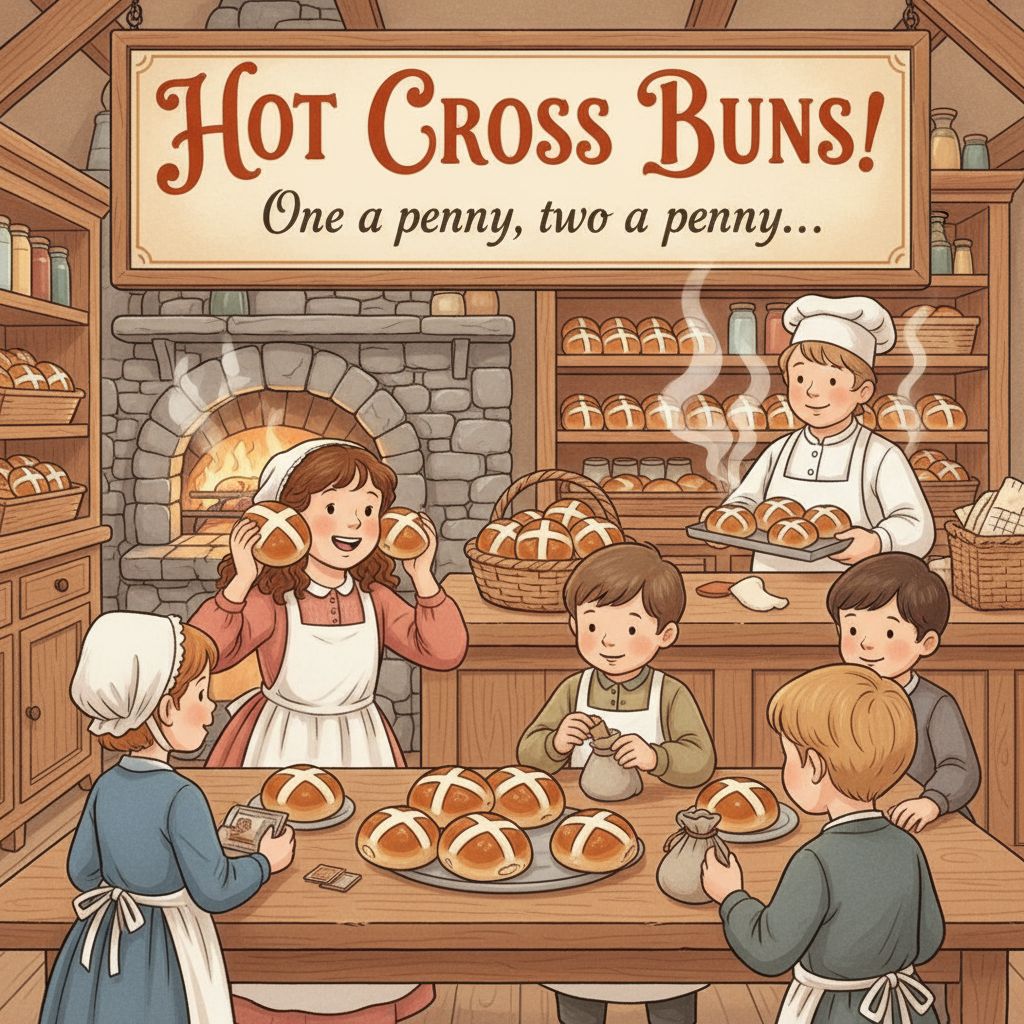
Street Cry to Song – Hot Cross Buns began as an 18th‑century London street vendor’s call to sell spiced buns marked with a cross, traditionally eaten on Good Friday to commemorate the crucifixion of Jesus.
Earliest Mentions – Recorded in Poor Robin’s Almanack (1733) and later in the London Chronicle (1767) with variations in wording.
Religious & Folklore Links – The cross symbolised the crucifixion; folklore claimed buns baked on Good Friday would never spoil and could protect against illness.
📜 Meaning
Literal Purpose – Originally a commercial jingle to attract customers during Lent, making it one of the earliest popularised advertising rhymes.
Cultural Shift – Over time, it transitioned into a children’s nursery rhyme and a beginner’s music lesson piece, thanks to its simple melody and repetitive structure.
Symbolism – Combines Christian tradition (Good Friday) with everyday commerce, showing how religious customs blended into public life.
🌟 Fun Facts
Musical Education – Still used worldwide to teach children basic notes on instruments like the recorder and piano.
Multiple Variations – Historical versions included playful extra verses, e.g., “Butter them and sugar them and put them in your muns (mouths)”.
Price Reference – “One a penny, two a penny” reflects 18th‑century pricing; later versions updated the cost as inflation rose.
Global Spread – While rooted in England, the rhyme is now sung in classrooms and homes across many countries, often detached from its religious origins.
Hot cross buns! Hot cross buns! One a penny, two a penny. Hot cross buns! If you have no daughters, Give them to your sons! One a penny, two a penny. Hot cross buns!