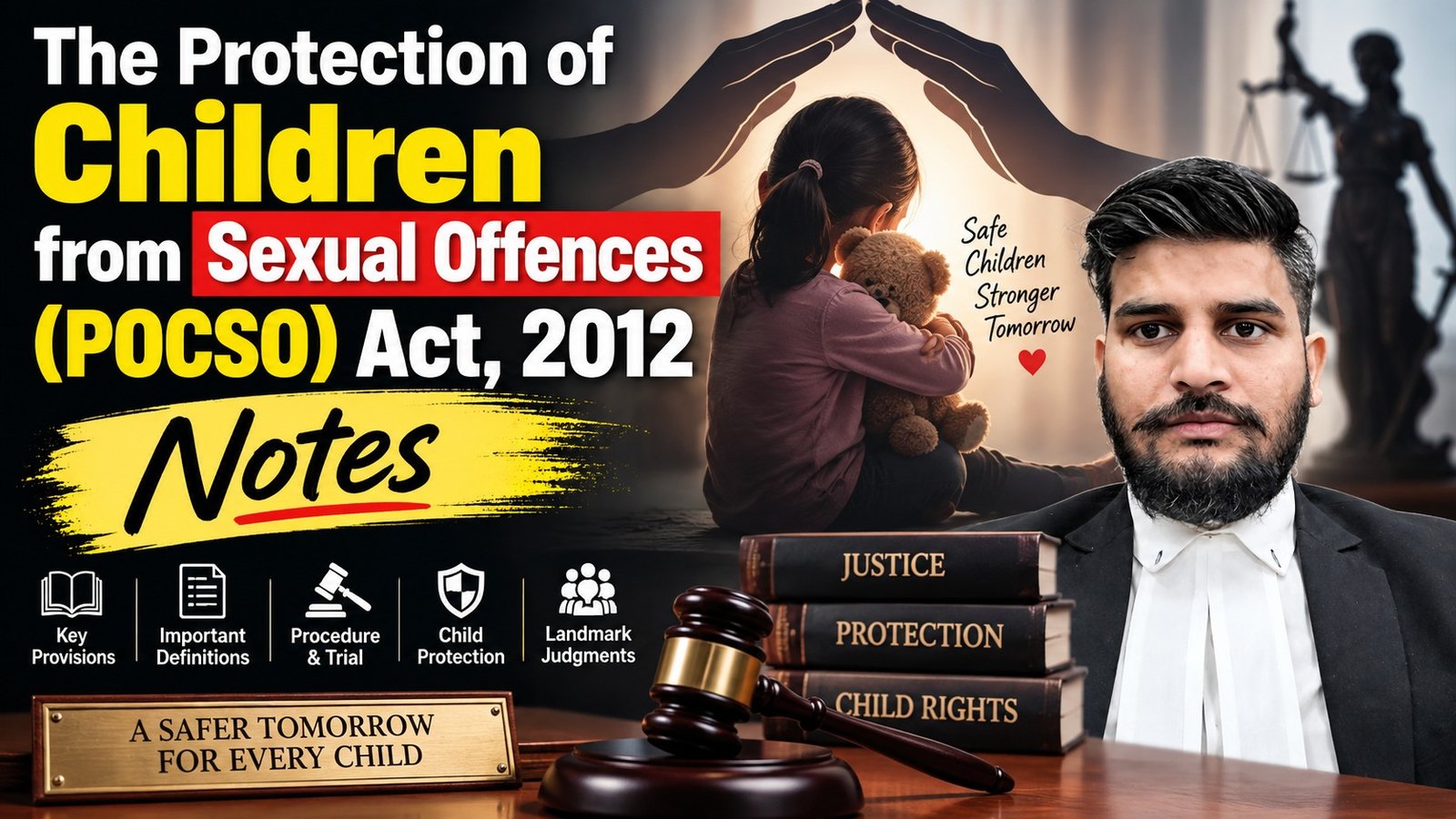
The Protection of Children from Sexual Offences (POCSO) Act, 2012 Notes
| Q. No. | Question |
|---|---|
| 1 | What are the salient features of POCSO Act, 2012? |
| 2 | Definitions under POCSO Act, 2012 |
| 3 | What is Penetrative Sexual Assault under the POCSO Act, and what are the punishments? |
| 4 | Discuss the punishment for using a child for pornographic purposes under POCSO Act. |
| 5 | What is the punishment for storage of pornographic material involving a child? |
| 6 | Discuss the provisions related to abetment of an offence. |
| 7 | Explain the procedure for reporting offenses under the POCSO Act. |
| 8 | Discuss the procedure for recording the statement of a child under POCSO Act. |
| 9 | Explain the powers and procedure of Special Courts in the POCSO Act. |
| 10 | Discuss the provisions for assistance to children with disabilities in Special Courts under the POCSO Act. |
| 11 | What are the provisions for handling false complaints? |
| 12 | Discuss the provisions related to media reporting and the protection of the identity of the child. |
8. Discuss the procedure for recording the statement of a child under POCSO Act.
- Child-Friendly Manner: Section 24 ensures that the statement of the child is recorded in a child-friendly manner.
- Place of Recording: The statement should be taken at the child’s residence or a place the child is comfortable with.
- Recording Officer: The statement must be recorded by a police officer who is a woman and not below the rank of a sub-inspector.
- No Uniform: The police officer must not wear a uniform while recording the child’s statement.
- No Contact with Accused: The child must not be in contact with the accused during the statement recording.
- Presence of Trusted Person: The statement must be recorded in the presence of a guardian, family member, or someone the child trusts.
- Assistance of Interpreter or Special Educator: If necessary, an interpreter or special educator may assist in recording the statement.
- Simple Language: The statement should be in simple language the child understands.
- Confidentiality: The identity of the child must be kept confidential during and after the statement.
- No Overnight Detention: The child must not be detained overnight at a police station.
- Prompt Recording: The statement must be recorded promptly and not delayed unnecessarily.
- Special Care for Disabilities: Special care must be taken when the child has a mental or physical disability to ensure proper communication.
- Case Law – State v. Pooja Sharma (2017): Clarified that a child’s statement recorded improperly or under pressure cannot be used in court.